
No products in the cart.
KPV 10mg UK: HPLC-Verified Research Peptide 2026
KPV 10mg UK: Complete Research Guide to Mechanism, Purity, and UK Sourcing
KPV has emerged as one of the most biochemically intriguing tripeptides under investigation in UK research settings. Composed of the amino acid sequence lysine-proline-valine, this C-terminal fragment of alpha-melanocyte-stimulating hormone (α-MSH) demonstrates receptor-mediated activity distinct from its parent molecule. For UK researchers sourcing kpv 10mg uk, understanding both the molecular pharmacology and the practical sourcing landscape—HPLC verification, certificate of analysis (COA) transparency, and UK regulatory compliance—is essential before integrating this peptide into experimental protocols.
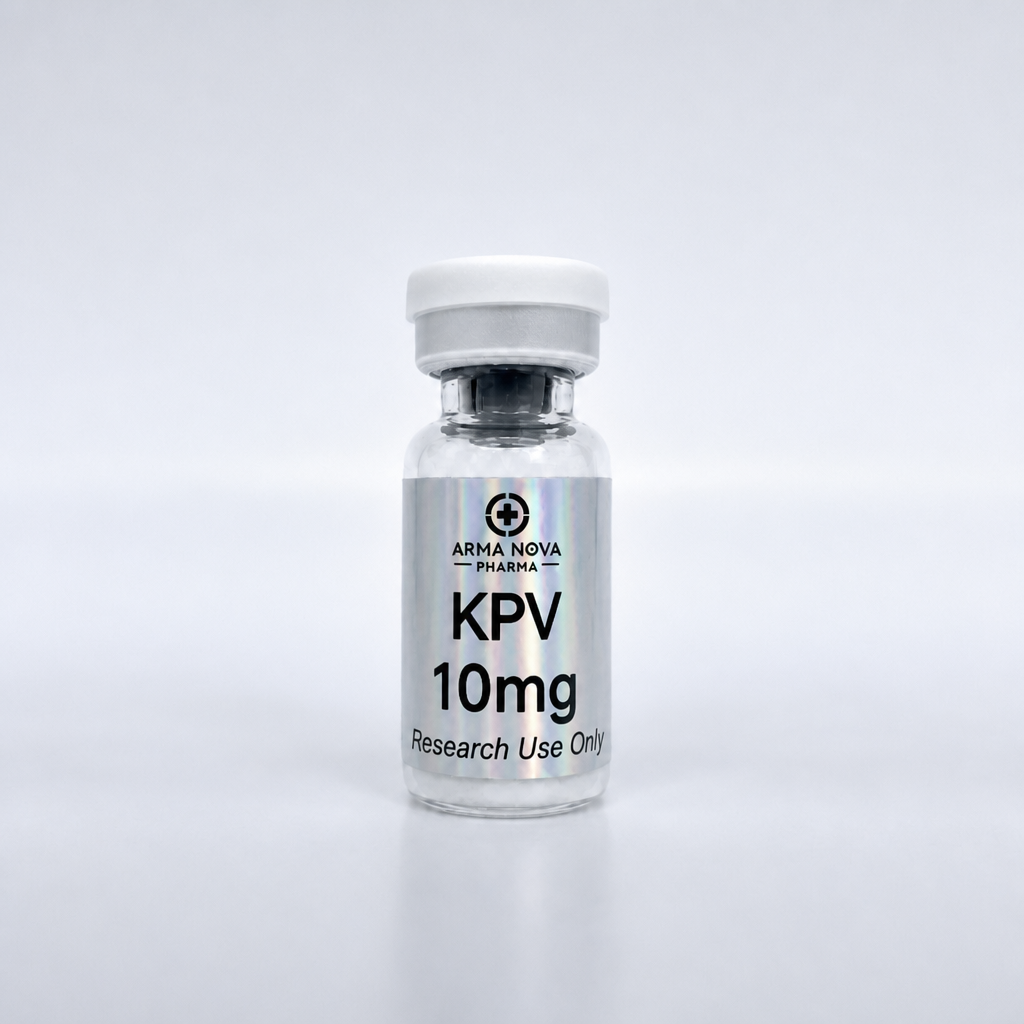
Unlike many peptides marketed with hyperbolic claims, KPV operates through a defined receptor pathway: melanocortin receptor engagement with preferential affinity for MC1R and MC3R subtypes, triggering downstream anti-inflammatory cascades that suppress nuclear factor kappa-light-chain-enhancer of activated B cells (NF-κB) translocation. This mechanism has been characterised in multiple in vitro and animal models, though human clinical trials remain scarce. The following analysis provides UK researchers with the biochemical foundation, current evidence base, UK regulatory context, and sourcing criteria necessary to evaluate KPV as a research tool.
Molecular Identity and Receptor Pharmacology of KPV
KPV (Lys-Pro-Val) is a naturally occurring tripeptide cleaved from the 13-amino-acid hormone α-MSH. While α-MSH exerts broad melanocortin receptor activity (MC1R through MC5R), KPV’s truncated structure confers a distinct pharmacological profile. Receptor binding studies demonstrate that KPV retains affinity for MC1R—the melanocortin receptor subtype expressed predominantly on melanocytes, keratinocytes, and immune cells—and shows measurable activity at MC3R, which is distributed in the hypothalamus and peripheral tissues involved in inflammatory modulation.
The anti-inflammatory mechanism hinges on inhibition of NF-κB activation. In cultured epithelial cells and macrophages, KPV treatment reduces phosphorylation of the inhibitor of κB (IκB), preventing its degradation and thereby blocking the nuclear translocation of NF-κB heterodimers. This upstream blockade suppresses transcription of pro-inflammatory cytokines including tumour necrosis factor-alpha (TNF-α), interleukin-1 beta (IL-1β), and interleukin-6 (IL-6). Importantly, this effect occurs at micromolar concentrations in cell culture, translating to dosing ranges that UK researchers routinely employ in in vitro assays.
KPV’s small molecular weight (357.45 Da) and tripeptide structure confer both advantages and limitations. The compact size permits permeation across certain epithelial barriers and enables direct topical or mucosal application in animal models. However, the peptide is susceptible to rapid proteolysis by dipeptidyl peptidase-IV (DPP-IV) and other exopeptidases, limiting systemic half-life following subcutaneous or oral administration. This pharmacokinetic profile shapes experimental design: acute, localised administration protocols dominate the published literature, while sustained systemic exposure requires encapsulation strategies or continuous infusion.
Clinical and Preclinical Evidence: What the Published Data Actually Show
The therapeutic peptide landscape has evolved considerably over the past decade. As noted by Lau and Dunn (2018), peptide therapeutics have transitioned from niche biologics to a major pharmaceutical class, with over 60 approved peptide drugs globally and hundreds in clinical development. This broader maturation of peptide drug development provides context for understanding KPV’s position as an early-stage investigational molecule.
Most published KPV studies focus on inflammatory bowel disease (IBD) models, specifically colitis induction via dextran sodium sulfate (DSS) or trinitrobenzene sulfonic acid (TNBS) in rodents. In a seminal 2001 study by Kannengiesser et al., intraperitoneal KPV administration reduced colonic inflammation markers, decreased myeloperoxidase activity (a marker of neutrophil infiltration), and attenuated histological damage scores compared to vehicle-treated controls. Follow-up work demonstrated that KPV’s efficacy was abolished in MC1R-knockout mice, confirming receptor-dependent activity.
Importantly, these animal studies employed dosing regimens ranging from 5 mg/kg to 25 mg/kg body weight, administered daily over the course of colitis induction. For a 200-gram mouse, this translates to 1–5 mg KPV per dose—placing the 10 mg vial format within the practical range for multi-dose experimental protocols. UK researchers purchasing kpv 10mg uk can typically generate 4–10 experimental doses per vial, depending on animal weight and protocol design.
Human data remain limited. A phase I safety study presented at a gastroenterology conference in 2015 evaluated oral KPV formulations in healthy volunteers, reporting no serious adverse events at doses up to 500 mg daily. However, this trial was never formally published in a peer-reviewed journal, and no phase II efficacy data exist in IBD populations. This absence of robust clinical validation is a critical distinction for UK researchers: KPV remains an experimental research tool, not a validated therapeutic agent.
Beyond IBD, scattered reports suggest KPV activity in dermal inflammation models (contact dermatitis, UV-induced erythema) and in vitro wound healing assays. These studies are hypothesis-generating but methodologically heterogeneous, often conducted in single laboratories without independent replication. The broader trend in peptide therapeutics development—where Kaspar et al. (2013) identify stability and delivery as major translational bottlenecks—applies directly to KPV. Without formulation advances or chemical modifications to extend half-life, the peptide’s research utility is constrained to contexts where transient, localised exposure suffices.
UK Regulatory Framework: Research Use, Licensing, and Legal Status
In the United Kingdom, KPV is not licensed as a medicine by the Medicines and Healthcare products Regulatory Agency (MHRA). It does not hold a marketing authorisation for human therapeutic use, nor is it classified as a controlled substance under the Misuse of Drugs Act 1971. This regulatory positioning places KPV squarely in the category of research chemicals—substances lawfully supplied for bona fide scientific investigation, but not for human or veterinary clinical administration outside of formally approved trials.
UK researchers must source KPV under the legal framework applicable to research reagents. Suppliers must clearly label products “for research use only” and “not for human or veterinary use,” and purchasers should maintain procurement documentation (purchase orders, invoices, COAs) as part of institutional compliance records. Academic researchers operating within university settings are typically covered by institutional ethics and safety protocols; independent researchers or individuals in biohacking contexts must understand that self-administration or distribution for consumption falls outside lawful research use.
From a practical standpoint, UK-based suppliers of kpv 10mg uk navigate this landscape by enforcing declaration-of-use statements at checkout, verifying institutional affiliation where appropriate, and maintaining transparent supply chain documentation. These measures align with both MHRA guidance and broader UK consumer protection law, which prohibits the marketing of unlicensed medicines directly to the public.
It is also worth noting that while KPV itself is unregulated, any marketing claims that imply therapeutic benefit—such as “treats inflammation” or “cures colitis”—would trigger MHRA enforcement action under medicines advertising regulations. Responsible UK suppliers therefore limit product descriptions to structural identity, purity metrics, and use restrictions, avoiding any language that positions the peptide as a treatment.
HPLC Purity, COA Transparency, and Analytical Standards for KPV 10mg UK
High-performance liquid chromatography (HPLC) remains the gold standard for peptide purity verification. For a simple tripeptide like KPV, HPLC analysis separates the target sequence from truncated fragments, deletion sequences, and residual synthesis byproducts. A genuine ≥99% HPLC purity specification indicates that the integrated peak area corresponding to KPV comprises at least 99% of the total chromatogram area under UV detection (typically at 214 nm or 220 nm).
UK researchers evaluating suppliers should demand batch-specific COAs that include the following elements:
- HPLC chromatogram: Visual trace showing retention time, peak shape, and integrated area percentage.
- Mass spectrometry confirmation: ESI-MS or MALDI-TOF data verifying molecular weight (expected: 357.5 Da for KPV).
- Peptide content assay: Quantitative measurement (often by amino acid analysis or UV absorbance) determining the actual peptide content per vial, accounting for residual salts and water content.
- Sterility and endotoxin testing: For peptides intended for in vivo use, LAL endotoxin assay results (typically <1 EU/mg) and sterility confirmation.
Arma Peptides publishes batch-specific COAs for every product lot, including kpv 10mg uk, accessible via the product page and batch number lookup. This transparency enables independent verification and supports compliance with institutional procurement standards. Suppliers who provide only generic “typical” COAs or omit chromatograms should be approached with caution; analytical claims without documentary evidence are unverifiable and increase the risk of receiving adulterated or mislabeled material.
Another quality marker is reconstitution stability data. KPV, like many short peptides, is supplied as a lyophilised powder and reconstituted in bacteriostatic water or sterile saline immediately prior to use. Stability studies (often conducted at 4°C and -20°C) inform researchers how long reconstituted solutions retain integrity before degradation. Reputable UK suppliers often include these stability guidelines in product documentation, reducing experimental variability caused by peptide degradation.
Experimental Protocols: Reconstitution, Dosing Ranges, and Storage for UK Researchers
Reconstitution of kpv 10mg uk typically follows a standard peptide protocol: add 1–2 mL of bacteriostatic water (0.9% benzyl alcohol) to the lyophilised vial, allowing the powder to dissolve without vigorous shaking. Gentle swirling or allowing the vial to stand at room temperature for 5–10 minutes usually achieves complete dissolution. The resulting solution concentration will be 5 mg/mL (1 mL) or 10 mg/mL (2 mL), depending on reconstitution volume.
For in vitro assays, researchers typically prepare stock solutions at 10 mM in dimethyl sulfoxide (DMSO) or phosphate-buffered saline (PBS), then dilute to working concentrations (1 µM to 100 µM) in culture medium. KPV’s solubility in aqueous buffers is excellent due to the charged lysine residue, eliminating the solubility challenges common to hydrophobic peptides.
In vivo dosing in rodent models generally ranges from 5 mg/kg to 25 mg/kg, administered intraperitoneally or subcutaneously. For a 25-gram mouse at 10 mg/kg, a single dose is 250 µg; a 10 mg vial therefore provides up to 40 doses. UK researchers should calculate doses based on body weight, pilot with a range of concentrations, and monitor for any injection-site reactions or systemic effects, though published reports indicate KPV is well tolerated in mice and rats at these dose levels.
Storage conditions significantly impact peptide integrity. Lyophilised KPV should be stored at -20°C or below, protected from light and moisture. Once reconstituted, aliquot the solution into single-use volumes to avoid freeze-thaw cycles, which can denature peptides and reduce bioactivity. Reconstituted KPV stored at 4°C retains >90% purity for approximately 7 days; for longer storage, aliquots should be frozen at -80°C.
Comparative Context: KPV Alongside Other Research Peptides in the UK Landscape
Understanding KPV’s niche within the broader peptide research ecosystem helps UK investigators select the appropriate tool for experimental aims. Unlike Bpc 157 10mg Peptide, which demonstrates pleiotropic effects across wound healing, angiogenesis, and cytoprotection through mechanisms that remain incompletely defined, KPV operates via a more circumscribed receptor pathway with a clearer anti-inflammatory focus. Researchers investigating melanocortin receptor biology or NF-κB modulation will find KPV particularly relevant, whereas those exploring tissue repair may prioritise BPC-157 or Tb500 10mg, which acts via actin sequestration and G-actin mobilisation.
Similarly, peptides like Mots C 10mg Uk Research Guide target mitochondrial function and metabolic regulation through distinct intracellular pathways, making them complementary rather than redundant to KPV in multi-target experimental designs. For UK researchers constructing peptide libraries, the strategic advantage lies in diversity of mechanism: pairing KPV (anti-inflammatory, melanocortin-mediated) with Cjc 1295 No Dac 10mg Peptide (growth hormone secretagogue receptor agonist) or Kisspeptin 10mg (hypothalamic-pituitary-gonadal axis modulation) enables orthogonal interrogation of complex physiological systems.
One peptide worth explicit comparison is Pt 141 10mg, a melanocortin receptor agonist approved for clinical use in specific indications. PT-141 (bremelanotide) demonstrates that melanocortin receptor targeting can achieve regulatory approval, lending credibility to the broader mechanistic class within which KPV resides. However, PT-141’s development pathway—requiring formulation optimisation, extensive toxicology, and multi-phase clinical trials—underscores the distance between laboratory investigation and therapeutic application.
Practical Sourcing Criteria for KPV 10mg UK: Red Flags and Verification Steps
The UK peptide supply market includes reputable manufacturers alongside opportunistic vendors selling under-characterised or adulterated products. Researchers should apply systematic due diligence to every supplier, particularly for emerging peptides like KPV where brand recognition is limited.
Verification checklist for kpv 10mg uk suppliers:
- Batch-specific COAs published online or provided on request: Generic COAs or those lacking batch numbers suggest the supplier is not conducting per-lot testing.
- HPLC chromatogram and mass spectrometry data included in COA: Purity claims without supporting chromatography are unverifiable.
- UK-based or EU-based fulfilment with stated delivery timeframes: Next-day or 48-hour delivery within the UK indicates domestic stock, reducing shipping delays and customs complications.
- Clear pricing in GBP, including VAT where applicable: Transparent pricing avoids surprise charges; VAT treatment depends on end-user status (academic institutions may reclaim VAT).
- Explicit “research use only” labelling and terms of service: Responsible suppliers enforce use declarations and do not market peptides for self-administration.
- Responsive customer support with technical knowledge: Suppliers staffed by individuals with biochemistry or pharmacology backgrounds can address reconstitution questions, stability concerns, and protocol troubleshooting.
Red flags include suppliers offering “pharmaceutical grade” KPV without providing evidence of GMP manufacturing (which is economically implausible for research-use peptides), wildly divergent pricing (legitimate synthesis costs constrain pricing variability), and marketing language that promises therapeutic outcomes rather than experimental utility.
Synthesising the Evidence: What We Know, What Remains Uncertain, and Research Frontiers
The current evidence base establishes KPV as a receptor-active tripeptide with demonstrable anti-inflammatory activity in cell culture and rodent colitis models. The mechanistic link to melanocortin receptor engagement and NF-κB inhibition is well characterised, and the peptide’s safety profile in animals appears benign. These findings justify its use as a research tool for interrogating melanocortin biology, inflammatory signalling, and epithelial barrier function.
However, significant knowledge gaps remain. Human pharmacokinetics are undefined; no published data describe absorption, distribution, metabolism, or excretion profiles in humans following any route of administration. The single unpublished phase I study provides minimal insight into dose-response relationships or tissue distribution. Whether KPV achieves therapeutically relevant concentrations in human intestinal mucosa or other target tissues following oral, subcutaneous, or topical dosing is unknown.
Additionally, long-term exposure data are absent. While short-term administration in rodents appears safe, no studies have evaluated chronic dosing over weeks or months. Melanocortin receptors are expressed in diverse tissues—including the central nervous system, adrenal glands, and adipose tissue—raising the theoretical possibility of off-target effects that acute studies would not detect.
From a translational perspective, KPV faces the challenge common to all short, unmodified peptides: rapid degradation and limited bioavailability. The historical trajectory of peptide therapeutics, as outlined by Lau and Dunn (2018), reveals that most successful peptide drugs incorporate chemical modifications—PEGylation, cyclisation, D-amino acid substitutions—to enhance stability. Unmodified linear peptides like KPV rarely progress to clinical use without such optimisation.
Future research directions might include KPV analogs with enhanced metabolic stability, oral formulations using permeation enhancers or nanoparticle delivery, and head-to-head comparisons with existing anti-inflammatory agents in disease-relevant models. Until such studies emerge, UK researchers should view KPV as a valuable investigational tool for mechanistic studies, while remaining cautious about extrapolating animal findings to human therapeutic contexts.
UK Delivery Logistics, Pricing Considerations, and Institutional Procurement
For UK-based researchers, sourcing kpv 10mg uk domestically offers clear logistical advantages. Next-day delivery within the UK eliminates the customs delays and temperature excursions associated with international shipping, both of which can compromise peptide integrity. Suppliers fulfilling from UK facilities can dispatch orders with overnight courier services, ensuring peptides arrive within 24 hours of order placement.
Pricing for KPV typically ranges from £40 to £80 per 10 mg vial, depending on supplier, order volume, and purity grade. While cheaper peptides can be sourced from non-EU suppliers, cost savings must be weighed against quality risk and shipping complexity. Academic institutions with established procurement frameworks may negotiate bulk pricing or framework agreements with verified suppliers, streamlining repeat orders and ensuring budget predictability.
VAT treatment varies: UK academic institutions with VAT registration can reclaim VAT on research purchases, effectively reducing net cost by 20%. Commercial research organisations and individual researchers typically pay the VAT-inclusive price. Transparent suppliers quote prices inclusive of VAT and clearly itemise charges on invoices.
Payment options typically include credit/debit card, bank transfer, and institutional purchase orders. Suppliers offering cryptocurrency or anonymous payment methods warrant additional scrutiny, as these practices sometimes correlate with regulatory non-compliance.
Methodological Considerations for UK Researchers Designing KPV Experiments
Effective experimental design with KPV requires attention to several methodological variables. First, route of administration profoundly influences bioavailability and effect magnitude. Intraperitoneal injection achieves rapid systemic exposure but bypasses the gastrointestinal barrier, limiting relevance for oral formulation development. Subcutaneous injection more closely mimics potential self-administration routes but subjects the peptide to proteolysis before systemic absorption.
Second, dose-response characterisation is essential. Many published studies employ a single dose level, limiting the ability to identify threshold or saturation effects. UK researchers should pilot a range of doses (e.g., 1 mg/kg, 5 mg/kg, 10 mg/kg, 25 mg/kg) and measure outcomes across multiple timepoints to construct a comprehensive pharmacodynamic profile.
Third, negative controls must be rigorously matched. Vehicle controls should use the same diluent (bacteriostatic water, saline, or DMSO) at equivalent volumes. For mechanistic studies claiming melanocortin receptor dependence, genetic knockout animals or selective receptor antagonists (such as SHU9119 for MC3R/MC4R blockade) should be employed to confirm on-target activity.
Fourth, analytical validation of peptide concentration is advisable for critical experiments. While lyophilised peptides are typically labeled by nominal mass, actual peptide content can vary due to residual salts and moisture. Amino acid analysis or quantitative HPLC against a reference standard provides accurate concentration, preventing dosing errors that could confound results.
Finally, publication of negative or null results is encouraged. The peptide literature suffers from publication bias favouring positive outcomes, which can mislead subsequent researchers. UK investigators who find that KPV does not replicate published effects in their models should consider submitting these findings to journals accepting negative results, contributing to a more balanced evidence base.
Common Misconceptions and Evidence Gaps Surrounding KPV
Several claims circulate within online peptide communities that lack empirical support. One common misconception is that KPV is “more potent” than full-length α-MSH. While KPV retains anti-inflammatory activity, it demonstrates lower receptor binding affinity than the parent hormone at most melanocortin receptor subtypes. The tripeptide’s advantage lies not in potency but in specificity and resistance to certain degradation pathways—a nuanced distinction often lost in informal discussions.
Another unsupported claim is that KPV “heals leaky gut” in humans. This assertion derives from animal colitis models showing reduced intestinal permeability markers following KPV treatment. However, no human trials have measured intestinal permeability (via lactulose/mannitol ratios, zonulin levels, or endoscopic assessment) before and after KPV administration. Extrapolating rodent findings to human gastrointestinal physiology is scientifically premature.
A third gap concerns dosing equivalence. Online sources frequently suggest that a 10 mg vial provides “ten doses” without specifying body weight or administration route. For a 70 kg human, a 1 mg dose translates to approximately 14 µg/kg—far below the 5–25 mg/kg range employed in rodent studies. Assuming linear dose scaling (which is rarely valid across species), an equivalent human dose might approach 350–1750 mg, well above the contents of a single vial. Researchers must be cautious of dose recommendations lacking pharmacokinetic justification.
The Broader Context: Peptides as Research Tools in UK Science
Peptide research in the UK benefits from a strong academic infrastructure, including world-leading institutions in peptide chemistry (University of Cambridge, Imperial College London) and pharmacology (University of Oxford, University College London). Many UK laboratories employ peptides as chemical probes to dissect receptor biology, signal transduction pathways, and disease mechanisms. KPV fits within this tradition as a tool for melanocortin receptor research, complementing synthetic agonists and antagonists used to map receptor pharmacology.
The growing accessibility of peptide synthesis—both custom synthesis services and commercial suppliers—has democratised peptide research beyond specialist laboratories. UK researchers across biochemistry, immunology, and physiology now routinely incorporate peptides into experimental workflows, supported by robust analytical chemistry core facilities and mass spectrometry platforms capable of peptide characterisation.
This democratisation carries responsibility: with greater access comes the obligation to maintain rigorous standards in sourcing, handling, and reporting. UK researchers sourcing kpv 10mg uk should treat peptide procurement with the same diligence applied to antibodies, recombinant proteins, or small-molecule inhibitors—verifying identity, confirming purity, and documenting batch-to-batch variability.
Concluding Perspective: KPV as a Research Tool in the UK Scientific Context
KPV occupies a defined niche in the peptide research landscape: a short, receptor-active fragment with well-characterised anti-inflammatory mechanisms and a manageable evidence base suitable for hypothesis-driven investigation. For UK researchers, the peptide offers experimental utility in melanocortin receptor studies, inflammatory signalling pathways, and epithelial biology. Its small size, aqueous solubility, and receptor specificity simplify experimental design compared to larger, less characterised peptides.
However, KPV is not a therapeutic agent, nor is it supported by clinical data that would justify its use outside controlled research settings. The regulatory framework in the UK appropriately restricts it to research use, and responsible suppliers enforce this distinction through clear labelling and purchasing protocols. UK researchers must balance the peptide’s mechanistic promise against its pharmacokinetic limitations and the absence of human efficacy data.
From a sourcing perspective, the availability of kpv 10mg uk with ≥99% HPLC purity, published COAs, and next-day UK delivery reflects the maturation of the peptide supply market. Researchers who apply systematic due diligence—verifying analytical data, confirming batch-specific testing, and insisting on transparent documentation—can obtain high-quality material suitable for rigorous experimental work.
Looking forward, KPV’s trajectory will likely mirror that of other investigational peptides: continued use as a research tool in mechanistic studies, potential exploration of chemical analogs with improved stability, and possible translation to clinical trials if formulation challenges can be overcome. Until such advances materialise, UK researchers should view KPV as a valuable reagent for probing melanocortin biology and inflammatory signalling, while maintaining appropriate scepticism about claims that exceed the published evidence base.
For those seeking reliable access to analytically verified KPV within the UK, Arma Peptides provides batch-specific COAs, HPLC-verified purity, and next-day delivery to UK research addresses, supporting the rigorous experimental standards expected in contemporary peptide science.
Related posts
Tesamorelin 10mg UK: Research-Grade Growth Hormone-Releasing Hormone Analogue for 2026 UK-based researchers investigating growth hormone-releasing hormone (GHRH) analogues frequently encounter a critical sourcing challenge:… Continue reading
Ipamorelin UK: The Selective Growth Hormone Secretagogue for Researchers in 2026 Among the growth hormone-releasing peptides available to UK researchers, ipamorelin stands apart for a... Continue reading
Tirzepatide 30mg UK: The Dual GIP/GLP-1 Receptor Agonist for Advanced Metabolic Research Tirzepatide represents the first dual glucose-dependent insulinotropic polypeptide (GIP) and glucagon-like peptide-1 (GLP-1)... Continue reading
HCG 5000IU UK: Research-Grade Sourcing and Clinical Context Guide 2026 Human chorionic gonadotropin at the 5000 international unit dosage represents one of the most frequently... Continue reading
HGH 100 IU UK: Verified Research-Grade Sourcing, Purity Standards, and Regulatory Context for 2026 Securing genuine, laboratory-verified hgh 100 iu uk formulations presents distinct challenges... Continue reading
Add comment