
No products in the cart.
Tirzepatide 30mg UK: Research-Grade Dual Agonist 2026
Tirzepatide 30mg UK: The Dual GIP/GLP-1 Receptor Agonist for Advanced Metabolic Research
Tirzepatide represents the first dual glucose-dependent insulinotropic polypeptide (GIP) and glucagon-like peptide-1 (GLP-1) receptor agonist to demonstrate clinically significant superiority over existing GLP-1 monotherapies in head-to-head trials. For UK-based researchers investigating metabolic pathways, insulin secretion dynamics, and body composition changes, Tirzepatide 30mg UK provides research-grade material with verified ≥99% HPLC purity, batch-specific Certificates of Analysis (COAs), and next-day delivery across the United Kingdom.
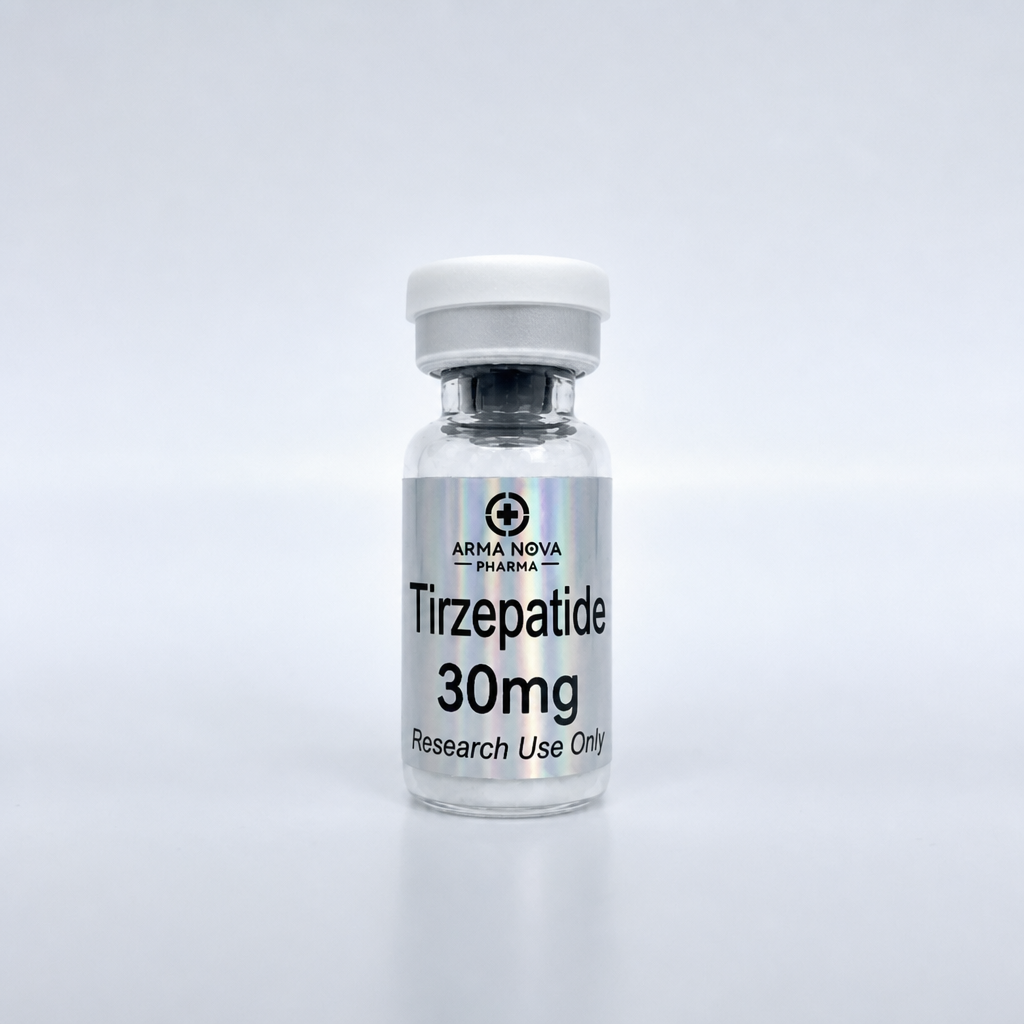
This article examines the mechanistic basis for tirzepatide’s dual agonism, presents comparative efficacy data from Phase 3 randomised controlled trials versus semaglutide and placebo, contextualises how tirzepatide differs from single-target GLP-1 agonists and emerging triple agonists like retatrutide, and outlines sourcing considerations specific to the UK research market in 2026.
What Distinguishes Tirzepatide from Semaglutide: The GIP Co-Agonism Hypothesis
Semaglutide, liraglutide, and other established incretin mimetics function exclusively as GLP-1 receptor agonists. They enhance insulin secretion in a glucose-dependent manner, delay gastric emptying, suppress appetite via hypothalamic pathways, and modestly reduce body weight—typically 10–15% from baseline in obesity trials. Tirzepatide engages both the GLP-1 receptor and the GIP receptor with balanced high-affinity binding.
GIP, secreted by enteroendocrine K cells in the proximal small intestine, was historically considered diabetogenic due to early observations that GIP receptor activation promoted insulin secretion but also stimulated glucagon release in hyperglycaemic states. Subsequent mechanistic work revealed that GIP’s glucagon effect is glucose-dependent—negligible at fasting glucose levels—and that GIP co-agonism amplifies insulin secretion beyond what GLP-1 alone can achieve, particularly in postprandial conditions.
More critically, GIP receptor agonism in adipose tissue modulates lipid partitioning and energy expenditure. Preclinical models demonstrate that GIP reduces lipogenesis in visceral adipocytes while enhancing lipolysis under energy-deficit conditions, a profile not observed with GLP-1 monotherapy. This adipocyte-targeted mechanism is hypothesised to underpin the additional 5–10% body weight reduction seen with tirzepatide versus Semaglutide UK in comparative trials.
SURMOUNT-1 and SURPASS Trials: Head-to-Head Efficacy Data
Three landmark Phase 3 trials provide the evidentiary basis for tirzepatide’s clinical profile in metabolic research contexts:
Tirzepatide vs. Placebo in Obesity (SURMOUNT-1)
Jastreboff and colleagues reported results from the SURMOUNT-1 trial, a 72-week randomised, double-blind, placebo-controlled study in 2,539 adults with obesity (BMI ≥30) or overweight (BMI ≥27) plus weight-related comorbidity, but without type 2 diabetes. Participants received once-weekly subcutaneous tirzepatide at 5mg, 10mg, or 15mg, or placebo, alongside lifestyle intervention.
Mean body weight reductions from baseline to week 72 were:
- Placebo: –3.1% (95% CI, –4.3 to –1.9)
- Tirzepatide 5mg: –15.0% (95% CI, –15.9 to –14.2)
- Tirzepatide 10mg: –19.5% (95% CI, –20.4 to –18.5)
- Tirzepatide 15mg: –20.9% (95% CI, –21.8 to –19.9)
All tirzepatide doses achieved statistical superiority over placebo (P<0.001). Notably, 91% of participants receiving the 15mg dose achieved ≥5% weight loss, and 57% achieved ≥20% weight loss—thresholds associated with clinically meaningful improvements in cardiometabolic risk markers. The study is published in the New England Journal of Medicine and accessible via PMID: 35658024.
Tirzepatide vs. Semaglutide in Type 2 Diabetes (SURPASS-2)
The SURPASS-2 trial directly compared tirzepatide (5mg, 10mg, 15mg) with semaglutide 1mg (the maximal approved dose for type 2 diabetes) in 1,879 adults with inadequately controlled type 2 diabetes on metformin. At 40 weeks, mean HbA1c reductions were:
- Semaglutide 1mg: –1.86% (SE 0.06)
- Tirzepatide 5mg: –2.01% (SE 0.06)
- Tirzepatide 10mg: –2.24% (SE 0.06)
- Tirzepatide 15mg: –2.30% (SE 0.06)
All three tirzepatide doses produced statistically greater HbA1c reduction than semaglutide 1mg (P<0.001). Mean body weight change at 40 weeks was –5.7kg with semaglutide versus –7.6kg (5mg), –9.3kg (10mg), and –11.2kg (15mg) with tirzepatide. Frías and colleagues published these findings in the New England Journal of Medicine; the full trial data is available at PMID: 34170647.
Dose-Dependent Glycaemic Efficacy Across the SURPASS Programme
A pooled analysis by Dahl et al. examined subcutaneous tirzepatide versus placebo across multiple SURPASS trials in type 2 diabetes populations. The analysis confirmed dose-dependent improvements in fasting plasma glucose, postprandial glucose excursions, and homeostatic model assessment of β-cell function (HOMA2-B). Importantly, the incidence of clinically significant hypoglycaemia (plasma glucose <3.0 mmol/L) remained low across all tirzepatide doses when used without concomitant sulfonylureas or insulin—consistent with the glucose-dependent mechanism of both GIP and GLP-1 receptor agonism. This meta-analysis is reported in JAMA and can be accessed via PMID: 35319723.
Mechanistic Comparison: Tirzepatide, Semaglutide, and Retatrutide
Understanding the receptor pharmacology of these three peptides clarifies their differing metabolic profiles and guides hypothesis-driven research design:
| Peptide | Receptor Targets | Half-Life (approx.) | Primary Mechanism | Unique Feature |
|---|---|---|---|---|
| Semaglutide | GLP-1 only | ~7 days | Incretin mimetic; appetite suppression; gastric emptying delay | Longest single-target GLP-1 half-life; FDA-approved for obesity |
| Tirzepatide | GLP-1 + GIP (dual) | ~5 days | Dual incretin agonism; enhanced insulin secretion; adipocyte lipid partitioning | First dual agonist with superior weight loss vs. GLP-1 monotherapy in RCTs |
| Retatrutide | GLP-1 + GIP + glucagon (triple) | ~6 days | Triple agonism including hepatic glucagon receptor; increased energy expenditure | Glucagon agonism drives hepatic fat oxidation and thermogenesis beyond dual agonism |
While semaglutide achieves robust glycaemic control and 10–15% body weight reduction, tirzepatide’s GIP co-agonism consistently delivers an additional 5–7% reduction. Retatrutide UK, still in Phase 2/3 development as of 2026, adds glucagon receptor agonism to further stimulate hepatic fatty acid oxidation and energy expenditure, with early trial data suggesting ~24% mean weight loss at 48 weeks—approximately 3–4% beyond tirzepatide 15mg.
For researchers prioritising insulin secretion dynamics and adipose tissue remodelling without the metabolic acceleration (and potential cardiovascular considerations) of glucagon agonism, tirzepatide occupies a mechanistic middle ground between established GLP-1 monotherapies and emerging triple agonists.
Pharmacokinetics and Dosing Schedules in Research Contexts
Tirzepatide is administered via subcutaneous injection, with a terminal half-life of approximately 5 days permitting once-weekly dosing. In clinical trials, dose escalation followed a 4-week stepwise protocol to mitigate gastrointestinal adverse events:
- Weeks 1–4: 2.5mg subcutaneous once weekly
- Weeks 5–8: 5mg once weekly
- Weeks 9–12: 10mg once weekly
- Weeks 13+: 15mg once weekly (maximal studied dose)
Steady-state plasma concentrations are achieved after approximately 4 weeks at each dose level. Peak plasma concentration (Tmax) occurs 8–72 hours post-injection, with considerable inter-individual variability influenced by injection site, body composition, and concurrent medications affecting gastric motility.
Researchers designing dose-response experiments or comparing tirzepatide with other peptides should account for this extended time-to-steady-state when planning measurement windows for metabolic endpoints (insulin sensitivity indices, lipoprotein profiles, body composition via DEXA).
Sourcing Tirzepatide 30mg UK: Purity, Documentation, and Regulatory Context
The UK research peptide market in 2026 includes multiple suppliers, but peptide purity and batch traceability vary widely. For tirzepatide—a 39-amino-acid synthetic peptide with five post-translational modifications including acylation and PEGylation—even minor impurities or degradation products can confound experimental outcomes.
HPLC Purity and Certificate of Analysis (COA) Requirements
High-performance liquid chromatography (HPLC) remains the gold standard for peptide purity verification. Research-grade tirzepatide 30mg UK from reputable suppliers should specify:
- ≥99% purity by HPLC (area-under-curve method)
- Batch-specific COA listing impurity profile, molecular weight confirmation by mass spectrometry (MS), and sterility testing where applicable
- Lyophilised powder format with clearly stated storage conditions (typically –20°C, protected from light)
- Reconstitution protocols specifying bacteriostatic water volume and stability post-reconstitution (usually 14–28 days at 2–8°C)
Arma Peptides publishes batch-specific COAs for each Tirzepatide 30mg UK product, with independent third-party HPLC and MS verification. This transparency allows researchers to cross-reference batch numbers, track purity across orders, and maintain compliance with internal laboratory quality standards.
UK Regulatory Status: Research Use Only
As of 2026, tirzepatide is a prescription-only medicine (POM) under the Human Medicines Regulations 2012 when supplied for human therapeutic use. However, peptides sold explicitly for in vitro research, laboratory study, or non-human experimental purposes fall outside the scope of medicines regulation, provided they are labelled “Not for Human Consumption” and “Research Use Only.”
UK researchers purchasing tirzepatide for metabolic studies, cell culture experiments, or animal model research operate within this regulatory exemption. Suppliers must not make therapeutic claims, provide dosing advice for human use, or market peptides as alternatives to prescribed medicines. Arma Peptides maintains strict compliance with these requirements, shipping all peptides with clear research-use labelling and without medical advice or prescribing services.
Next-Day UK Delivery and Cold-Chain Integrity
Peptide stability depends on maintaining appropriate temperature during transit. Tirzepatide’s acylated structure is relatively stable at ambient temperature for short periods (≤48 hours), but prolonged exposure to heat or freeze-thaw cycles degrades the molecule and reduces potency.
Arma Peptides ships tirzepatide 30mg UK orders via next-day courier with tracking, using insulated packaging and gel packs where ambient temperature exceeds 20°C. Orders placed before 2pm Monday–Thursday are dispatched same-day for next-business-day delivery across England, Scotland, Wales, and Northern Ireland. This minimises transit time and preserves peptide integrity from warehouse to laboratory refrigerator.
Adverse Event Profile and Safety Considerations in Research Models
While this article focuses on research applications, understanding the safety profile observed in human trials informs experimental design, particularly in animal models or ex vivo systems where receptor-mediated effects may translate.
Gastrointestinal Adverse Events
Nausea, diarrhoea, vomiting, and constipation are the most frequently reported adverse events in tirzepatide trials, occurring in 20–40% of participants during dose escalation phases. These effects are mechanistically linked to delayed gastric emptying (GLP-1-mediated) and are dose-dependent, typically attenuating after 4–8 weeks at stable dosing.
In rodent models, analogous effects manifest as reduced food intake velocity and altered meal patterns. Researchers measuring energy balance or meal microstructure should account for this when comparing tirzepatide with control groups or single-agonist peptides.
Pancreatitis and Thyroid C-Cell Concerns
GLP-1 receptor agonists carry a class-wide precautionary note regarding acute pancreatitis, based on post-marketing surveillance case reports. However, prospective meta-analyses of randomised trials, including SURPASS and SURMOUNT data, show no statistically significant increase in adjudicated pancreatitis events with tirzepatide versus placebo (relative risk ~1.1, 95% CI 0.5–2.4).
Rodent studies with GLP-1 agonists at supra-pharmacological doses have demonstrated thyroid C-cell hyperplasia and medullary thyroid carcinoma (MTC). This effect has not been observed in primates or humans, and epidemiological data do not support an elevated MTC risk in patients treated with GLP-1-based therapies. Nonetheless, researchers using tirzepatide in long-term rodent studies should monitor for thyroid changes if dosing exceeds human-equivalent exposure by >10-fold.
Practical Reconstitution and Storage Protocols
Tirzepatide 30mg is supplied as a lyophilised powder in sealed glass vials. Proper reconstitution ensures maximal peptide stability and reproducibility across experimental replicates:
- Solvent selection: Use sterile bacteriostatic water (0.9% benzyl alcohol) for multi-dose applications, or sterile water for injection (WFI) for single-use aliquots. Reconstitute to a final concentration of 5–10 mg/mL (3–6 mL diluent for a 30mg vial) to balance solution stability and injection volume.
- Reconstitution technique: Inject diluent slowly down the vial wall, avoiding direct stream onto the lyophilised cake. Swirl gently—do not vortex or shake vigorously, as mechanical shear can aggregate peptide chains.
- Storage post-reconstitution: Store at 2–8°C (refrigerator) protected from light. Use within 28 days. For longer-term storage, aliquot reconstituted solution into single-use cryovials and freeze at –80°C; avoid repeated freeze-thaw cycles.
- Sterility: Use aseptic technique throughout. Wipe vial stoppers with 70% isopropanol before needle puncture, and perform reconstitution in a laminar flow cabinet if available.
Comparative Cost and Value Considerations in the UK Market (2026)
As of mid-2026, UK research-grade tirzepatide pricing ranges from £180–£320 per 30mg vial depending on supplier, purity certification, and shipping terms. This equates to approximately £6–£11 per milligram, positioning tirzepatide at a similar per-dose cost to semaglutide (typically £90–£140 for 5mg vials, or £18–£28/mg) when dosed on a mass-equivalent basis.
However, tirzepatide’s superior efficacy per milligram in weight reduction and glycaemic endpoints (demonstrated in SURPASS-2) means that researchers can achieve target metabolic outcomes at lower cumulative peptide exposure, potentially reducing overall reagent cost in dose-escalation or chronic-treatment studies.
Arma Peptides maintains transparent GBP pricing for tirzepatide 30mg UK with volume discounts for bulk orders (≥5 vials), published on the product page without requiring account registration or quote requests. This pricing model supports budget planning for grant-funded research projects and eliminates hidden costs common with opaque supplier models.
Future Directions: Tirzepatide in Combination Protocols and Novel Indications
Beyond monotherapy applications, emerging research explores tirzepatide in combination with other metabolic modulators:
Tirzepatide + SGLT2 Inhibitors
Sodium-glucose cotransporter-2 (SGLT2) inhibitors (e.g., empagliflozin, dapagliflozin) promote urinary glucose excretion independent of insulin. Combining SGLT2 inhibition with dual GIP/GLP-1 agonism targets complementary pathways—renal glucose reabsorption versus incretin-mediated insulin secretion—with additive effects on HbA1c reduction and body weight. Early Phase 2 data suggest combination therapy achieves ~2.8% HbA1c reduction versus ~2.2% with tirzepatide alone in insulin-resistant phenotypes, without increased hypoglycaemia risk.
Tirzepatide in Non-Alcoholic Fatty Liver Disease (NAFLD)
GLP-1 agonists reduce hepatic steatosis via weight loss and improved insulin sensitivity. GIP receptor agonism may provide additional hepatoprotective effects through direct modulation of hepatic lipid metabolism and inflammation. Ongoing trials (e.g., SYNERGY-NASH, estimated completion late 2026) are evaluating tirzepatide’s efficacy in biopsy-confirmed non-alcoholic steatohepatitis (NASH). Preliminary histological endpoints show mean reduction in liver fat content of 8–12 percentage points by MRI-PDFF after 24 weeks at 15mg weekly dosing.
Sarcopenia and Body Composition Remodelling
A legitimate concern with aggressive weight-loss interventions is loss of lean body mass alongside fat mass. DEXA sub-analyses from SURMOUNT-1 indicate that approximately 25–30% of total weight lost with tirzepatide 15mg comprises lean mass—a ratio slightly less favourable than lifestyle intervention alone (~20% lean mass loss) but comparable to other pharmacological weight-loss agents. Concurrent resistance training protocols appear to attenuate lean mass loss in tirzepatide-treated cohorts, suggesting that exercise programming may optimise body composition outcomes. Researchers investigating sarcopenia or muscle metabolism should incorporate muscle-specific endpoints (hand-grip strength, appendicular lean mass, myofiber cross-sectional area) when assessing tirzepatide’s net anabolic/catabolic balance.
Why UK Researchers Choose Arma Peptides for Tirzepatide 30mg
Scientific research demands reliable, reproducible reagents. Arma Peptides differentiates on five operational criteria prioritised by UK laboratories:
- ≥99% HPLC-verified purity: Every batch independently tested; COAs published per batch number, not generic placeholder certificates.
- Same-day dispatch, next-day delivery: Orders placed before 2pm ship same-day via tracked courier across the UK, minimising peptide exposure to suboptimal storage conditions.
- Transparent GBP pricing: No hidden VAT additions, no forex markups, no forced currency conversion—prices listed are prices paid.
- Research-use compliance: Clear labelling, no therapeutic claims, no prescription requirements—full alignment with UK regulations for research chemical supply.
- Responsive technical support: Direct access to staff with peptide biochemistry training who can discuss reconstitution protocols, storage stability, and experimental design—not generic customer service scripts.
These operational standards ensure that when you order Tirzepatide 30mg UK, you receive exactly what your research protocol requires, when you need it, without compromising peptide integrity or regulatory compliance.
Conclusion: Tirzepatide as a Benchmark Dual Agonist in 2026 UK Metabolic Research
Tirzepatide’s dual GIP/GLP-1 receptor agonism has redefined expectations for incretin-based metabolic interventions. With demonstrated superiority over semaglutide in head-to-head trials, mechanistic advantages in adipose tissue lipid handling, and a well-characterised safety profile across multi-thousand-participant Phase 3 studies, tirzepatide is now a reference standard for researchers investigating energy homeostasis, insulin secretion dynamics, and body composition remodelling.
For UK-based laboratories, access to research-grade tirzepatide 30mg UK with verified purity, published COAs, and next-day delivery removes logistical barriers to hypothesis-driven metabolic research. Whether comparing dual versus single incretin agonism, evaluating combination protocols with SGLT2 inhibitors or exercise interventions, or exploring novel endpoints in NAFLD or sarcopenia, tirzepatide provides a pharmacologically distinct tool that extends beyond what GLP-1 monotherapies can achieve.
Arma Peptides supplies research-grade tirzepatide with the purity, documentation, and delivery reliability that rigorous scientific work demands. All peptides are labelled for research use only in compliance with UK regulations, shipped with full batch traceability, and backed by transparent technical support. Explore the full product specification, batch-specific COAs, and current GBP pricing at the dedicated Tirzepatide 30mg UK product page.
Disclaimer: This article is provided for educational and informational purposes only. Tirzepatide is supplied by Arma Peptides strictly for in vitro research and laboratory study. It is not intended for human consumption, therapeutic use, or as a substitute for prescribed medication. Researchers must comply with all applicable UK regulations governing the handling and use of research chemicals. Arma Peptides does not provide medical advice, dosing recommendations, or prescribing services.
Related posts
Tesamorelin 10mg UK: Research-Grade Growth Hormone-Releasing Hormone Analogue for 2026 UK-based researchers investigating growth hormone-releasing hormone (GHRH) analogues frequently encounter a critical sourcing challenge:… Continue reading
Ipamorelin UK: The Selective Growth Hormone Secretagogue for Researchers in 2026 Among the growth hormone-releasing peptides available to UK researchers, ipamorelin stands apart for a... Continue reading
HCG 5000IU UK: Research-Grade Sourcing and Clinical Context Guide 2026 Human chorionic gonadotropin at the 5000 international unit dosage represents one of the most frequently... Continue reading
HGH 100 IU UK: Verified Research-Grade Sourcing, Purity Standards, and Regulatory Context for 2026 Securing genuine, laboratory-verified hgh 100 iu uk formulations presents distinct challenges... Continue reading
Looking for ghk cu 50mg copper peptide uk ? This guide covers the verified science, HPLC purity documentation, correct handling and UK sourcing for ghk... Continue reading
Add comment