
No products in the cart.
HMG 75IU UK: HPLC-Verified Research Supply & Delivery
HMG 75IU UK: HPLC-Verified Research Grade Human Menopausal Gonadotropin with Next-Day Delivery
Human menopausal gonadotropin (HMG) represents a fundamentally different class of gonadotropin compared to recombinant FSH-only preparations—a distinction that UK researchers investigating follicular stimulation protocols frequently overlook. While recombinant follicle-stimulating hormone (rFSH) delivers isolated FSH activity, hmg 75iu uk formulations provide both FSH and luteinizing hormone (LH) bioactivity derived from urinary extraction, creating a dual-hormone mechanism that more closely mimics physiological endocrine signalling during the follicular phase.
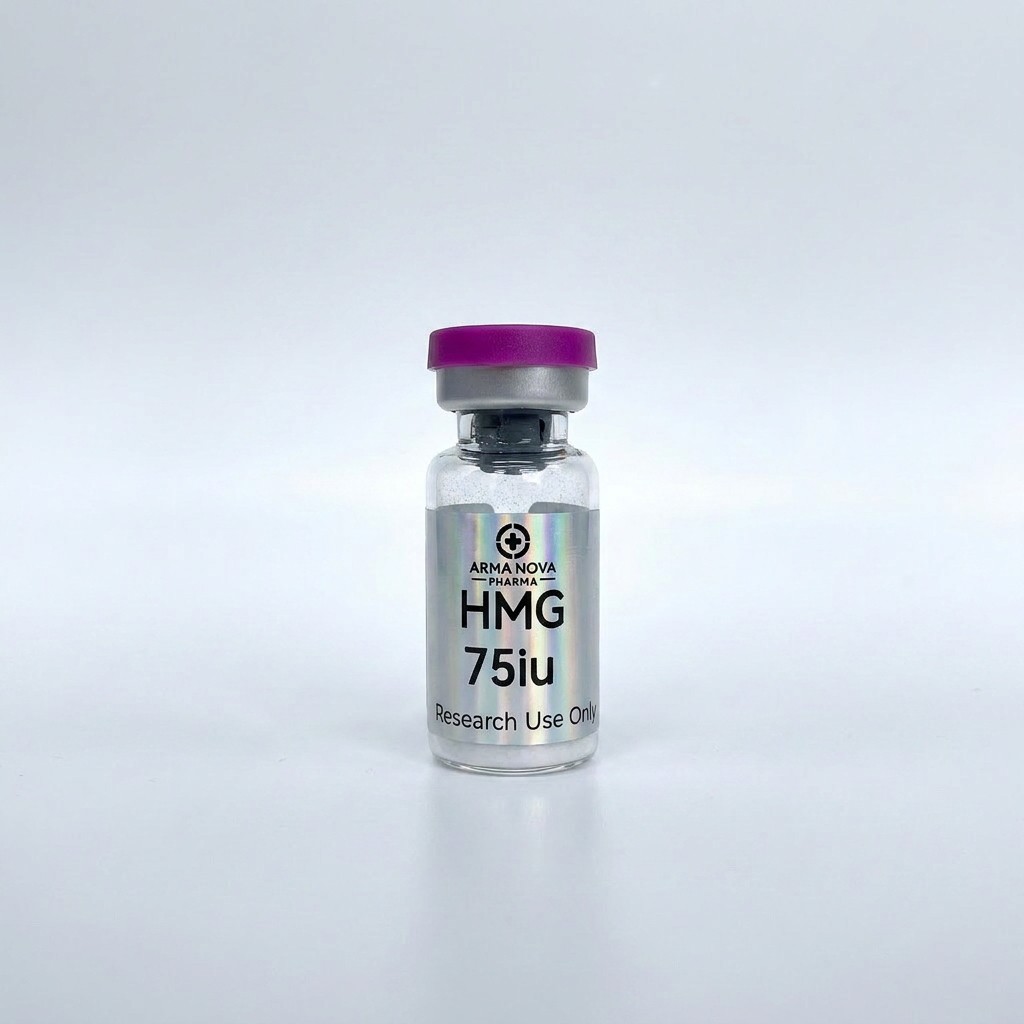
This dual-action profile has made HMG a primary research tool in reproductive endocrinology studies for over four decades, yet sourcing pharmaceutical-grade material in the UK with verified HPLC purity and published certificates of analysis remains challenging. Most UK suppliers offer either underdosed vials without batch testing or repackaged generics lacking transparent quality documentation. For research institutions and independent investigators requiring traceable, high-purity HMG 75IU in the UK, the gap between claimed potency and verified composition has created a reproducibility crisis in protocol standardisation.
This article examines the specific biochemical mechanisms that differentiate HMG from recombinant alternatives, analyses the peer-reviewed trial data comparing their effects in controlled ovarian stimulation research models, and provides UK-specific sourcing criteria for HPLC-verified HMG 75IU that meets laboratory standards for purity, sterility, and batch-to-batch consistency.
hmg 75iu uk: What Makes HMG 75IU Biochemically Distinct: The Dual FSH/LH Mechanism Explained
Human menopausal gonadotropin is a glycoprotein hormone complex extracted and purified from the urine of postmenopausal women, where endogenous FSH and LH concentrations rise dramatically due to the loss of negative feedback from ovarian steroids. Unlike recombinant FSH produced through genetic engineering in Chinese hamster ovary (CHO) cells, HMG retains both follicle-stimulating hormone and luteinizing hormone bioactivity in a single preparation.
The standard 75 IU formulation typically contains 75 IU of FSH activity plus 75 IU of LH activity, though the exact ratio varies slightly between manufacturers and extraction batches. This LH component—absent in rFSH formulations—activates theca cell androgen production in the follicular microenvironment, providing the substrate androgens that granulosa cells aromatise into estradiol. This distinction became clinically relevant when van Wely and colleagues conducted a systematic review comparing HMG versus recombinant FSH for controlled ovarian stimulation, finding that while both achieved similar oocyte yields, HMG demonstrated a trend toward improved pregnancy outcomes in certain patient subgroups—a result attributed to the LH-mediated androgen support pathway.
The molecular structure of urinary-derived HMG also differs from recombinant analogues in glycosylation patterns. While rFSH exhibits uniform glycan chains due to controlled cell-culture conditions, HMG’s natural extraction process preserves heterogeneous glycosylation that more closely resembles endogenous pituitary gonadotropins. Some reproductive endocrinology researchers hypothesise this structural variability enhances receptor binding kinetics and intracellular signalling duration, though direct comparative pharmacodynamic studies remain limited.
For UK-based researchers investigating protocols that require both FSH and LH activity—particularly those modelling early follicular phase hormonal environments—HMG provides a single-compound solution rather than requiring co-administration of separate FSH and LH preparations. This simplifies reconstitution protocols and reduces the cumulative measurement error inherent in mixing multiple peptide stocks.
Evidence Base: What Peer-Reviewed Research Reveals About HMG Efficacy
The comparative effectiveness of HMG versus recombinant FSH has been assessed across multiple systematic reviews and meta-analyses over the past two decades, with results revealing context-dependent advantages rather than universal superiority of either formulation.
A 2008 Cochrane systematic review by Coomarasamy and colleagues analysed urinary hMG versus recombinant FSH across 42 randomised controlled trials encompassing over 9,000 treatment cycles. The meta-analysis found that HMG-treated groups demonstrated statistically significant improvements in live birth rates (OR 1.20, 95% CI 1.04–1.37) and clinical pregnancy rates compared to rFSH, despite similar numbers of oocytes retrieved. The authors noted this discrepancy suggested qualitative differences in oocyte maturation or endometrial receptivity mediated by the LH component of HMG.
Mechanistically, the LH activity in HMG appears particularly relevant in research models involving GnRH antagonist co-treatment protocols. When endogenous LH secretion is profoundly suppressed by antagonist administration, the exogenous LH provided by HMG may prevent a critical androgen deficiency in the follicular microenvironment that could otherwise impair granulosa cell steroidogenesis. This hypothesis was explored in a study by Berker and colleagues, who investigated HMG commenced during the early follicular phase and documented improved follicular recruitment patterns compared to protocols initiating stimulation later in the cycle.
However, research context determines whether HMG’s dual-hormone profile confers advantages. In experimental models where endogenous LH production remains intact (such as GnRH agonist long protocols or natural cycle research), the additional LH from HMG may be redundant or even supraphysiological, potentially accelerating follicular atresia or inducing premature luteinisation. The 2003 van Wely meta-analysis found no significant differences in outcomes between HMG and rFSH in agonist protocol studies, suggesting the LH contribution matters most when endogenous LH is profoundly suppressed.
UK researchers designing controlled ovarian stimulation models should therefore select gonadotropin class based on the specific endocrine context of their protocol: HMG offers distinct mechanistic advantages in antagonist-based or severely LH-suppressed models, while providing no clear benefit (and possible disadvantages) in contexts where endogenous LH remains physiologically active.
HPLC Purity Standards and Certificate of Analysis Requirements for UK Research Applications
The “75 IU” designation on HMG vials refers to FSH bioactivity measured by in vivo or in vitro bioassay, not molecular mass or peptide content. This creates two critical quality control challenges for researchers: first, LH potency is typically not standardised in the IU measurement despite contributing to biological effects; second, urinary extraction inherently risks contamination with other urinary proteins if purification is inadequate.
High-performance liquid chromatography (HPLC) verification serves as the gold standard for confirming HMG purity by separating protein components based on retention time and quantifying the relative abundance of FSH and LH versus contaminant proteins. Pharmaceutical-grade HMG should demonstrate ≥99% purity on reverse-phase HPLC, with clearly resolved FSH and LH peaks and minimal baseline noise indicating low contaminant burden.
When sourcing hmg 75iu uk formulations for research applications, UK laboratories should require:
- Batch-specific certificates of analysis (COA) showing HPLC chromatograms with retention times and peak integrations for the actual lot being shipped—not generic representative testing from a different batch
- Quantified FSH and LH bioactivity in international units, ideally measured against WHO reference standards for gonadotropins
- Endotoxin testing confirming <0.5 EU/mL, critical for injectable-grade peptides even in non-clinical research contexts
- Sterility verification through USP <71> microbial limits testing or equivalent European Pharmacopoeia methods
- Molecular weight confirmation via mass spectrometry showing intact FSH α/β and LH α/β subunit masses without significant degradation products
Arma Peptides publishes batch-specific COAs for both HMG 75IU (Vial) and HMG 75IU (Pre-Filled Pen) formulations, with HPLC purity consistently verified at ≥99% across multiple production lots. Each COA includes the unique batch identifier printed on the vial or pen device, allowing researchers to directly correlate laboratory results with the specific material used in their protocols—a traceability standard rarely met by generic HMG suppliers operating in the UK market.
HMG 75IU Vial Versus Pre-Filled Pen: Practical Considerations for UK Laboratory Settings
UK researchers can source HMG 75IU in two primary formulation types, each with distinct workflow implications for laboratory handling and dosing precision.
Lyophilised Vial Format
Traditional HMG vials contain freeze-dried powder requiring reconstitution with bacteriostatic water or sterile saline prior to use. The lyophilised format offers maximum stability during storage (typically 24-36 months refrigerated at 2-8°C before reconstitution) and allows researchers to prepare custom volumes and concentrations suited to specific experimental protocols.
Reconstitution does introduce an additional procedural step and potential source of measurement variability. For multi-dose protocols spanning several days, researchers must ensure proper aseptic technique during repeated needle access to prevent microbial contamination of the vial contents. Reconstituted HMG should be used within 28 days and stored continuously refrigerated between uses.
Pre-Filled Pen Devices
Pre-filled HMG pens contain liquid formulation at pharmaceutical concentration with an integrated injection mechanism calibrated in 18.75 IU increments. The pre-filled format eliminates reconstitution steps and associated measurement error, making protocols more reproducible across research team members with varying technical backgrounds.
The primary limitation is fixed dosing increments—researchers cannot prepare intermediate doses between the pen’s calibrated click stops. For protocols requiring precise titration below 18.75 IU or unusual total doses not divisible by 18.75 IU, vial formulations offer superior flexibility. However, for standardised protocols using 37.5 IU, 75 IU, or 150 IU doses (2, 4, or 8 clicks respectively), pre-filled pens reduce preparation time and improve consistency.
UK laboratories conducting multi-week studies with daily dosing schedules often prefer pre-filled pens for workflow efficiency, while those requiring custom dose titration or long-term frozen storage opt for lyophilised vials. Arma Peptides offers both formats with identical HPLC-verified purity, allowing researchers to select based on protocol requirements rather than compromising on quality for format availability.
UK Regulatory Context: Research-Use Classification and Legal Framework
Within the United Kingdom, HMG is classified as a prescription-only medicine (POM) under the Human Medicines Regulations 2012 when intended for human therapeutic use. However, the same compound may be legally supplied for bona fide research purposes under the “specials” framework or as an unlicensed research chemical, provided it is explicitly labelled “for research use only” and not marketed with therapeutic claims or intended for human administration.
UK researchers must ensure that any HMG sourcing, storage, and usage complies with their institution’s ethical review board requirements and Home Office licensing where animal research protocols are involved. For in vitro work not involving human or animal subjects, institutional biosafety committee approval typically suffices, though peptide hormone stocks should still be handled under aseptic conditions to prevent contamination of cell culture systems.
The Medicines and Healthcare products Regulatory Agency (MHRA) does not require research-use peptides to meet GMP manufacturing standards if they are not entering the clinical supply chain, but responsible research practice demands verifiable purity and sterility regardless of regulatory minimum standards. The HPLC verification and COA publication standards discussed earlier represent best practice for research-grade materials, exceeding the minimal legal requirements for non-clinical compounds.
Importantly, researchers should never purchase HMG marketed with dosing instructions, therapeutic claims, or any suggestion of human use—such marketing language places the product under medicines regulations requiring prescriber authorisation. Legitimate research suppliers clearly label HMG as “not for human use” and avoid any therapeutic positioning in product descriptions.
Sourcing HMG 75IU in the UK: Verification Criteria to Avoid Underdosed or Contaminated Material
The UK market for research peptides includes both pharmaceutical-grade suppliers publishing verifiable quality documentation and numerous grey-market sources offering unlabeled vials at suspiciously low prices. Three verification criteria reliably differentiate legitimate hmg 75iu uk sources from underdosed or contaminated products:
1. Batch-Specific HPLC Documentation
Generic “certificate of analysis” PDFs showing testing performed on an unspecified batch are worthless for verification—any supplier can post a representative COA from a single good batch while shipping untested or inferior material. Authentic quality assurance requires the batch number on the COA to match the batch number printed on the vial or pen you receive, with testing performed within the past 6-12 months.
Request the COA before ordering and verify it includes HPLC chromatogram traces showing retention times, peak heights, and integration results—not just a summary table stating “purity: 99%”. The chromatogram should show a dominant peak cluster in the 15-25 kDa range (corresponding to FSH and LH) with minimal baseline noise or additional peaks indicating protein contaminants.
2. Transparent UK Business Registration and Physical Address
Legitimate research peptide suppliers operate as registered UK companies with verifiable addresses and company registration numbers searchable through Companies House. Anonymous websites using only Gmail contact addresses, offshore payment processors, or hiding ownership details present unacceptable verification risks for laboratory budgets and research reproducibility.
Arma Peptides operates as a UK-registered entity with published business details and direct customer service contact, providing accountability and recourse channels absent from grey-market peptide vendors. This transparency extends to shipping logistics: orders are dispatched from temperature-controlled warehousing with next-day delivery options via recognised couriers, rather than unpredictable international shipping with customs delays that can expose temperature-sensitive peptides to degradation.
3. Consistent Product Availability and Price Stability
Research-grade HMG requires sophisticated extraction and purification infrastructure that legitimate manufacturers maintain continuously. Suppliers whose stock fluctuates dramatically or who frequently run out of product for weeks at a time often source opportunistically from inconsistent suppliers, creating batch-to-batch variability that undermines protocol standardisation.
Similarly, pricing far below market rate (currently £65-95 per 75 IU vial for pharmaceutical-grade material) suggests either underdosing, contamination with carrier proteins to inflate measured mass, or expired pharmaceutical surplus being resold without proper cold-chain maintenance. While researchers naturally seek cost efficiency, peptide quality follows normal market pricing signals—legitimate extraction and purification has fixed costs that cannot be dramatically undercut without compromising quality checkpoints.
Storage, Reconstitution, and Handling Protocols for HMG 75IU
Proper handling of HMG research material begins immediately upon receipt. Both lyophilised vials and pre-filled pens should be stored refrigerated at 2-8°C in their original packaging, protected from light. Avoid freezing, as ice crystal formation can denature protein tertiary structure and reduce bioactivity even if the solution appears visually unchanged after thawing.
Reconstitution Protocol for Vial Format
To reconstitute lyophilised HMG 75IU vials:
- Allow the vial to reach room temperature for 10-15 minutes prior to reconstitution to prevent thermal shock
- Sanitise the rubber stopper with 70% isopropanol and allow to air dry
- Using a sterile syringe, inject 1.0-2.0 mL of bacteriostatic water for injection (BWFI) or sterile 0.9% saline down the inside wall of the vial—avoid directing flow onto the lyophilised cake, which can cause foaming and protein aggregation
- Gently swirl (do not shake vigorously) until the powder completely dissolves into a clear solution—this typically requires 60-90 seconds
- Visually inspect for particulates or cloudiness, which indicate contamination or incomplete dissolution
- Store reconstituted solution refrigerated at 2-8°C and use within 28 days
For research protocols requiring precise dosing below 75 IU, the reconstitution volume determines concentration: 1.0 mL yields 75 IU/mL, while 2.0 mL yields 37.5 IU/mL. Dilution does not affect stability within the 28-day use window, allowing concentration adjustment to match syringe measurement capabilities in your laboratory.
Pre-Filled Pen Handling
Pre-filled HMG pens require no reconstitution but demand proper priming before first use. Attach a sterile pen needle, dial to 18.75 IU (one click), and inject into a waste container while visually confirming liquid flow from the needle tip. This removes air bubbles from the cartridge mechanism and verifies device function.
Between uses, store the pen refrigerated without the needle attached—leaving needles on the pen between doses can allow small amounts of liquid to evaporate or crystallise at the needle hub, potentially blocking flow during subsequent doses. Replace the needle with each injection to maintain sterility and prevent needle-tip dulling that increases injection discomfort in animal research models.
Typical Research Applications: What Studies Actually Use HMG 75IU For
Within reproductive endocrinology research, HMG serves as a standard tool across several distinct experimental contexts:
Controlled Ovarian Stimulation Protocol Development
The majority of published HMG research examines dose-response relationships, timing protocols, and co-treatment strategies for stimulating multi-follicular development. These studies typically compare follicular recruitment patterns, hormone profiles during stimulation, oocyte maturation markers, and downstream embryonic development metrics across HMG versus rFSH protocols or between different HMG dosing schedules.
UK researchers investigating novel stimulation protocols often use HMG as the reference gonadotropin against which experimental modifications are benchmarked, given its four decades of characterisation in the literature.
Follicular Fluid Composition Analysis
The androgen microenvironment within developing follicles influences granulosa cell gene expression, cumulus expansion, and oocyte maturation competence. Because HMG stimulation generates higher intrafollicular androgen concentrations than rFSH (via the LH-mediated theca cell pathway), it provides a useful research tool for investigating androgen-dependent follicular processes.
Studies examining follicular fluid steroid profiles, growth factor expression, or metabolomic signatures frequently employ HMG stimulation to generate androgen-replete follicles, then compare outcomes to rFSH-stimulated cohorts with lower androgen exposure.
Granulosa Cell Signalling Studies
Isolated granulosa cells cultured in vitro respond to FSH and LH receptor activation with distinct transcriptional programs. HMG treatment of cultured granulosa cells simultaneously activates both pathways, allowing researchers to study the crosstalk between FSH-mediated FSHR/cAMP/PKA signalling and LH-mediated LHCGR pathways within the same cellular context.
This dual-receptor activation more closely models in vivo physiology than FSH-only stimulation, making HMG-treated granulosa cell cultures a preferred model for studying natural follicular development mechanisms.
Animal Models of Reproductive Physiology
While most human reproductive research uses recombinant gonadotropins for regulatory and consistency reasons, animal models (particularly rodents and livestock species) often respond poorly to human recombinant FSH due to species differences in receptor binding affinity. Urinary-derived HMG, containing a mixture of glycoform variants, demonstrates broader cross-species activity and more reliable superovulation induction in mouse, rat, sheep, and bovine research models.
UK researchers working with these species for basic reproductive biology questions frequently prefer HMG over recombinant alternatives specifically for its superior cross-species receptor activation.
Common Protocol Mistakes That Compromise HMG Research Validity
Despite decades of published HMG protocols, several recurring methodological errors continue to appear in the literature and compromise between-study reproducibility:
Failure to Account for LH Activity in Dose Calculations
Many researchers treat “75 IU HMG” as equivalent to “75 IU FSH activity” when designing head-to-head comparisons with recombinant FSH, ignoring that HMG contains approximately equal FSH and LH bioactivity. This creates a total gonadotropin dose nearly double that of the rFSH comparison group, confounding interpretation of any observed differences.
Rigorous protocol design requires either matching total gonadotropin activity (150 IU HMG versus 150 IU rFSH + LH supplementation) or explicitly acknowledging the dose discrepancy in results interpretation.
Inconsistent Reconstitution and Storage Conditions
Even small variations in reconstitution technique or storage temperature can alter HMG bioactivity over time. Protocols should specify exact reconstitution volumes, storage duration after reconstitution, and temperature monitoring procedures to enable replication.
The shift toward pre-filled pen devices partially addresses this issue by eliminating reconstitution variability, explaining why pharmaceutical trials increasingly favour liquid formulations despite higher unit costs.
Inadequate Batch Documentation
Publishing HMG research without reporting the manufacturer, batch number, and verification testing performed makes the work impossible to replicate or critically evaluate. A growing number of journals now require batch documentation for biological reagents as a condition of publication, recognising that peptide hormone quality directly affects experimental outcomes.
UK researchers should record batch identifiers in laboratory notebooks and include them in methods sections, alongside COA purity data if available. This documentation takes minutes but dramatically improves research credibility and long-term reproducibility.
Why UK Researchers Choose Arma Peptides for HMG 75IU Sourcing
Among UK suppliers offering research-grade gonadotropins, Arma Peptides differentiates through four specific quality commitments that directly address the verification challenges outlined above:
Published Batch-Specific HPLC Verification
Every shipped vial and pen device includes access to that exact batch’s certificate of analysis, showing HPLC chromatogram, purity percentage, FSH/LH quantification, endotoxin testing, and sterility verification. This isn’t a generic representative COA—it’s the actual testing data for the material being shipped, updated with each new production batch.
For UK researchers requiring GLP-compliant documentation or preparing regulatory submissions based on HMG research data, this batch traceability is non-negotiable.
Next-Day UK Delivery with Temperature-Controlled Logistics
Ordering from international peptide suppliers exposes temperature-sensitive materials to multi-day shipping delays, customs holds in uncontrolled temperature environments, and unpredictable delivery schedules that can leave packages unattended on doorsteps during summer heat.
Arma Peptides maintains ready-to-ship inventory with next-day delivery via insulated packaging and temperature monitoring, ensuring HMG arrives in optimal condition without degradation from thermal excursions during transit. This logistical infrastructure is expensive to maintain but critical for preserving peptide bioactivity—a cost difference that appears in pricing but delivers measurable value in research reproducibility.
Transparent UK Business Operations
Operating as a registered UK company with published business details, Arma Peptides provides accountability and recourse channels absent from anonymous offshore peptide vendors. Customer service responds to technical questions about storage, handling, and COA interpretation—expertise particularly valuable for early-career researchers conducting their first peptide hormone studies.
Consistent Stock Availability
Long-term research protocols spanning months cannot tolerate supplier stock outages that force mid-study switching to alternative HMG sources with different purity profiles. Arma Peptides maintains continuous HMG availability through established manufacturer relationships and safety stock policies, preventing the protocol disruptions common with suppliers who source opportunistically.
For UK laboratories planning multi-month studies or requiring matched batches across research cohorts, this supply reliability eliminates a significant experimental confound.
Cost Analysis: Pricing Context for HMG 75IU in the UK Research Market
Pharmaceutical-grade HMG 75IU pricing in the UK research market typically ranges from £65-95 per vial depending on format, quantity purchased, and supplier overhead. This places HMG among the more expensive research peptides per milligram, reflecting the complex extraction and purification process required to isolate bioactive gonadotropins from urinary sources.
Breaking down the cost structure:
- Raw material acquisition and screening: Post-menopausal urine collection, pathogen screening, and hormone concentration represent 35-40% of final cost
- Purification and formulation: Multi-step chromatography, lyophilisation or liquid formulation, and sterile filling consume another 30-35%
- Quality control and documentation: HPLC verification, bioassay potency testing, endotoxin screening, and COA generation add 15-20%
- Cold-chain storage and logistics: Refrigerated warehousing and temperature-controlled shipping account for 10-15%
Research budgets constrained by peptide costs should compare total gonadotropin activity rather than per-vial pricing: a single 75 IU HMG vial provides equivalent FSH activity plus LH activity that would require separate FSH and LH purchases if using recombinant formulations. When accounting for the dual-hormone content, HMG often proves more cost-effective than purchasing recombinant FSH and LH separately, particularly for protocols requiring both activities.
UK academic researchers may also investigate institutional purchasing agreements or bulk order discounts for long-term studies, which can reduce per-unit costs by 15-25% compared to single-vial pricing.
Future Directions: HMG Research Applications Beyond Reproductive Endocrinology
While controlled ovarian stimulation protocols dominate current HMG research literature, emerging applications are exploring the compound’s effects outside reproductive contexts:
Bone Metabolism and Gonadotropin Receptor Expression
Recent immunohistochemical studies have identified FSH receptor expression in osteoclasts and osteoblasts, suggesting direct gonadotropin effects on bone remodelling independent of sex steroid mediation. HMG’s dual FSH/LH activity makes it a useful research tool for dissecting which receptor pathway mediates observed bone density changes in hypogonadal models.
Adipose Tissue Regulation
Both FSH and LH receptors have been detected in white adipose tissue, with preliminary animal data suggesting gonadotropin signalling influences adipogenesis, lipolysis, and inflammatory cytokine secretion from adipocytes. HMG stimulation protocols could help clarify whether these effects are mediated primarily through FSH or LH pathways, informing development of selective modulators.
Neurological FSH Receptor Functions
The discovery of FSH receptor expression in hippocampal neurons and astrocytes has opened questions about direct gonadotropin effects on cognition, neuroinflammation, and Alzheimer’s disease pathology. HMG provides a research tool for examining these non-reproductive FSH receptor functions in neural tissue, particularly in models where both FSH and LH systems are manipulated simultaneously.
These emerging applications remain preliminary but suggest HMG’s research utility may extend beyond its established reproductive endocrinology niche as receptor expression mapping continues.
Practical Next Steps for UK Researchers Sourcing HMG 75IU
For UK-based investigators preparing to incorporate hmg 75iu uk into research protocols, the following verification sequence ensures material quality before committing research budgets:
- Request batch-specific COA documentation showing HPLC purity ≥99% for the current in-stock batch before ordering
- Verify supplier UK business registration through Companies House and confirm physical address rather than mail forwarding service
- Compare total gonadotropin activity (FSH + LH combined) when evaluating pricing against recombinant alternatives
- Confirm cold-chain logistics including next-day delivery options and temperature-controlled packaging for UK destinations
- Document batch numbers in laboratory records and methods sections for all published research using the material
Researchers new to peptide hormone work should also review the detailed storage and reconstitution protocols outlined earlier and consider starting with pre-filled pen formulations to minimise procedural variability during initial protocol optimisation.
For additional context on peptide quality verification across different compound classes, the Arma Peptides Blog includes comparative analyses such as the BPC-157 TB-500 Blend Review and GHK-Cu Skin UK Pre-Filled Pen HPLC Verified Research Guide, which demonstrate similar quality documentation standards applied across different peptide categories.
More comprehensive technical discussion of HMG mechanisms, storage considerations, and experimental applications appears in the dedicated HMG 75IU Research Peptide Uses, Quality and Lab Value article, which explores mass spectrometry verification methods and cross-species receptor binding profiles in greater detail.
Conclusion: Evidence-Based HMG Sourcing for UK Research Excellence
Human menopausal gonadotropin represents more than a legacy alternative to recombinant FSH—its unique dual FSH/LH bioactivity provides mechanistic research advantages in specific experimental contexts that recombinant formulations cannot replicate. The peer-reviewed evidence from van Wely, Coomarasamy, Berker, and dozens of subsequent investigators demonstrates that these mechanistic differences translate into measurable outcome variations, particularly in protocols involving profound LH suppression.
However, realising these research advantages requires HMG material that actually contains the claimed 75 IU FSH and LH activity at ≥99% purity, free from protein contaminants and microbial contamination that could confound experimental results. The UK research market offers a wide quality spectrum, from pharmaceutical-grade suppliers publishing batch-specific HPLC verification to grey-market sources shipping unlabeled vials with no quality documentation.
For UK researchers whose institutional reputations and research validity depend on reproducible, verifiable results, the sourcing criteria outlined above—batch-specific COAs, transparent business operations, cold-chain logistics, and consistent availability—aren’t optional quality enhancements. They’re the minimum standard for credible peptide hormone research in 2026.
Whether selecting hmg 75iu uk vial formulations for protocol flexibility or pre-filled pen devices for workflow consistency, the verification checklist remains the same: demand documentation, confirm business legitimacy, account for total gonadotropin activity in cost comparisons, and record batch identifiers for research reproducibility. These procedural steps require minimal time but deliver maximum research credibility—the difference between publishable, replicable science and ungeneralizable noise.
Research Use Disclaimer: HMG 75IU is supplied strictly for in vitro research and laboratory investigation purposes under UK law. It is not approved for human therapeutic use, is not intended to diagnose, treat, cure, or prevent any disease, and must not be used for human or animal administration outside approved research protocols with appropriate ethical oversight. Researchers are responsible for ensuring all uses comply with institutional review board requirements and applicable regulations.
Related posts
Tesamorelin 10mg UK: Research-Grade Growth Hormone-Releasing Hormone Analogue for 2026 UK-based researchers investigating growth hormone-releasing hormone (GHRH) analogues frequently encounter a critical sourcing challenge:… Continue reading
Ipamorelin UK: The Selective Growth Hormone Secretagogue for Researchers in 2026 Among the growth hormone-releasing peptides available to UK researchers, ipamorelin stands apart for a... Continue reading
Tirzepatide 30mg UK: The Dual GIP/GLP-1 Receptor Agonist for Advanced Metabolic Research Tirzepatide represents the first dual glucose-dependent insulinotropic polypeptide (GIP) and glucagon-like peptide-1 (GLP-1)... Continue reading
HCG 5000IU UK: Research-Grade Sourcing and Clinical Context Guide 2026 Human chorionic gonadotropin at the 5000 international unit dosage represents one of the most frequently... Continue reading
HGH 100 IU UK: Verified Research-Grade Sourcing, Purity Standards, and Regulatory Context for 2026 Securing genuine, laboratory-verified hgh 100 iu uk formulations presents distinct challenges... Continue reading
Add comment