
No products in the cart.
PT-141 10mg UK: FDA-Approved Bremelanotide Research Guide
Looking for pt 141 10mg uk? This guide covers the verified science, HPLC purity documentation, correct handling and UK sourcing for pt 141 10mg uk, written for researchers who need real data rather than marketing claims.
PT-141 10mg UK: The Only Centrally-Acting Sexual Function Peptide With FDA Approval
PT-141, chemically designated as bremelanotide, represents the only peptide targeting sexual function via the central nervous system rather than through peripheral vascular mechanisms. In 2019, the FDA approved PT-141 under the brand name Vyleesi for female sexual interest/arousal disorder (FSIAD), marking the first melanocortin receptor agonist to receive regulatory approval for this indication. For researchers in the UK seeking PT-141 10mg UK formulations, understanding the mechanistic distinction between bremelanotide and conventional phosphodiesterase-5 (PDE5) inhibitors is critical to experimental design and interpretation of results.
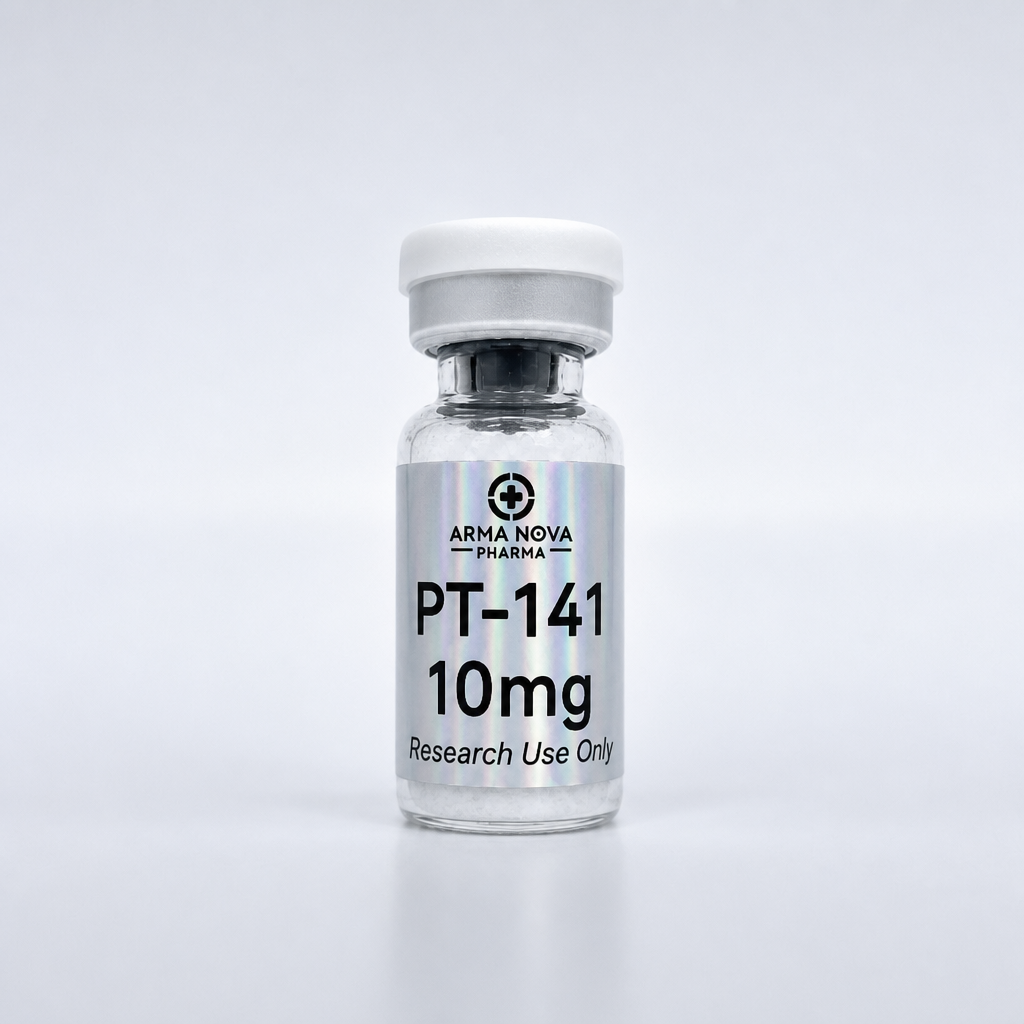
The research landscape surrounding PT-141 differs fundamentally from related compounds. Unlike Melanotan 2 UK formulations—which activate multiple melanocortin receptor subtypes including MC1R (responsible for melanogenesis and tanning effects)—PT-141 demonstrates selective agonism at MC4R and MC3R in the hypothalamus and limbic system. This selectivity eliminates the cutaneous hyperpigmentation commonly associated with Melanotan II while preserving the sexual arousal effects mediated through hypothalamic pathways.
For UK-based researchers, sourcing pt 141 10mg uk with verified purity and documented provenance remains a primary consideration. Arma Peptides supplies bremelanotide at ≥99% HPLC-verified purity with published Certificates of Analysis (COA) for each batch, manufactured under ISO-compliant conditions and shipped with next-day UK delivery. All peptides are intended strictly for research purposes under UK law.
pt 141 10mg uk: Mechanism of Action: Why PT-141 Works Differently From Sildenafil
The mechanistic profile of PT-141 diverges sharply from peripheral vasodilators. While sildenafil, tadalafil, and vardenafil exert their effects by inhibiting PDE5 in smooth muscle tissue—thereby enhancing nitric oxide-mediated blood flow to genital tissues—bremelanotide operates exclusively within the central nervous system.
PT-141 is a cyclic heptapeptide analogue of α-melanocyte-stimulating hormone (α-MSH), structured as Ac-Nle-cyclo[Asp-His-D-Phe-Arg-Trp-Lys]-OH. Upon administration, it crosses the blood-brain barrier and binds to melanocortin-4 receptors (MC4R) and melanocortin-3 receptors (MC3R) concentrated in the paraventricular nucleus of the hypothalamus, the medial preoptic area, and regions of the limbic system implicated in sexual motivation and arousal.
Activation of MC4R initiates a cascade involving cyclic adenosine monophosphate (cAMP) signalling and downstream modulation of dopaminergic, oxytocinergic, and adrenergic neurotransmission. This neurochemical pathway enhances sexual desire at the level of the brain, independent of peripheral genital blood flow. The clinical implication: PT-141 can produce arousal effects even in subjects who do not respond to PDE5 inhibitors due to neurogenic dysfunction, psychological factors, or compromised vascular responsiveness.
A 2004 randomised, double-blind, placebo-controlled trial by Diamond et al. evaluated intranasal PT-141 in healthy males and men with mild-to-moderate erectile dysfunction. Results demonstrated significant increases in erectile function scores (measured via RigiScan monitoring) compared to placebo, with effects emerging within 30-60 minutes of administration and persisting for up to six hours. Critically, the study documented no significant cardiovascular events or changes in blood pressure—a safety profile distinct from PDE5 inhibitors, which carry contraindications in patients on nitrate therapy.
PT-141 vs Melanotan II: Resolving the UK Market Confusion
A persistent source of confusion in the UK peptide research community involves conflating PT-141 with Melanotan II (MT-II). Both peptides derive from the same parent molecule (α-MSH), but they exhibit fundamentally different receptor binding profiles and physiological effects.
Melanotan II is a non-selective melanocortin receptor agonist. It activates MC1R (inducing melanogenesis and cutaneous tanning), MC3R and MC4R (modulating sexual arousal), and MC5R (involved in sebaceous gland function). The broad receptor activity of MT-II produces a constellation of effects: skin darkening, appetite suppression, sexual arousal, and occasional facial flushing or nausea.
PT-141 (bremelanotide) was specifically developed to isolate the sexual function effects while eliminating MC1R activation. Through structural modification—particularly the substitution of norleucine at position 4 and the cyclisation of the peptide backbone—researchers created a compound with selectivity for MC4R and MC3R without appreciable MC1R agonism. Consequently, PT-141 does not produce tanning effects, making it unsuitable for cosmetic melanogenesis research but ideal for isolated investigation of central sexual arousal pathways.
UK researchers comparing these compounds should note that Melanotan 2 UK formulations remain popular for studies examining melanocortin system pleiotropy, whereas pt 141 10mg uk batches are appropriate when experimental protocols require elimination of confounding melanogenic effects.
Clinical Evidence: From Phase III Trials to FDA Approval
The path from preclinical discovery to FDA approval for bremelanotide spanned nearly two decades of iterative research, including multiple phase III randomised controlled trials (RCTs) that established efficacy and safety profiles in human subjects.
The RECONNECT Programme: Definitive Evidence in FSIAD
The FDA approval of PT-141 (Vyleesi) in June 2019 was grounded in data from the RECONNECT trials—two phase III, multicentre, randomised, double-blind, placebo-controlled studies enrolling 1,247 premenopausal women diagnosed with female sexual interest/arousal disorder according to DSM-5 criteria.
Subjects self-administered subcutaneous bremelanotide 1.75mg or placebo as needed, approximately 45 minutes prior to anticipated sexual activity. Co-primary endpoints included changes from baseline in (1) the Female Sexual Function Index (FSFI) desire domain score and (2) a composite measure of sexual distress. At 24 weeks, women receiving PT-141 demonstrated statistically significant improvements in both endpoints compared to placebo (p < 0.001), with mean increases in desire scores of approximately 0.3 points on the FSFI scale—a clinically meaningful threshold validated in prior psychometric research.
Importantly, efficacy was independent of baseline oestrogen status, menopausal transition stage, or concomitant use of hormonal contraceptives, suggesting that the MC4R-mediated central arousal pathway operates distinctly from peripheral hormonal milieu.
Salvage Therapy for PDE5 Inhibitor Non-Responders
A pivotal 2008 study by Safarinejad and Hosseini addressed a critical clinical gap: what therapeutic options exist for individuals who fail to respond to sildenafil? This randomised, double-blind, placebo-controlled trial enrolled 260 men with moderate-to-severe erectile dysfunction who had previously demonstrated inadequate response to sildenafil citrate 100mg.
Participants received either subcutaneous bremelanotide 2.0mg or placebo prior to attempted intercourse over a 12-week period. The primary endpoint—International Index of Erectile Function (IIEF) erectile function domain score—improved by a mean of 6.8 points in the bremelanotide arm versus 1.2 points in placebo (p < 0.001). Notably, 54.3% of bremelanotide-treated subjects achieved erections sufficient for penetration, compared to 12.1% on placebo.
These findings underscore a mechanistic principle: because PT-141 acts centrally rather than through local penile haemodynamics, it can bypass the vascular deficits that render PDE5 inhibitors ineffective in a subset of patients. For researchers investigating pt 141 10mg uk formulations, this trial provides a methodological template for salvage-therapy experimental models.
Dose-Response Relationships and Intranasal vs Subcutaneous Administration
Early-phase research explored intranasal delivery of PT-141, capitalising on the olfactory epithelium’s capacity for direct CNS access. The Diamond et al. (2004) trial utilised doses ranging from 7mg to 20mg administered intranasally, demonstrating dose-dependent increases in nocturnal penile tumescence and rigidity.
However, subsequent development pivoted to subcutaneous administration due to concerns over transient blood pressure elevations observed at higher intranasal doses, likely mediated by sympathetic activation secondary to rapid CNS penetration. The FDA-approved subcutaneous formulation (Vyleesi) settled on 1.75mg as the optimal balance between efficacy and tolerability, with the most common adverse events being nausea (40% of subjects, typically mild and transient) and flushing (20%).
For research purposes, reconstituted pt 141 10mg uk vials allow flexible dosing protocols. A 10mg lyophilised vial reconstituted in 2ml bacteriostatic water yields a 5mg/ml concentration, permitting precise titration for dose-ranging studies.
Sourcing PT-141 10mg UK: Purity, Verification, and Regulatory Context
The UK peptide research market encompasses a spectrum of suppliers, varying widely in quality assurance practices. For investigators prioritising reproducibility and experimental validity, peptide purity and identity verification are non-negotiable.
HPLC Purity and Mass Spectrometry Verification
Arma Peptides supplies PT-141 10mg UK batches at ≥99% purity as determined by high-performance liquid chromatography (HPLC). Each batch undergoes reverse-phase HPLC analysis to quantify the percentage of the target peptide relative to impurities, truncated sequences, and degradation products.
Complementary mass spectrometry (MS) analysis confirms molecular weight and sequence identity. For bremelanotide, the expected monoisotopic mass is 1025.2 Da; deviations exceeding ±0.5 Da suggest synthesis errors or contamination. Certificates of Analysis (COAs) documenting HPLC purity and MS confirmation are published per batch, accessible via the product page.
Third-party researchers have documented that peptides below 95% purity may contain bioactive impurities or aggregates that introduce confounding variables in receptor-binding assays or in vivo studies. The ≥99% specification mitigates this risk.
UK Regulatory Framework: Research Use Only
In the United Kingdom, peptides including PT-141 are not licensed for human consumption outside of approved clinical trials or prescription use. The Medicines and Healthcare products Regulatory Agency (MHRA) classifies bremelanotide as a prescription-only medicine when intended for therapeutic use.
Arma Peptides supplies all peptides—including pt 141 10mg uk—strictly for research purposes under the Research Exemption provisions. Purchasers affirm that materials will be used exclusively in in vitro or properly regulated in vivo research settings, not for human self-administration.
This regulatory distinction is critical. Researchers should ensure institutional oversight (e.g., ethics committee approval for animal studies) and adhere to the Animals (Scientific Procedures) Act 1986 where applicable.
Storage, Reconstitution, and Stability
Lyophilised PT-141 10mg should be stored at -20°C, protected from light and moisture. Under these conditions, the peptide remains stable for at least 24 months as confirmed by accelerated degradation studies.
Upon reconstitution in bacteriostatic water (0.9% benzyl alcohol), the peptide solution should be stored at 2-8°C and used within 30 days. For extended storage of reconstituted aliquots, freezing at -80°C in single-use volumes minimises freeze-thaw cycles, which can promote aggregation and loss of bioactivity.
Researchers should avoid reconstituting in plain sterile water if the solution will be stored beyond 48 hours, as bacterial contamination risk increases without a bacteriostatic agent.
Comparative Pharmacology: PT-141 vs Other Melanocortin Agonists
The melanocortin system comprises five receptor subtypes (MC1R–MC5R), each with distinct tissue distribution and physiological roles. Understanding where PT-141 fits within this family clarifies its experimental applications and limitations.
| Receptor | Primary Tissue | Physiological Role | PT-141 Affinity | Melanotan II Affinity |
|---|---|---|---|---|
| MC1R | Melanocytes, keratinocytes | Melanogenesis, skin pigmentation | Negligible | High |
| MC3R | Hypothalamus, limbic system | Energy homeostasis, sexual arousal | Moderate-High | High |
| MC4R | Hypothalamus (PVN, MPOA) | Appetite regulation, sexual function | High | High |
| MC5R | Sebaceous glands, exocrine tissues | Sebum production, thermoregulation | Low | Moderate |
This receptor selectivity profile explains why PT-141 does not induce tanning (no MC1R agonism) but retains potent effects on sexual arousal (MC4R/MC3R agonism). For researchers interested in selective central nervous system effects without peripheral melanogenic confounds, pt 141 10mg uk formulations offer a cleaner experimental tool than non-selective analogues.
Experimental Design Considerations for UK Researchers
Researchers incorporating PT-141 into experimental protocols should account for several methodological factors that influence reproducibility and interpretation.
Timing and Pharmacokinetics
Subcutaneous administration of bremelanotide produces peak plasma concentrations (Tmax) at approximately 60 minutes post-injection, with a terminal half-life of 2.7 hours. However, pharmacodynamic effects—particularly on sexual arousal—exhibit a longer duration (up to 6-8 hours), suggesting that receptor occupancy kinetics or downstream signalling cascades extend beyond plasma elimination.
For behavioural studies in animal models, researchers should time experimental endpoints to coincide with peak receptor engagement rather than peak plasma levels. In rodent models, sexual behaviour assays are typically conducted 1-2 hours post-administration.
Species Differences in Melanocortin Receptor Homology
Melanocortin receptor sequences exhibit high but incomplete homology across species. Human MC4R shares 94% sequence identity with rodent orthologues, but binding affinity and downstream signalling efficacy can differ. Investigators translating findings from rodent studies to human physiology should confirm that receptor pharmacology is conserved for the specific peptide-receptor pair under investigation.
Interaction With Other Research Peptides
Researchers often study peptides in combination or within broader experimental contexts. PT-141’s central mechanism means it does not exhibit direct pharmacokinetic interactions with peripherally acting compounds, but overlapping signalling pathways warrant consideration.
For example, studies combining PT-141 with regenerative peptides like Bpc 157 10mg Peptide or Tb500 10mg should account for potential overlapping effects on endothelial function or angiogenesis, which may modulate vascular responses independent of MC4R activation. Similarly, Cjc 1295 No Dac 10mg Peptide—a growth hormone-releasing hormone analogue—may indirectly influence sexual function via IGF-1-mediated pathways, complicating interpretation in multi-peptide protocols.
Safety Profile and Reported Adverse Events in Clinical Trials
The FDA approval process required comprehensive safety documentation across 1,267 participants in phase III trials. The most frequently reported adverse events with subcutaneous bremelanotide 1.75mg were:
- Nausea (40% vs 13% placebo): typically mild, transient, and most common after initial doses with development of tolerance over repeated administrations
- Flushing (20% vs 3% placebo): likely mediated by MC4R-induced sympathetic activation
- Headache (11% vs 8% placebo): generally mild and resolving within 24 hours
- Injection site reactions (13%): erythema and mild discomfort, typical of subcutaneous peptide administration
Critically, PT-141 did not produce the cardiovascular effects associated with intranasal delivery at higher doses in earlier trials. Transient increases in systolic blood pressure (mean elevation 4-6 mmHg) were observed but did not meet thresholds for clinical concern or discontinuation.
No patterns of hepatotoxicity, renal impairment, or endocrine dysregulation emerged in long-term safety studies extending to 52 weeks. Unlike chronic PDE5 inhibitor use—which can be associated with visual disturbances due to cross-reactivity with PDE6 in retinal tissue—bremelanotide’s central mechanism avoids these peripheral effects.
For research purposes, these safety data inform dose selection and monitoring parameters. Researchers using pt 141 10mg uk in animal models should implement appropriate observational endpoints to detect analogous adverse effects (e.g., food intake suppression as a proxy for nausea in rodents).
Why UK Researchers Choose Arma Peptides for PT-141 10mg
Reproducibility in peptide research hinges on consistent product quality across batches and transparent documentation of purity and identity. Arma Peptides addresses these requirements through:
- HPLC-verified ≥99% purity: Each batch of PT-141 10mg UK undergoes reverse-phase HPLC quantification with published chromatograms
- Published COAs: Certificates of Analysis including mass spectrometry confirmation, endotoxin levels (≤1 EU/mg), and sterility testing are accessible per batch number
- UK-based dispatch: Next-day delivery across the UK, with cold-chain packaging to maintain peptide stability during transit
- Responsive technical support: PhD-level consultation available for reconstitution protocols, storage optimisation, and experimental design queries
- GMP-compliant manufacturing: Synthesised under ISO 9001:2015 certified conditions using solid-phase peptide synthesis (SPPS) with Fmoc chemistry
For researchers requiring additional melanocortin-related peptides or other research compounds, Arma Peptides maintains a curated catalogue including Mots C 10mg Uk Research Guide resources and related peptides, ensuring a single verified source for multi-peptide experimental protocols.
PT-141 in the Context of Broader Sexual Function Research
The FDA approval of bremelanotide in 2019 represented a paradigm shift in sexual medicine: the recognition that sexual arousal is fundamentally a CNS-mediated process, not merely a vascular phenomenon. This conceptual advance opens new research avenues in neuropharmacology, neuroendocrinology, and psychosexual medicine.
Prior to PT-141, pharmacological interventions for sexual dysfunction focused almost exclusively on peripheral mechanisms—PDE5 inhibitors to enhance blood flow, topical vasodilators, or hormonal supplementation. These approaches fail in a substantial minority of patients, particularly those with neurogenic, psychogenic, or mixed-aetiology dysfunction.
By targeting MC4R in the hypothalamus and limbic system, bremelanotide addresses sexual dysfunction at the level of neural desire and arousal circuits. This mechanism explains its efficacy in populations refractory to sildenafil and its unique indication for FSIAD—a condition with no prior FDA-approved pharmacotherapy.
Ongoing research investigates whether PT-141’s central mechanism can be leveraged for other conditions involving motivation and reward circuitry, including anhedonia in depression, loss of libido secondary to SSRI use, and hypoactive sexual desire disorder in postmenopausal women. These applications remain investigational, but the mechanistic rationale is compelling.
Practical Protocols: Reconstitution and Handling for Research Use
Researchers new to peptide handling may benefit from a standardised protocol for reconstituting pt 141 10mg uk lyophilised powder:
- Preparation: Allow the lyophilised vial to equilibrate to room temperature (20-25°C) for 10 minutes. Prepare bacteriostatic water (0.9% benzyl alcohol) and alcohol swabs.
- Reconstitution: Using a sterile syringe, draw 2ml bacteriostatic water. Inject slowly down the side of the vial to minimise foaming. Do not shake; swirl gently until the powder dissolves completely (typically 30-60 seconds).
- Concentration: A 10mg vial reconstituted in 2ml yields 5mg/ml. For a typical research dose of 1.75mg (equivalent to the FDA-approved dose), draw 0.35ml.
- Storage: Store reconstituted solution at 2-8°C. For single-use aliquots, freeze at -80°C and thaw once immediately before use.
- Sterility: Use aseptic technique throughout. Wipe vial stoppers with alcohol before each needle insertion to prevent contamination.
For dose-ranging studies, researchers may prepare a dilution series from the stock solution, ensuring that injection volumes remain practical (0.1-1.0ml) to minimise injection site variability.
Future Directions: PT-141 Beyond Sexual Function
Emerging preclinical research suggests that melanocortin-4 receptor agonism may have broader applications beyond sexual arousal. MC4R is expressed not only in hypothalamic nuclei governing sexual behaviour but also in regions implicated in:
- Energy homeostasis and appetite regulation: MC4R knockout mice exhibit severe obesity, and selective agonists reduce food intake in rodent models
- Motivated behaviour and reward processing: MC4R signalling modulates dopaminergic transmission in the ventral tegmental area and nucleus accumbens
- Neuroprotection and neuroinflammation: Melanocortin peptides exhibit anti-inflammatory effects in models of ischaemic brain injury and neurodegeneration
These findings raise the hypothesis that PT-141 or related selective MC4R agonists could be repurposed for metabolic research, addiction neuroscience, or neuroprotection studies. While such applications remain speculative, the specificity of PT-141 for MC4R makes it a valuable pharmacological tool for dissecting melanocortin receptor physiology across multiple domains.
Conclusion: PT-141 as a Validated, Mechanistically Distinct Research Tool
PT-141 occupies a unique position in peptide pharmacology: it is the only centrally-acting sexual function peptide with FDA approval, backed by phase III randomised controlled trial data in nearly 1,300 human subjects. Its mechanism—selective MC4R agonism in the hypothalamus and limbic system—differentiates it fundamentally from peripheral vasodilators and from non-selective melanocortin agonists like Melanotan II.
For UK researchers, sourcing pt 141 10mg uk with verified ≥99% HPLC purity and published Certificates of Analysis ensures experimental reproducibility and data integrity. Arma Peptides provides pharmaceutical-grade bremelanotide synthesised under ISO-compliant conditions, with next-day UK delivery and comprehensive technical support.
Whether investigating salvage therapy for PDE5 inhibitor non-responders, exploring the neurobiology of sexual arousal, or dissecting melanocortin receptor pharmacology, PT-141 represents a validated, mechanistically transparent research tool with a robust evidence base. The FDA approval of Vyleesi in 2019 underscores the clinical relevance and safety profile of this compound, positioning it as a cornerstone peptide for investigators working at the intersection of neuropharmacology and sexual medicine.
All peptides supplied by Arma Peptides are intended strictly for research use only under UK law. Researchers should ensure appropriate institutional oversight and adhere to the Animals (Scientific Procedures) Act 1986 or equivalent regulations governing peptide research in their jurisdiction.
Related posts
Tesamorelin 10mg UK: Research-Grade Growth Hormone-Releasing Hormone Analogue for 2026 UK-based researchers investigating growth hormone-releasing hormone (GHRH) analogues frequently encounter a critical sourcing challenge:… Continue reading
Ipamorelin UK: The Selective Growth Hormone Secretagogue for Researchers in 2026 Among the growth hormone-releasing peptides available to UK researchers, ipamorelin stands apart for a... Continue reading
Tirzepatide 30mg UK: The Dual GIP/GLP-1 Receptor Agonist for Advanced Metabolic Research Tirzepatide represents the first dual glucose-dependent insulinotropic polypeptide (GIP) and glucagon-like peptide-1 (GLP-1)... Continue reading
HCG 5000IU UK: Research-Grade Sourcing and Clinical Context Guide 2026 Human chorionic gonadotropin at the 5000 international unit dosage represents one of the most frequently... Continue reading
HGH 100 IU UK: Verified Research-Grade Sourcing, Purity Standards, and Regulatory Context for 2026 Securing genuine, laboratory-verified hgh 100 iu uk formulations presents distinct challenges... Continue reading
Add comment