
No products in the cart.
MOTS-C 10mg UK: ≥99% HPLC Verified | Next-Day Delivery
MOTS-C 10mg UK: Comprehensive Guide to the Mitochondrial-Encoded Metabolic Peptide
Among the growing catalogue of research peptides available to UK-based scientists and longevity researchers, MOTS-C occupies a uniquely compelling position. Unlike growth hormone secretagogues or synthetic analogs derived from traditional endocrine signaling cascades, MOTS-C is a 16-amino-acid peptide encoded within the mitochondrial genome itself—specifically, within the 12S ribosomal RNA gene region of mitochondrial DNA. This mitochondrial origin distinguishes it fundamentally from nuclear-encoded peptides and explains its direct role in cellular energy sensing, glucose metabolism, and adaptive stress responses.
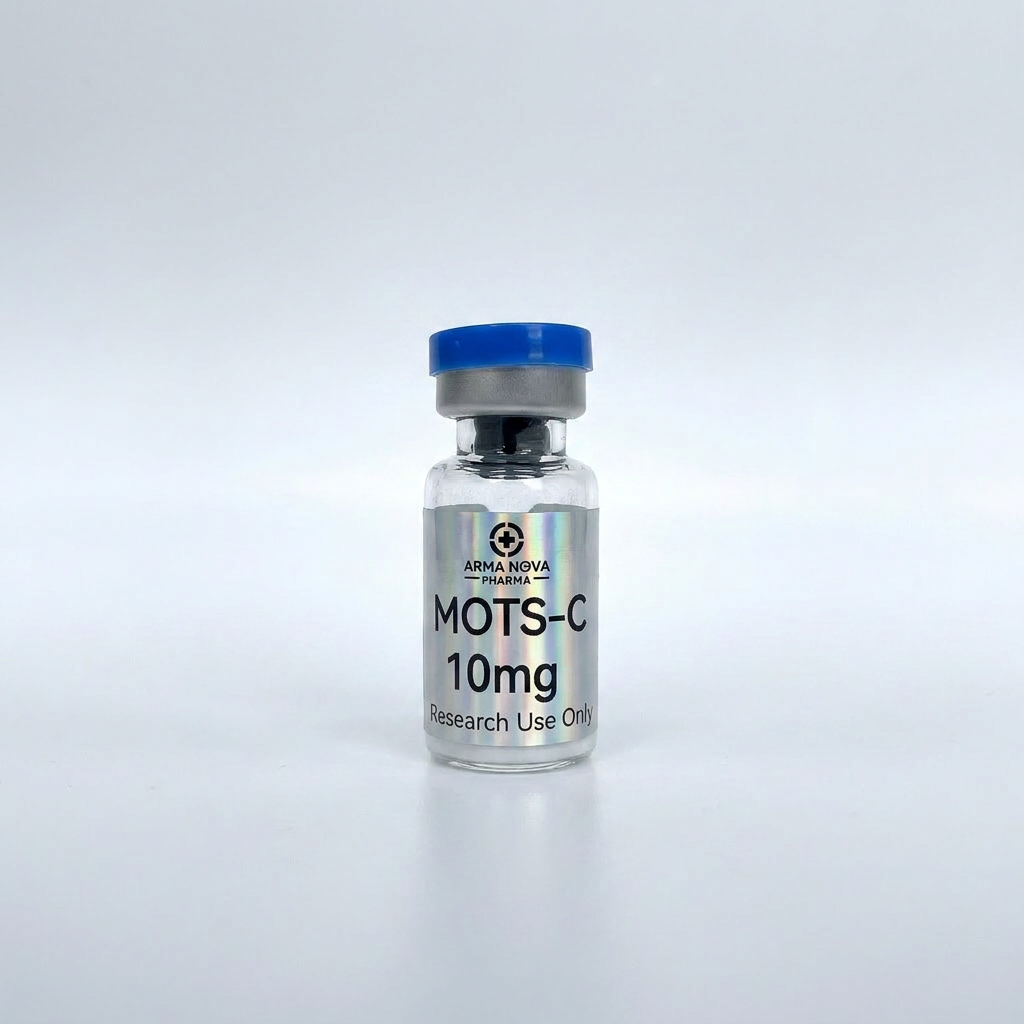
For researchers sourcing mots c 10mg uk supplies, understanding this mechanistic foundation is essential. MOTS-C does not mimic a known hormone; rather, it represents an entirely distinct class of signaling molecules called mitochondrial-derived peptides (MDPs), which act as retrograde messengers from mitochondria to the nucleus and other tissues. This article examines the molecular biology underpinning MOTS-C function, reviews key human and preclinical evidence, and provides practical guidance for UK researchers requiring ≥99% HPLC-verified material with transparent batch documentation.
mots c 10mg uk: What Makes MOTS-C Structurally and Functionally Distinct
MOTS-C (mitochondrial open reading frame of the 12S rRNA-c) was first characterized by Lee et al. in 2015, who identified it as a product of a previously overlooked open reading frame within mitochondrial DNA. The peptide sequence is highly conserved across mammals, suggesting evolutionary preservation of function. Its 16-amino-acid structure (MRWQEMGYIFYPRKLR) allows it to readily cross cellular membranes and exert effects both intracellularly and systemically following secretion.
The defining mechanistic feature of MOTS-C is its direct activation of AMP-activated protein kinase (AMPK), often described as the cell’s master energy sensor. AMPK activation occurs in response to energetic stress—exercise, caloric restriction, hypoxia—and initiates a coordinated metabolic shift favoring fatty acid oxidation, mitochondrial biogenesis, and glucose uptake while suppressing anabolic pathways such as lipogenesis and protein synthesis. MOTS-C bypasses upstream kinase cascades and appears to activate AMPK via a folate-dependent mechanism involving the folate-AICAR axis, as demonstrated in skeletal muscle and hepatocyte models.
This mechanism explains why MOTS-C administration in rodent models replicates many phenotypic outcomes of endurance exercise or caloric restriction: improved insulin sensitivity, enhanced glucose disposal, protection against diet-induced obesity, and increased mitochondrial respiration. Critically, MOTS-C does not simply stimulate a single receptor or pathway—it reprograms metabolic flux at the level of the cell’s energetic control hub.
Human Evidence and Translational Relevance
While the majority of MOTS-C research has been conducted in murine models, emerging human data substantiate its physiological relevance. Reynolds et al. (2021) published pivotal findings demonstrating that circulating MOTS-C levels increase acutely following exercise in humans and correlate inversely with age-related physical decline. The study showed that MOTS-C injections in aged mice restored muscle function and exercise capacity to levels comparable with younger animals, implicating MOTS-C as a mediator of the exercise-mimetic response.
Further supporting translation to human contexts, genetic polymorphisms in the mitochondrial 12S rRNA region that disrupt MOTS-C expression have been associated with increased susceptibility to metabolic syndrome and type 2 diabetes in Japanese cohorts. Specifically, the m.1382A>C polymorphism—which abrogates MOTS-C translation—correlates with higher fasting glucose and reduced insulin sensitivity. This genetic epidemiology strengthens the case that endogenous MOTS-C plays a protective metabolic role in humans, not merely in laboratory animals.
In a 2023 review, Zheng et al. summarized accumulating preclinical evidence for MOTS-C in contexts including ischemia-reperfusion injury, osteoporosis, neurodegenerative disease models, and age-related frailty. While clinical trials remain limited as of 2026, observational and mechanistic human data now converge with robust preclinical findings to position MOTS-C as a high-priority target for metabolic and aging research.
MOTS-C 10mg UK: Purity Standards and Analytical Verification
The credibility of any research conclusion rests on reagent purity. For researchers sourcing mots c 10mg uk inventory, the minimum acceptable standard is ≥99% purity as determined by high-performance liquid chromatography (HPLC), with mass spectrometry (MS) confirmation of molecular weight. Certificates of Analysis (COAs) must be batch-specific and publicly accessible—generic or absent COAs are red flags indicating questionable manufacturing oversight.
Arma Peptides supplies both a MOTS-C 10mg (Vial) format and a MOTS-C 10mg (Pre-Filled Pen) option, each accompanied by third-party HPLC verification and published per-batch COAs. The vial format is lyophilized powder requiring reconstitution with bacteriostatic water or sterile saline, providing flexibility for dosing protocols and enabling precise titration. The pre-filled pen format offers convenience for standardized dosing in repeated-measures designs or longitudinal studies.
Purity verification is not merely a quality assurance formality—it directly impacts experimental reproducibility. Trace contaminants, residual solvents, or incorrect peptide sequences can confound mechanistic assays, introduce artifactual toxicity, or produce false-negative results in metabolic readouts. UK researchers should expect transparent documentation including:
- HPLC chromatogram showing single dominant peak (≥99% area under curve)
- Mass spectrometry data confirming molecular weight (1694.98 Da for MOTS-C)
- Amino acid sequence verification via Edman degradation or tandem MS
- Endotoxin testing (LAL assay) confirming ≤1.0 EU/mg
- Sterility assurance via USP <71> Sterility Tests
These benchmarks are standard in pharmaceutical peptide manufacturing but remain inconsistently applied across research-grade suppliers. Arma Peptides maintains ISO-compliant synthesis protocols and publishes COAs directly on product pages, enabling independent verification before purchase.
UK Regulatory Context and Research-Use Designation
In the United Kingdom, MOTS-C is classified as a research chemical, not approved for human therapeutic use, veterinary application, or as a food supplement. It is explicitly designated for in vitro and preclinical research only under UK law. The Medicines and Healthcare products Regulatory Agency (MHRA) does not recognize MOTS-C as a licensed medicinal product, and its sale for human consumption would constitute a breach of the Human Medicines Regulations 2012.
This regulatory status mirrors that of other investigational peptides such as BPC-157 10mg Peptide, PT-141 10mg, and TB-500 10mg, all of which occupy a similar legal space as research-grade biochemicals. Researchers procuring mots c 10mg uk materials must ensure institutional compliance, appropriate ethical oversight (where applicable), and adherence to laboratory safety protocols.
UK suppliers operating within this framework are required to implement age verification (18+), restrict sales to qualified researchers or institutions, and include clear labeling that products are “not for human or veterinary use.” Arma Peptides adheres to these requirements, providing explicit disclaimers and requiring account verification prior to purchase. This legal positioning protects both supplier and end-user, ensuring that MOTS-C remains available for legitimate scientific inquiry while preventing misuse.
Mechanistic Insights: AMPK Activation and Metabolic Reprogramming
To fully appreciate MOTS-C’s experimental utility, researchers must understand its molecular effectors. Upon entering cells, MOTS-C translocates to the nucleus under conditions of metabolic stress and binds to specific genomic regions, including antioxidant response elements. However, the most well-characterized pathway involves cytoplasmic AMPK activation.
AMPK is a heterotrimeric serine/threonine kinase consisting of a catalytic α subunit and regulatory β and γ subunits. It is allosterically activated by rising AMP:ATP ratios and by upstream kinases such as LKB1. MOTS-C appears to activate AMPK independent of LKB1 in certain contexts, instead acting via the folate pathway: MOTS-C inhibits dihydrofolate reductase (DHFR), leading to accumulation of dihydrofolate and subsequent AICAR (5-aminoimidazole-4-carboxamide ribonucleotide) accumulation, a direct AMPK activator.
Once activated, AMPK phosphorylates downstream targets including:
- Acetyl-CoA carboxylase (ACC): inhibition reduces malonyl-CoA, relieving inhibition of carnitine palmitoyltransferase 1 (CPT1) and enabling fatty acid oxidation
- PGC-1α: activation stimulates mitochondrial biogenesis and oxidative capacity
- mTORC1: suppression reduces protein synthesis and autophagy inhibition, favoring catabolic flux
- GLUT4 translocation: enhanced glucose uptake in skeletal muscle and adipocytes, improving insulin sensitivity
This coordinated response explains observed phenotypes in MOTS-C-treated animals: increased endurance capacity, reduced adiposity, improved glycemic control, and enhanced mitochondrial density. Importantly, these effects are not simply pharmacological overrides—they recapitulate endogenous adaptive responses to energy deficit, lending mechanistic plausibility to therapeutic translation.
Practical Considerations for UK Researchers Designing MOTS-C Studies
Effective experimental design requires attention to formulation, dosing, storage, and reconstitution. MOTS-C is supplied as sterile lyophilized powder, typically requiring reconstitution in bacteriostatic water (0.9% benzyl alcohol) or sterile 0.9% sodium chloride solution. Reconstituted solutions should be stored at 2–8°C and used within 14 days to minimize peptide degradation. For longer-term storage, lyophilized powder remains stable at -20°C for at least 12 months when protected from light and moisture.
Dosing protocols in published murine studies range from 5 mg/kg to 15 mg/kg administered via intraperitoneal or subcutaneous injection, typically delivered daily or three times weekly. Allometric scaling to human-equivalent doses suggests a range of approximately 0.4–1.2 mg/kg, though direct clinical data remain sparse. For in vitro work, MOTS-C is commonly applied at concentrations between 1 µM and 50 µM, depending on cell type and assay duration.
UK researchers requiring standardized dosing may prefer the MOTS-C 10mg (Pre-Filled Pen), which eliminates reconstitution variability and provides consistent per-administration volumes. This format is particularly advantageous in longitudinal studies where inter-dose reproducibility is critical.
Comparative Context: MOTS-C Within the Mitochondrial-Derived Peptide Family
MOTS-C is one of several mitochondrial-derived peptides (MDPs) now recognized as bioactive signaling molecules. Others include humanin, SHLP1 through SHLP6, and SHMOOSE. Each is encoded within mitochondrial DNA open reading frames and exhibits distinct biological functions, though all share the common feature of mitochondrial-to-nuclear retrograde signaling.
Humanin, encoded within the 16S rRNA gene, demonstrates neuroprotective and anti-apoptotic effects, with clinical trials underway in Alzheimer’s disease. The SHLP peptides modulate insulin sensitivity, lipid metabolism, and inflammatory signaling. MOTS-C is unique in its specific AMPK activation and pronounced metabolic effects on skeletal muscle and adipose tissue.
This emerging family of MDPs challenges traditional paradigms in which mitochondria are viewed solely as metabolic organelles executing nuclear instructions. Instead, mitochondria actively communicate their functional status to the rest of the cell and organism via peptide secretion, integrating metabolic, stress, and aging signals. For researchers investigating metabolic disease, aging, or exercise physiology, MOTS-C represents a tractable entry point into this novel signaling axis.
UK Sourcing: Delivery, Pricing, and Supplier Verification
Timely access to research materials is critical for experimental continuity. Arma Peptides offers next-day UK delivery for orders placed before 3:00 PM, with shipping tracked via Royal Mail Special Delivery or DPD courier services. All peptides are shipped in insulated packaging with gel ice packs to maintain cold-chain integrity during transit, particularly important during warmer months.
Pricing for mots c 10mg uk typically ranges from £45 to £70 per vial, depending on supplier and volume discounts. Arma Peptides prices competitively while maintaining rigorous quality standards—a critical balance given that anomalously low-priced peptides often correlate with substandard purity or absent analytical verification. Bulk discounts are available for institutional orders, and researchers can request pro forma invoices for university procurement systems.
Supplier verification should include:
- Published COAs accessible pre-purchase, not merely “available upon request”
- Transparent contact information and business registration verifiable via Companies House
- Responsive technical support capable of answering specific synthesis or storage questions
- Secure payment processing with standard UK consumer protections
- Clear refund/replacement policy for verified quality issues
Arma Peptides meets these criteria, operating as a UK-registered entity with full traceability and adherence to consumer protection standards. Researchers can review detailed product information and batch-specific COAs on the MOTS-C 10mg UK Research Guide page, which consolidates technical specifications, handling protocols, and literature references.
Applications in Metabolic Research and Aging Studies
MOTS-C’s mechanistic profile makes it particularly relevant for several active research domains:
Insulin Resistance and Type 2 Diabetes Models
In high-fat diet (HFD) rodent models, MOTS-C administration prevents or reverses insulin resistance, reduces hepatic steatosis, and normalizes glucose tolerance curves. These effects persist even when treatment is initiated after metabolic dysfunction is established, suggesting potential as an intervention rather than merely a preventive agent. Mechanistically, AMPK activation in skeletal muscle increases GLUT4 translocation and glycogen synthesis, while hepatic AMPK activation suppresses gluconeogenesis and lipogenesis.
Exercise Physiology and Performance
The finding that MOTS-C levels rise acutely post-exercise and decline with aging positions it as a potential mediator of exercise adaptations. In aged mice, MOTS-C restores running endurance and grip strength to levels comparable with young controls. This suggests MOTS-C may contribute to the “exercise factor” in systemic rejuvenation—a bioactive signal that coordinates multi-tissue metabolic improvements following physical activity. UK researchers investigating exercise mimetics or aging interventions have begun incorporating MOTS-C into comparative protocols alongside established candidates such as AICAR or nicotinamide riboside.
Mitochondrial Dysfunction and Aging
Age-related decline in mitochondrial function is a conserved feature across species. MOTS-C expression decreases with age in humans, and genetic variants that reduce MOTS-C production correlate with metabolic disease susceptibility. Exogenous MOTS-C administration in aged animals improves mitochondrial respiration, reduces oxidative damage markers, and extends healthspan metrics including physical function and glucose homeostasis. Whether MOTS-C directly extends lifespan in mammals remains under investigation, but preliminary data from invertebrate models (C. elegans) show lifespan extension contingent on intact AMPK signaling.
Cardiovascular and Ischemia-Reperfusion Models
Preclinical studies demonstrate that MOTS-C pretreatment reduces infarct size and preserves cardiac function following experimental myocardial ischemia-reperfusion injury. The protective mechanism involves AMPK-dependent activation of autophagy and reduction of inflammatory cytokine release. Similar protective effects have been observed in renal and hepatic ischemia models, suggesting broad applicability in acute metabolic stress.
Common Misconceptions and Clarifications
Despite growing research interest, several misconceptions about MOTS-C persist in online discourse and warrant correction:
Misconception 1: MOTS-C is a growth hormone analog or secretagogue.
MOTS-C does not interact with the growth hormone axis, nor does it stimulate IGF-1 secretion. Its effects on body composition (reduced adiposity, preserved lean mass) arise from direct metabolic reprogramming via AMPK, not anabolic hormone signaling. This distinction is critical when interpreting study results and designing control groups.
Misconception 2: MOTS-C produces acute energy boosts similar to stimulants.
MOTS-C does not acutely increase ATP production or act as a stimulant. Its benefits emerge from chronic metabolic adaptation—improved mitochondrial efficiency, enhanced fatty acid oxidation, and increased oxidative capacity. Effects are observable over days to weeks, not minutes to hours.
Misconception 3: All MOTS-C products are equivalent if labeled “10mg.”
Peptide purity, sequence accuracy, endotoxin levels, and storage conditions vary dramatically across suppliers. A “10mg” product at 85% purity with 10 EU/mg endotoxin is not equivalent to ≥99% HPLC-verified material with ≤1 EU/mg endotoxin. Experimental results are only as reliable as reagent quality—a point often underappreciated until irreproducible data force retrospective audit.
Future Directions and Clinical Translation
As of early 2026, no MOTS-C compound has completed Phase III clinical trials, though preclinical momentum and early human safety data suggest translation is advancing. Key outstanding questions include:
- Optimal dosing regimens and pharmacokinetics in humans
- Long-term safety profile, particularly regarding mitochondrial feedback regulation
- Efficacy in heterogeneous human populations (varying ages, metabolic baselines, genetic backgrounds)
- Comparative effectiveness versus established metabolic interventions (metformin, GLP-1 agonists, exercise)
- Potential for combination therapies (e.g., with NAD+ precursors, senolytics, or other MDPs)
UK academic institutions including the University of Cambridge, Imperial College London, and the University of Edinburgh have initiated exploratory studies examining MOTS-C in metabolic disease cohorts and aging populations. Results from these trials will be critical in determining whether the impressive preclinical efficacy translates to clinically meaningful human outcomes.
Ordering MOTS-C 10mg in the UK: Practical Checklist
For researchers ready to incorporate MOTS-C into their experimental protocols, the following checklist ensures compliant, high-quality procurement:
- Verify supplier publishes batch-specific HPLC/MS COAs accessible before purchase
- Confirm ≥99% purity and molecular weight confirmation (1694.98 Da)
- Check endotoxin testing results (≤1.0 EU/mg for cell culture applications)
- Ensure cold-chain shipping with tracking and insurance
- Review return/replacement policy for quality-related issues
- Confirm research-use-only designation and institutional compliance
- Document batch numbers and COA references in laboratory records for traceability
- Store lyophilized powder at -20°C, reconstituted solutions at 2–8°C
- Use bacteriostatic water or sterile saline for reconstitution; avoid pH extremes
- Implement appropriate biosafety protocols per institutional guidelines
Arma Peptides streamlines this process by providing all necessary documentation upfront, enabling researchers to proceed with confidence that reagent quality will not compromise experimental integrity.
Conclusion: MOTS-C as a Window Into Mitochondrial Signaling
MOTS-C represents more than a single research tool—it exemplifies a paradigm shift in our understanding of mitochondrial biology. For decades, mitochondria were conceptualized as passive executors of nuclear genetic programs, responsible for ATP synthesis but otherwise subordinate. The discovery of bioactive mitochondrial-derived peptides like MOTS-C reveals mitochondria as active signaling hubs, communicating their functional state and modulating whole-organism metabolism, aging, and stress responses.
For UK researchers sourcing mots c 10mg uk supplies, this mechanistic context informs experimental design and interpretation. MOTS-C is not merely another peptide agonist; it is a molecular messenger from the cell’s energetic command center, coordinating systemic metabolic adaptation via AMPK activation. Its conservation across species, responsiveness to exercise and metabolic stress, and decline with aging position it as a high-value target for translational research.
Rigorous experimental work demands reagents of verified quality. Arma Peptides provides ≥99% HPLC-verified MOTS-C with transparent COAs, next-day UK delivery, and dedicated technical support, enabling researchers to focus on scientific questions rather than supply-chain uncertainties. Whether investigating insulin resistance, exercise mimetics, aging interventions, or fundamental mitochondrial biology, MOTS-C offers a tractable, mechanistically grounded entry point into one of biology’s most exciting emerging fields.
Disclaimer: MOTS-C is supplied strictly for in vitro research and preclinical investigation. It is not approved for human consumption, therapeutic use, or veterinary application under UK law. Researchers must ensure institutional compliance and appropriate ethical oversight prior to procurement and use.

Related posts

Tesamorelin 10mg UK: Research-Grade Growth Hormone-Releasing Hormone Analogue for 2026 UK-based researchers investigating growth hormone-releasing hormone (GHRH) analogues frequently encounter a critical sourcing challenge:… Continue reading
Ipamorelin UK: The Selective Growth Hormone Secretagogue for Researchers in 2026 Among the growth hormone-releasing peptides available to UK researchers, ipamorelin stands apart for a... Continue reading
Tirzepatide 30mg UK: The Dual GIP/GLP-1 Receptor Agonist for Advanced Metabolic Research Tirzepatide represents the first dual glucose-dependent insulinotropic polypeptide (GIP) and glucagon-like peptide-1 (GLP-1)... Continue reading

HCG 5000IU UK: Research-Grade Sourcing and Clinical Context Guide 2026 Human chorionic gonadotropin at the 5000 international unit dosage represents one of the most frequently... Continue reading

HGH 100 IU UK: Verified Research-Grade Sourcing, Purity Standards, and Regulatory Context for 2026 Securing genuine, laboratory-verified hgh 100 iu uk formulations presents distinct challenges... Continue reading
Add comment