
No products in the cart.
HMG 75IU UK: HPLC-Verified Research Gonadotropin Supply
HMG 75IU UK: The Dual-Hormone Gonadotropin Researchers Trust for Follicular Stimulation Protocols
When reproductive endocrinology researchers in the UK require a gonadotropin preparation that delivers both follicle-stimulating hormone (FSH) and luteinizing hormone (LH) activity from a single biological source, human menopausal gonadotropin (HMG) remains the reference standard. Unlike recombinant FSH-only formulations, hmg 75iu uk preparations retain the dual-hormone pharmacology that mirrors endogenous pituitary signalling—a distinction that has driven decades of controlled ovarian stimulation research and continues to inform contemporary protocols in assisted reproductive technology (ART) laboratories.
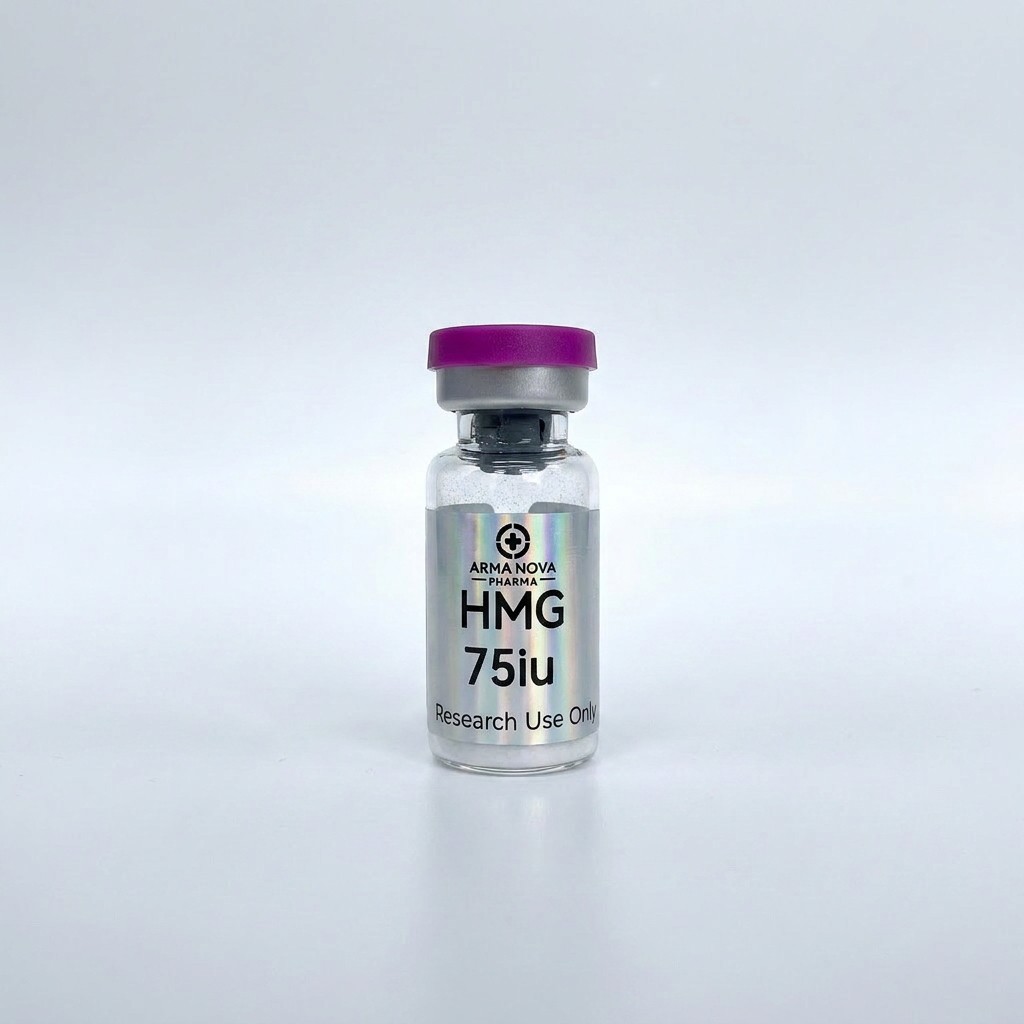
This guide examines the mechanistic basis for HMG’s unique dual activity, analyses peer-reviewed comparative trial data from reproductive endocrinology literature, and provides UK-specific sourcing criteria for researchers who demand batch-verified purity and transparent certificate-of-analysis documentation. Arma Peptides supplies HMG 75IU (Vial) and HMG 75IU (Pre-Filled Pen) formats at ≥99% HPLC-verified purity with published COAs per batch, backed by fast UK & EU logistics and compliance with research-use-only regulations under UK law.
What Distinguishes HMG From Recombinant FSH: The Dual FSH/LH Mechanism
Human menopausal gonadotropin is extracted from the urine of postmenopausal women, where elevated circulating gonadotropins are filtered and concentrated. Each 75 IU ampule or pre-filled pen contains 75 IU of FSH activity alongside approximately 75 IU of LH activity, though the precise ratio varies slightly by manufacturer and purification methodology. This contrasts sharply with recombinant FSH (rFSH) products, which are synthesised via Chinese hamster ovary (CHO) cell lines and contain only FSH with no LH component.
The significance of this dual-hormone profile lies in follicular steroidogenesis. FSH drives granulosa cell aromatase expression and promotes follicle maturation, while LH stimulates thecal cells to produce androgens—the obligate substrates for oestradiol synthesis. In some research models, particularly those involving late-follicular-phase or luteal-rescue protocols, the presence of LH activity is hypothesised to improve androgen substrate availability and support corpus luteum function post-ovulation.
This mechanistic distinction is not merely academic. In a Cochrane-grade systematic review by Coomarasamy et al. (2008, PMID: 18477645), pooled analysis of randomised controlled trials comparing urinary HMG versus recombinant FSH for controlled ovarian stimulation found no significant difference in live birth rates (OR 1.04, 95% CI 0.86–1.26), but noted subtle differences in intermediate endpoints such as oestradiol kinetics and follicular cohort synchronisation. The authors concluded that the choice between HMG and rFSH should account for protocol-specific objectives rather than assuming bioequivalence.
Evidence from Reproductive Endocrinology Trials: HMG Versus rFSH Head-to-Head
UK researchers evaluating hmg 75iu uk formulations for controlled ovarian stimulation protocols often reference three landmark studies that directly compared HMG to recombinant FSH under GnRH agonist or antagonist protocols:
van Wely et al. (2003): GnRH Agonist Long Protocol Comparison
This multicentre randomised trial (van Wely M et al., 2003, PMID: 14607553) enrolled 274 women undergoing IVF/ICSI with GnRH agonist downregulation. Participants received either urinary HMG or recombinant FSH for ovarian stimulation. The primary endpoint was ongoing pregnancy rate per started cycle.
Results showed no statistically significant difference in ongoing pregnancy rates (HMG: 31% vs. rFSH: 28%, OR 1.15, 95% CI 0.69–1.93). However, researchers noted that the HMG cohort required a significantly lower total FSH dose (1,874 IU vs. 2,146 IU, p=0.002) to achieve comparable follicular response—a pharmacoeconomic consideration that remains relevant for UK laboratories operating under constrained research budgets. The authors attributed this dose efficiency to the LH co-activity in HMG, which may enhance FSH receptor signalling via synergistic intracellular pathways.
Coomarasamy et al. (2008): Systematic Review and Meta-Analysis
The most comprehensive synthesis of HMG-versus-rFSH evidence came from Coomarasamy et al. (2008, PMID: 18477645), published in Human Reproduction Update. This meta-analysis pooled data from 42 randomised controlled trials (9,606 women) across GnRH agonist and antagonist protocols.
Key findings included:
- Live birth rate: No significant difference (OR 1.04, 95% CI 0.86–1.26) in GnRH agonist cycles; trend favoring HMG in GnRH antagonist cycles (OR 1.19, 95% CI 1.00–1.41, p=0.05).
- OHSS risk: Comparable incidence of ovarian hyperstimulation syndrome between groups (OR 1.12, 95% CI 0.82–1.52).
- Total FSH dose: Significantly lower in HMG groups across all protocols (weighted mean difference −168 IU, p<0.001).
The authors concluded that while HMG and rFSH are broadly equivalent for live birth outcomes, the LH activity in HMG may confer subtle advantages in specific subpopulations—particularly poor responders or those undergoing GnRH antagonist protocols where endogenous LH suppression is more profound.
Berker et al. (2021): Early Follicular Phase HMG Initiation
A more recent trial by Berker B et al. (2021, PMID: 32833190) investigated the timing of HMG commencement in IVF cycles. This randomised study compared early follicular phase HMG initiation (day 2–3) versus delayed start (day 5–6) in 120 women undergoing GnRH antagonist protocols.
Findings demonstrated that early HMG initiation resulted in:
- Higher number of retrieved oocytes (13.2 ± 4.1 vs. 10.8 ± 3.7, p=0.02)
- Increased mature (MII) oocyte yield (10.1 ± 3.3 vs. 8.2 ± 2.9, p=0.03)
- No difference in clinical pregnancy rates (42% vs. 38%, p=0.61)
The authors attributed these outcomes to the dual FSH/LH activity of HMG, which they hypothesised supports earlier cohort recruitment and synchronised follicular development when initiated before dominant follicle selection. This protocol nuance is particularly relevant for UK researchers designing controlled ovarian stimulation experiments where oocyte yield and developmental synchrony are primary endpoints.
Why UK Researchers Specify HMG 75IU UK: Sourcing and Verification Criteria
The demand for hmg 75iu uk formulations stems from three non-negotiable requirements among scientifically literate researchers: batch-to-batch purity verification, transparent supply-chain provenance, and compliance with UK regulatory frameworks governing research-use peptides.
HPLC-Verified Purity and Certificate-of-Analysis Documentation
Biological extracts like HMG are inherently variable. Urinary source material can contain trace proteins, pyrogens, and inactive gonadotropin isoforms that compromise both experimental reproducibility and biosafety. High-performance liquid chromatography (HPLC) coupled with mass spectrometry (MS) is the gold-standard analytical method for verifying FSH/LH bioactivity and detecting contaminants.
Arma Peptides publishes third-party COAs for each batch of HMG 75IU (Vial) and HMG 75IU (Pre-Filled Pen), documenting ≥99% purity via HPLC-UV and confirming the 75 IU FSH / 75 IU LH activity profile via bioassay. This transparency allows researchers to cross-reference lot numbers with specific experimental cohorts—a critical traceability feature for GLP-compliant laboratories and those preparing data for peer review.
UK-Based Logistics and Regulatory Compliance
Under UK law, HMG formulations are classified as prescription-only medicines when marketed for therapeutic use. However, research institutions, academic laboratories, and licenced biotech entities may procure HMG for in-vitro or animal-model research under the “research-use-only” exemption, provided the substance is not administered to human subjects outside of clinical trial frameworks governed by the Medicines and Healthcare products Regulatory Agency (MHRA).
Arma Peptides ships hmg 75iu uk orders from temperature-controlled warehousing, ensuring compliance with domestic shipping regulations and eliminating customs delays or border seizures associated with non-UK suppliers. All shipments include temperature-monitoring labels to verify cold-chain integrity during transit—a non-negotiable safeguard for lyophilised gonadotropin stability, which degrades rapidly above 8°C.
Pre-Filled Pen Versus Vial Format: Practical Considerations for Laboratory Protocols
Researchers can source HMG 75IU UK in two formats: traditional lyophilised vials requiring reconstitution with sterile water for injection, or pre-filled pens that deliver 75 IU per click-dose without reconstitution. The choice depends on experimental design:
| Feature | Vial Format | Pre-Filled Pen |
|---|---|---|
| Reconstitution | Required (user-supplied diluent) | Ready-to-use, no mixing |
| Dose precision | Manual syringe measurement (±5%) | Mechanical click-dose (±2%) |
| Sterility risk | Higher (multiple punctures) | Lower (single-use cartridge) |
| Storage post-reconstitution | Must use within 28 days (2–8°C) | Stable 28 days post-first use |
| Cost per IU | Lower (bulk vial pricing) | Higher (device manufacturing) |
For high-throughput ovarian stimulation models in rodent research, vial formats offer cost efficiency and flexible dosing. For studies requiring precise per-animal dosing or those conducted in GLP-compliant facilities with strict sterility protocols, pre-filled pens reduce user-error variance and contamination risk.
Protocol Design: Integrating HMG 75IU Into Controlled Ovarian Stimulation Research
UK researchers incorporating hmg 75iu uk into experimental protocols typically follow a stepwise approach adapted from clinical ART frameworks but tailored to species-specific physiology and research endpoints.
Step 1: Baseline Pituitary Suppression (GnRH Agonist or Antagonist)
To isolate HMG’s pharmacodynamic effects from endogenous gonadotropin fluctuations, most controlled ovarian stimulation models employ GnRH analogues. GnRH agonists (e.g., leuprolide, triptorelin) induce initial flare followed by receptor downregulation and sustained LH/FSH suppression—ideal for synchronising follicular cohorts. GnRH antagonists (e.g., cetrorelix, ganirelix) provide immediate competitive inhibition without flare, reducing protocol duration but necessitating higher HMG doses to compensate for more profound LH suppression.
In the Berker et al. (2021) study cited earlier, researchers used a flexible GnRH antagonist protocol with cetrorelix 0.25 mg/day initiated when the lead follicle reached 12–14 mm. This design minimises premature LH surge risk while preserving some endogenous LH activity during early folliculogenesis—a rationale that informed their early HMG start timing.
Step 2: HMG Dosing Regimen and Titration
Standard starting doses for HMG 75IU UK protocols range from 150–225 IU/day (2–3 ampules or pen clicks) depending on baseline antral follicle count, age, and prior response history. Unlike rFSH, where dose is purely FSH-based, HMG dosing must account for the concurrent LH activity—particularly relevant in models where endogenous LH is not fully suppressed.
Dose titration follows serial ultrasound folliculometry and serum oestradiol (E2) measurements. The van Wely et al. (2003) trial used a fixed-dose HMG protocol (150 IU/day) but permitted reduction to 75 IU/day if E2 exceeded 10,000 pmol/L—a safety threshold to mitigate OHSS risk. UK researchers replicating this design should note that the LH component in HMG may drive more rapid E2 rise compared to rFSH monotherapy, necessitating closer monitoring intervals (every 48–72 hours versus every 96 hours).
Step 3: Ovulation Trigger and Luteal Support
Once ≥3 follicles reach 17–18 mm diameter, final oocyte maturation is triggered with human chorionic gonadotropin (hCG) or a GnRH agonist bolus. HCG’s LH-mimetic activity completes meiosis I and prepares the oocyte for fertilisation. In protocols using HMG, some researchers argue that the cumulative LH exposure (both from HMG and trigger) may enhance oocyte cytoplasmic maturation—though this remains a hypothesis requiring direct experimental validation.
Luteal-phase support post-trigger typically employs exogenous progesterone (vaginal micronised or intramuscular), though some HMG protocols add low-dose hCG supplementation (500–1,000 IU every 3 days) to leverage residual LH receptor signalling. This approach is more common in research models examining corpus luteum angiogenesis or steroidogenic enzyme expression than in clinical ART, where OHSS risk limits hCG use.
Common Misconceptions About HMG: What the Data Actually Shows
Despite decades of reproductive endocrinology research, several persistent myths about HMG circulate in both academic and biohacker communities. Addressing these directly:
Myth 1: “HMG Always Produces Better Outcomes Than rFSH”
Reality: The Coomarasamy et al. (2008) meta-analysis found no significant difference in live birth rates between HMG and rFSH in GnRH agonist cycles. The advantage of HMG is protocol-specific and subpopulation-dependent, not universal. Researchers designing experiments must justify HMG selection based on mechanistic rationale (e.g., need for LH activity in antagonist cycles, poor responder populations) rather than assuming blanket superiority.
Myth 2: “HMG Carries Higher OHSS Risk Due to LH Activity”
Reality: Pooled trial data shows comparable OHSS incidence between HMG and rFSH (OR 1.12, 95% CI 0.82–1.52, p=0.48). The primary OHSS driver is ovarian follicular mass and hCG trigger dose—not the specific gonadotropin preparation used for stimulation. Properly monitored HMG protocols with E2-guided dose adjustments carry no excess risk relative to rFSH.
Myth 3: “Urinary Source Makes HMG Less Pure Than Recombinant Products”
Reality: Modern HMG undergoes multi-step chromatographic purification including ion-exchange, size-exclusion, and affinity chromatography, achieving ≥99% purity as verified by HPLC. Recombinant products are not inherently purer—they simply derive from a different production system (CHO cells vs. human urine). Both require rigorous batch testing; the key differentiator for UK researchers is whether the supplier publishes third-party COAs per batch, as Arma Peptides does for all hmg 75iu uk inventory.
UK-Specific Regulatory Context: Research Use Only Under MHRA Frameworks
Researchers procuring hmg 75iu uk must understand the legal distinction between research-use peptides and medicinal products. Under the Human Medicines Regulations 2012 (as amended), HMG is a prescription-only medicine (POM) when supplied for therapeutic use in humans. However, the MHRA permits non-clinical research use under the following conditions:
- The substance is purchased by a licenced research institution, academic laboratory, or company engaged in pharmaceutical R&D.
- It is used exclusively for in-vitro experiments, animal model research, or other non-human applications.
- It is not administered to human subjects outside of a clinical trial with MHRA Clinical Trial Authorisation (CTA) and ethics approval.
- The supplier clearly labels the product “For Research Use Only—Not for Human or Veterinary Use” and does not make therapeutic claims.
Arma Peptides complies with these requirements for all peptide and gonadotropin sales to UK researchers. For institutions planning to transition HMG research into clinical trials, separate regulatory pathways apply, including Investigational Medicinal Product Dossier (IMPD) submission to the MHRA and approval from a Research Ethics Committee (REC) recognised under the UK Policy Framework for Health and Social Care Research.
Further guidance is available via the MHRA clinical trials authorisation portal.
Cost Considerations and UK Pricing Context for HMG 75IU
Pricing for hmg 75iu uk formulations varies by format, supplier, and order volume. As of 2026, UK researchers typically encounter the following cost ranges:
- Vial format (75 IU lyophilised): £15–£28 per ampule at retail; bulk orders (≥10 ampules) often qualify for 15–25% volume discounts.
- Pre-filled pen (75 IU per dose): £22–£38 per pen, reflecting device manufacturing costs and enhanced dosing precision.
- Reconstitution supplies: Sterile water for injection (SWFI), bacteriostatic water, and insulin syringes add approximately £0.50–£1.50 per dose in ancillary costs for vial users.
When calculating total protocol costs, researchers should account for the dose efficiency observed in clinical trials. The van Wely et al. (2003) study documented a mean total HMG dose of 1,874 IU per cycle versus 2,146 IU for rFSH—a 12.7% reduction. For a UK laboratory running 50 controlled ovarian stimulation cycles annually, this translates to a saving of approximately 13,600 IU (181 ampules), which at £20/ampule represents £3,620 in annual cost avoidance relative to rFSH protocols requiring higher total doses.
Arma Peptides offers institutional pricing for UK universities and research organisations placing recurring orders, with flexible payment terms in GBP and VAT-exempt invoicing for qualifying entities.
Storage, Reconstitution, and Handling Best Practices for HMG 75IU
Proper handling of HMG 75IU UK formulations is essential to preserve bioactivity and ensure experimental reproducibility. Lyophilised HMG is relatively stable but degrades under suboptimal conditions.
Pre-Reconstitution Storage
Unopened HMG 75IU vials and pre-filled pens should be stored at 2–8°C (refrigerated) and protected from light. Freezing is contraindicated, as ice crystal formation can denature glycoprotein structures and fragment FSH/LH dimers. Lyophilised vials tolerate brief room-temperature excursions (up to 25°C for 7 days) without significant potency loss, but prolonged ambient storage accelerates degradation.
Arma Peptides ships all HMG orders with insulated packaging and refrigerant gel packs, accompanied by temperature-monitoring strips that indicate if the parcel exceeded 8°C during transit. Upon receipt, researchers should immediately transfer vials/pens to a dedicated peptide refrigerator set to 4°C and log the lot number, receipt date, and storage location in their laboratory inventory system.
Reconstitution Protocol for Vial Format
To reconstitute a 75 IU HMG vial:
- Swab the vial stopper with 70% isopropyl alcohol and allow to air-dry (30 seconds).
- Draw 1 mL sterile water for injection (SWFI) into a 1–2 mL sterile syringe fitted with a 21–23 gauge needle.
- Inject the diluent slowly down the vial wall (not directly onto the lyophilised cake) to minimise foaming.
- Gently swirl the vial—do not shake vigorously, as mechanical shear can denature gonadotropin glycoproteins.
- Allow the solution to stand for 2–3 minutes until fully dissolved (clear, colourless to pale yellow).
- Draw the required dose using a fresh sterile syringe (insulin syringe for subcutaneous injection models, larger bore for intramuscular).
Reconstituted HMG retains potency for 28 days when stored at 2–8°C in the original vial. Each vial puncture introduces contamination risk, so single-use protocols (one vial per dose) are preferred in GLP environments.
Pre-Filled Pen Administration
Pre-filled pens eliminate reconstitution steps but require correct priming and dose-setting technique:
- Attach a new sterile pen needle (31–32 gauge, 4–6 mm) before each use.
- Prime the pen by dialling to 75 IU and expelling a small droplet to confirm flow and remove air bubbles.
- Dial the required dose (75 IU per click for most pens) and inject subcutaneously at a 90° angle into the lower abdomen or anterior thigh.
- Hold the needle in place for 5–10 seconds post-injection to prevent backflow.
- Dispose of the needle immediately into a sharps container.
Pens should be returned to refrigeration within 30 minutes of use and never left at room temperature for extended periods.
Where HMG 75IU UK Fits Within Broader Peptide Research Portfolios
UK researchers working with gonadotropins often investigate adjacent peptide compounds that modulate reproductive endocrine pathways, tissue repair, or metabolic signalling. Arma Peptides maintains a curated Blog covering mechanistic insights and sourcing guidance for complementary research peptides.
Relevant cross-reference topics include:
- BPC-157 and TB-500 for ovarian tissue repair models: Both peptides demonstrate pro-angiogenic and anti-inflammatory activity in preclinical injury models. Researchers studying ovarian reserve preservation or post-surgical adhesion prevention may combine these peptides with HMG-stimulated folliculogenesis protocols. See our detailed analysis in BPC-157 TB-500 Blend Review: What Researchers Need to Know.
- GHK-Cu for endometrial remodelling research: Copper peptide GHK-Cu modulates matrix metalloproteinase expression and collagen synthesis—pathways implicated in endometrial receptivity. UK researchers examining implantation models may explore GHK-Cu alongside HMG-driven oocyte maturation studies. Reference our sourcing guide: GHK-Cu Skin UK: Pre-Filled Pen HPLC-Verified Research Guide.
- Kisspeptin and GnRH pulse-generator research: Kisspeptin (metastin) is the upstream regulator of hypothalamic GnRH release, making it a target for research into hypogonadotropic hypogonadism and ovulation induction. Combined kisspeptin/HMG protocols are emerging in translational reproductive endocrinology.
For comprehensive technical documentation on HMG applications, batch verification procedures, and comparative gonadotropin pharmacology, consult our dedicated resource: HMG 75IU Research Peptide: Uses, Quality, and Lab Value.
Frequently Asked Questions: HMG 75IU UK Sourcing and Application
Is HMG 75IU legal to purchase in the UK for research purposes?
Yes, provided it is procured by a licenced research institution or individual conducting non-clinical research and labelled for research use only. HMG is a prescription-only medicine for therapeutic use, but the MHRA permits purchase for in-vitro and animal model research without prescription. Human administration outside approved clinical trials is prohibited.
What is the shelf life of unopened HMG 75IU vials and pens?
Lyophilised HMG vials typically carry a 24–36 month shelf life from manufacture when stored at 2–8°C, as indicated on the manufacturer label and COA. Pre-filled pens have similar stability (24 months refrigerated). Once reconstituted or first punctured, use within 28 days.
Can I mix HMG with recombinant FSH in the same protocol?
Yes, some clinical and research protocols employ sequential or concurrent HMG/rFSH regimens. For example, starting with rFSH to drive initial follicle recruitment, then switching to HMG in late follicular phase to add LH activity. This approach is sometimes used in poor responder populations. Ensure doses are calculated based on total FSH IU across both products.
How does HMG 75IU compare to Menotropin or other brand names?
Menotropin is the International Nonproprietary Name (INN) for HMG—they are the same substance. Commercial brand names include Menopur, Merional, and others. All are urinary-derived gonadotropins with dual FSH/LH activity at a ~1:1 ratio. The critical differentiator for research use is batch-verified purity and transparent COA publication, not brand name.
What is the optimal reconstitution volume for HMG 75IU vials?
Standard reconstitution uses 1 mL SWFI per 75 IU vial, yielding a 75 IU/mL concentration. Some protocols use 0.5 mL to achieve 150 IU/mL for smaller injection volumes, but higher concentration increases viscosity and may slightly reduce subcutaneous absorption kinetics. For intramuscular administration, 1 mL is preferred to minimise injection-site discomfort.
Does Arma Peptides ship HMG 75IU UK orders with cold-chain verification?
Yes, all HMG shipments include insulated packaging, refrigerant gel packs, and adhesive temperature-monitoring strips that provide a visual record of temperature excursions during transit. If the indicator shows exposure above 8°C, contact customer support for product replacement under our cold-chain guarantee.
Final Considerations: Selecting a Trusted HMG 75IU UK Supplier
When sourcing hmg 75iu uk for reproductive endocrinology research, material quality and supply-chain transparency directly impact experimental validity. Three red flags should prompt researchers to seek alternative suppliers:
- No published COAs: Any supplier unwilling to provide third-party HPLC verification and endotoxin testing data per batch lacks quality-control oversight.
- Non-refrigerated shipping: Gonadotropins degrade rapidly at ambient temperature. Suppliers shipping HMG in standard envelopes without cold-chain protection compromise product integrity before it reaches your laboratory.
- Vague sourcing claims: Generic statements like “pharmaceutical grade” or “highest purity” without specific analytical data are marketing rhetoric, not quality assurance.
Arma Peptides addresses all three criteria with ≥99% HPLC-verified HMG 75IU, refrigerated UK logistics with temperature monitoring, and publicly accessible COAs cross-referenced to batch lot numbers. Our HMG 75IU (Vial) and HMG 75IU (Pre-Filled Pen) formats serve UK researchers demanding the same analytical rigour they apply to their experimental design.
For ovarian stimulation protocols that require both FSH-driven folliculogenesis and LH-supported steroidogenesis, human menopausal gonadotropin remains the reference dual-hormone preparation. The evidence base—from van Wely’s dose-efficiency findings to Coomarasamy’s meta-analytic synthesis to Berker’s protocol-timing insights—supports HMG as a mechanistically distinct tool in controlled ovarian stimulation research, not merely an interchangeable alternative to recombinant FSH.
UK researchers who demand batch-verified purity, transparent COA documentation, and compliant research-use-only supply now have a UK-based source that meets the standards their experiments require.
Disclaimer: This content is intended for educational and informational purposes to support UK-based researchers conducting non-clinical in-vitro or animal model studies. HMG 75IU is supplied by Arma Peptides for research use only under UK law. It is not intended for human therapeutic use, self-administration, or any application outside licenced laboratory research settings. Human administration of HMG without MHRA clinical trial authorisation and ethics approval is prohibited. Researchers are responsible for ensuring their work complies with all applicable UK regulations, including the Human Medicines Regulations 2012, Animals (Scientific Procedures) Act 1986 (as amended), and institutional biosafety protocols. Consult qualified regulatory and scientific advisors before designing experiments involving gonadotropins or other bioactive peptides.
Related posts
Tesamorelin 10mg UK: Research-Grade Growth Hormone-Releasing Hormone Analogue for 2026 UK-based researchers investigating growth hormone-releasing hormone (GHRH) analogues frequently encounter a critical sourcing challenge:… Continue reading
Ipamorelin UK: The Selective Growth Hormone Secretagogue for Researchers in 2026 Among the growth hormone-releasing peptides available to UK researchers, ipamorelin stands apart for a... Continue reading
Tirzepatide 30mg UK: The Dual GIP/GLP-1 Receptor Agonist for Advanced Metabolic Research Tirzepatide represents the first dual glucose-dependent insulinotropic polypeptide (GIP) and glucagon-like peptide-1 (GLP-1)... Continue reading
HCG 5000IU UK: Research-Grade Sourcing and Clinical Context Guide 2026 Human chorionic gonadotropin at the 5000 international unit dosage represents one of the most frequently... Continue reading
HGH 100 IU UK: Verified Research-Grade Sourcing, Purity Standards, and Regulatory Context for 2026 Securing genuine, laboratory-verified hgh 100 iu uk formulations presents distinct challenges... Continue reading
Add comment