
No products in the cart.
Retatrutide Revytal 30mg UK: Phase 2 Trial Data & Sourcing
Retatrutide Revytal 30mg UK: The Triple-Receptor Agonist Outperforming Dual GLP-1/GIP Therapies
A 48-week phase 2 trial published in the New England Journal of Medicine demonstrated that retatrutide revytal 30mg uk participants achieved up to 24.2% body weight reduction at the highest dose—substantially exceeding dual-agonist comparators and conventional GLP-1 monotherapy. The critical differentiator is retatrutide’s third mechanism of action: glucagon receptor agonism, which drives hepatic fat oxidation and thermogenic energy expenditure in ways that GLP-1 and GIP receptor activation alone cannot replicate.
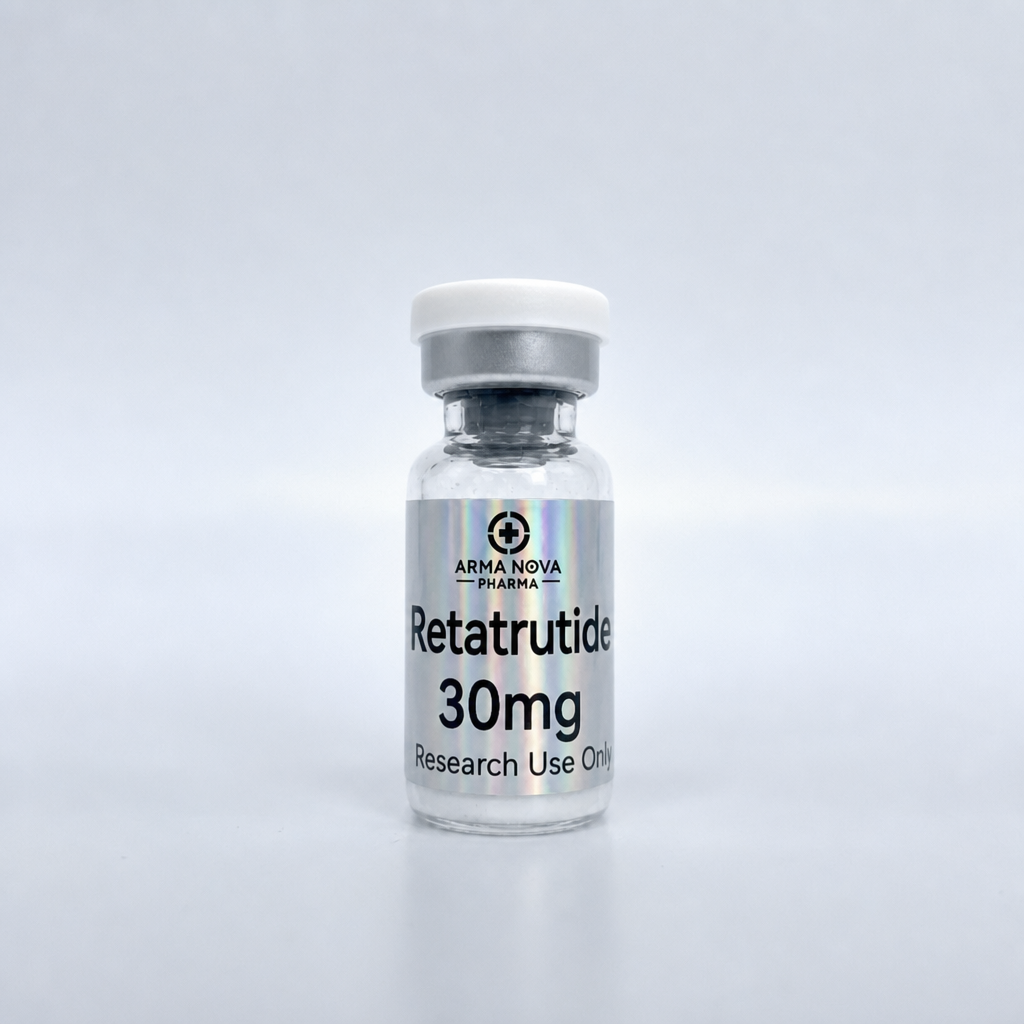
For UK-based researchers and biohackers sourcing peptide compounds for investigational protocols, understanding the precise receptor pharmacology and clinical evidence base is essential. This guide examines the published phase 2 and ongoing phase 3 trial data for retatrutide (developmental code LY3437943), explains the mechanistic contribution of each receptor target, and outlines UK-specific sourcing considerations including HPLC purity verification, certificate of analysis (COA) transparency, and regulatory status under UK law.
What Distinguishes Retatrutide from Tirzepatide and Semaglutide: The Glucagon Receptor Difference
Retatrutide is classified as a triple hormone receptor agonist, simultaneously activating GLP-1, GIP, and glucagon receptors. This contrasts with Tirzepatide UK, a dual GLP-1/GIP agonist, and Semaglutide UK, a GLP-1 receptor agonist. While the addition of GIP to GLP-1 in tirzepatide improved weight loss outcomes relative to semaglutide alone, the third receptor—glucagon—introduces metabolic pathways that neither dual nor mono-agonists engage.
Glucagon receptor agonism specifically:
- Increases hepatic glucose output initially, but when combined with GLP-1 activity (which suppresses hepatic glucose production), the net effect is enhanced lipolysis and fatty acid oxidation without hyperglycemia
- Stimulates thermogenesis via brown adipose tissue activation, raising total daily energy expenditure independent of activity level
- Reduces hepatic steatosis (fatty liver) through direct promotion of beta-oxidation pathways in hepatocytes
- Augments insulin secretion in a glucose-dependent manner when co-activated with GLP-1 and GIP receptors, maintaining glycemic control despite glucagon’s catabolic signaling
The practical consequence of this tri-agonism is that retatrutide does not simply reduce appetite and delay gastric emptying (the primary GLP-1 mechanisms). It actively accelerates energy expenditure and lipid catabolism, creating a dual-pronged metabolic intervention: reduced caloric intake plus elevated caloric output.
Phase 2 Trial Results: Jastreboff et al. (2023) NEJM Data Breakdown
The landmark phase 2 randomized controlled trial, published by Jastreboff and colleagues in the New England Journal of Medicine, enrolled 338 adults with obesity (BMI ≥30 kg/m²) or overweight (BMI ≥27 kg/m²) with at least one weight-related comorbidity. Participants were randomized to receive once-weekly subcutaneous retatrutide at doses of 1 mg, 4 mg, 8 mg, or 12 mg, or placebo, over 48 weeks. This study provides the most comprehensive dataset currently available for retatrutide revytal 30mg uk sourcing decisions.
Primary efficacy outcomes at 48 weeks (PMID: 37350954):
| Dose Group | Mean Weight Loss (%) | ≥5% Weight Loss (%) | ≥15% Weight Loss (%) |
|---|---|---|---|
| Placebo | -1.6% | 27% | 2% |
| Retatrutide 1 mg | -8.7% | 85% | 28% |
| Retatrutide 4 mg | -17.3% | 93% | 75% |
| Retatrutide 8 mg | -22.8% | 100% | 91% |
| Retatrutide 12 mg | -24.2% | 100% | 93% |
The dose-response relationship was highly consistent: every increment in retatrutide dose produced incrementally greater weight reduction. Notably, the 8 mg and 12 mg cohorts achieved 100% responder rates for ≥5% weight loss—a threshold associated with clinically meaningful metabolic improvements including HbA1c reduction, blood pressure normalization, and improvement in hepatic transaminases.
The study also measured changes in secondary cardiometabolic endpoints. At the 12 mg dose, participants experienced:
- -15.4 mmHg reduction in systolic blood pressure (vs. -1.3 mmHg placebo)
- -1.3% absolute reduction in HbA1c among participants with baseline type 2 diabetes
- -31.4% reduction in fasting triglycerides
- +13.5% increase in HDL cholesterol
Gastrointestinal adverse events (nausea, diarrhea, vomiting, constipation) were the most common treatment-related side effects, occurring in 60–80% of participants across active treatment groups, typically mild to moderate in severity and highest during dose-escalation phases. Discontinuation rates due to adverse events ranged from 4% (1 mg group) to 10% (12 mg group), comparable to or lower than those observed in GLP-1 monotherapy trials.
Understanding the 30mg Vial Format: Dosing Flexibility and Research Protocol Design
When sourcing Retatrutide 30mg UK, researchers encounter a vial format containing 30 mg of lyophilized powder. This is not a single-dose unit but a multi-dose vial intended for reconstitution with bacteriostatic water, allowing precise titration across a range of weekly doses based on protocol requirements.
Typical reconstitution and dose calculation example:
If reconstituting a 30 mg vial with 3 mL of bacteriostatic water, the resulting concentration is 10 mg/mL. To administer an 8 mg weekly dose (the phase 2 trial dose associated with 22.8% weight loss), a researcher would draw 0.8 mL from the reconstituted vial. A single 30 mg vial would therefore provide approximately 3.75 weeks of supply at the 8 mg weekly dose, or nearly 4 weeks at the 12 mg dose if reconstituted to a slightly higher concentration.
This format offers flexibility for:
- Dose-escalation protocols mirroring the phase 2 design: beginning at 2 mg weekly and increasing by 2–4 mg every 4 weeks until reaching target maintenance dose
- Body-weight-adjusted dosing strategies, particularly relevant for smaller-statured individuals or those with heightened GI sensitivity
- Extended research timelines without requiring frequent resupply orders, reducing logistical complexity for multi-month investigations
It is essential to note that the phase 2 trial employed a structured dose-escalation schedule to minimize gastrointestinal side effects. Starting at the maximum dose without titration increases the probability of nausea, vomiting, and discontinuation. Research protocols should incorporate a ramp-up period consistent with published safety data.
HPLC Purity, Certificates of Analysis, and UK Sourcing Quality Markers
The clinical data from Jastreboff et al. was generated using pharmaceutical-grade retatrutide with rigorously controlled purity and potency. When sourcing peptide research compounds outside of a clinical trial context, verifying analytical purity becomes the researcher’s responsibility.
Key quality markers for retatrutide revytal 30mg uk sourcing:
HPLC purity ≥99%: High-performance liquid chromatography (HPLC) is the industry-standard method for quantifying peptide purity. A ≥99% HPLC result indicates minimal presence of truncated sequences, deletion peptides, and synthesis by-products. Lower-purity peptides (95–98%) may still be chemically functional but introduce variable dosing accuracy and potential immunogenicity risks in research applications.
Batch-specific COAs published and accessible: Reputable UK suppliers publish certificates of analysis for each production batch, detailing HPLC chromatogram results, mass spectrometry confirmation (confirming molecular weight matches the expected structure), and endotoxin testing (LAL assay confirming bacterial contamination below research-grade thresholds). A supplier that does not proactively publish COAs or only provides generic “representative” test results should be regarded with skepticism.
Lyophilization and sterile handling: Retatrutide is supplied as a sterile lyophilized powder. The lyophilization process removes water under vacuum, stabilizing the peptide for long-term storage at -20°C or colder. Suppliers should specify storage conditions and provide guidance on reconstitution with bacteriostatic water (typically 0.9% benzyl alcohol) to inhibit bacterial growth in multi-dose vials.
fast UK & EU fulfillment and next-day delivery: Domestic UK sourcing reduces transit time, minimizes temperature excursions during shipping, and avoids customs delays or import restrictions. Cold-chain shipping (insulated packaging with gel ice packs) is standard for peptide compounds to maintain stability during transit, particularly during warmer months.
Arma Peptides maintains ≥99% HPLC-verified purity standards, publishes COAs per batch, and offers next-day UK delivery for domestic orders. This combination of analytical transparency and logistical efficiency is particularly relevant for time-sensitive research protocols or when maintaining peptide cold-chain integrity is paramount.
UK Regulatory Context: Research Use Only and Legal Status
Under UK law, retatrutide is classified as a research chemical and is not approved by the Medicines and Healthcare products Regulatory Agency (MHRA) for human therapeutic use outside of clinical trials. It is legally available for purchase and possession when intended for research purposes only—defined as in vitro investigations, laboratory assays, and animal model studies conducted in accordance with institutional ethical review and the Animals (Scientific Procedures) Act 1986 where applicable.
Retatrutide is not a controlled substance under the Misuse of Drugs Act 1971, distinguishing it from scheduled anabolic steroids or psychoactive compounds. However, it is subject to regulations governing the sale of medicinal products. Suppliers must clearly label products as “not for human consumption” and “research use only,” and purchasers must acknowledge this intended use.
For individual researchers, biohackers, or athletes considering investigational use outside formal clinical trial enrollment, it is critical to understand:
- No long-term safety data (beyond 48 weeks) is publicly available for retatrutide
- Phase 3 trials are ongoing (TRIUMPH program), with primary completion dates extending into 2025–2026
- Off-label use or self-administration is undertaken at personal risk, without oversight from a qualified medical professional
- Insurance coverage, medical liability protections, and adverse event reporting infrastructure available in clinical trials do not apply to independent research use
Researchers should maintain detailed protocol documentation, informed consent procedures (if involving human participants), and safety monitoring plans consistent with Good Clinical Practice (GCP) guidelines, even in non-registered investigational contexts.
Comparative Efficacy: Retatrutide vs. Tirzepatide vs. Semaglutide in Head-to-Head Context
While no direct head-to-head trial has yet compared retatrutide, tirzepatide, and semaglutide in a single study population, cross-trial comparisons provide useful context for researchers deciding among these peptides.
Semaglutide (GLP-1 monotherapy): The STEP 1 trial demonstrated 14.9% weight loss at 68 weeks with semaglutide 2.4 mg weekly. A more recent cardiovascular outcomes trial (PMID: 37952131) confirmed that semaglutide reduces major adverse cardiovascular events by 20% in individuals with obesity and established cardiovascular disease, establishing both weight loss efficacy and cardioprotective benefits.
Tirzepatide (GLP-1/GIP dual agonist): The SURMOUNT-1 trial showed 22.5% weight loss at 72 weeks with tirzepatide 15 mg weekly, exceeding semaglutide’s results and establishing dual agonism as superior to GLP-1 monotherapy. Gastrointestinal tolerability was similar to semaglutide, with nausea and diarrhea being dose-dependent and most prominent during escalation.
Retatrutide (GLP-1/GIP/glucagon triple agonist): At 48 weeks, retatrutide 12 mg achieved 24.2% weight loss—numerically exceeding both semaglutide and tirzepatide at comparable time points. The shorter trial duration complicates direct comparison, but the dose-response curve and mechanistic rationale suggest retatrutide’s glucagon receptor activity contributes additive weight loss beyond dual agonism alone.
The key mechanistic hypothesis is that glucagon receptor agonism increases energy expenditure (via thermogenesis and hepatic fat oxidation) rather than solely reducing caloric intake (the predominant GLP-1 mechanism). This could theoretically translate to preserved lean mass during weight loss and reduced metabolic adaptation (“adaptive thermogenesis”) that often limits long-term weight maintenance with calorie restriction alone.
Ongoing Phase 3 Trials and Future Evidence Pipeline
Eli Lilly’s TRIUMPH clinical development program for retatrutide includes multiple phase 3 trials across obesity, type 2 diabetes, and metabolic dysfunction-associated steatohepatitis (MASH, formerly NASH). Key trials currently enrolling or underway include:
TRIUMPH-1: Retatrutide vs. placebo in adults with obesity, primary endpoint of percentage change in body weight at 72 weeks. Estimated completion 2025.
TRIUMPH-2: Retatrutide vs. placebo in adults with type 2 diabetes and obesity, assessing both glycemic control (HbA1c reduction) and weight loss. Estimated completion 2025.
TRIUMPH-3: Retatrutide in obstructive sleep apnea associated with obesity, measuring apnea-hypopnea index (AHI) reduction alongside weight endpoints. Estimated completion 2026.
TRIUMPH-4: Cardiovascular outcomes trial in individuals with obesity and established atherosclerotic cardiovascular disease, powered to detect reduction in major adverse cardiovascular events (MACE). This trial mirrors the design of the SELECT trial for semaglutide and will determine whether retatrutide confers cardioprotection beyond weight reduction alone. Estimated completion 2028.
Results from these trials will clarify long-term safety, durability of weight loss, and potential disease-modifying effects in metabolic comorbidities. Until phase 3 data is published, researchers relying on retatrutide revytal 30mg uk sourcing are extrapolating from phase 2 evidence and mechanistic pharmacology—a limitation that must be acknowledged in any investigational protocol design.
Practical Considerations for UK Researchers: Storage, Reconstitution, and Protocol Design
Storage: Lyophilized retatrutide should be stored at -20°C or colder in a freezer, protected from light and moisture. Once reconstituted with bacteriostatic water, the solution should be refrigerated at 2–8°C and used within 28 days. Freezing reconstituted peptide solutions is not recommended, as freeze-thaw cycles can degrade peptide structure and reduce potency.
Reconstitution protocol: Add bacteriostatic water slowly down the side of the vial to avoid foaming, which can denature peptide bonds. Gently swirl—do not shake vigorously—to dissolve the powder. Allow 5–10 minutes for complete dissolution. The reconstituted solution should be clear and colorless; any cloudiness or particulate matter indicates contamination or degradation.
Dose escalation: Based on the Jastreboff et al. trial protocol, a typical dose-escalation schedule begins at 2 mg weekly for 4 weeks, then increases by 2–4 mg every 4 weeks until reaching the target maintenance dose (commonly 8 mg or 12 mg weekly). This gradual titration minimizes gastrointestinal side effects and allows monitoring for individual tolerability thresholds.
Injection technique: Subcutaneous administration in the abdomen, thigh, or upper arm using an insulin syringe (typically 0.5 mL or 1 mL capacity with 29–31 gauge needle). Rotate injection sites weekly to prevent lipohypertrophy or injection-site reactions.
Safety monitoring: Research protocols should include baseline and periodic assessment of heart rate (GLP-1 agonists can cause mild tachycardia), lipase and amylase (to monitor for pancreatitis risk, though incidence in trials was rare), and hepatic transaminases. Participants with a history of medullary thyroid carcinoma or MEN2 syndrome should be excluded, consistent with contraindications for GLP-1 receptor agonists.
Why the Glucagon Receptor Component Matters: Mechanistic Deep Dive
The inclusion of glucagon receptor agonism in retatrutide’s design is not arbitrary—it targets a specific metabolic bottleneck that limits weight loss in GLP-1 and dual GLP-1/GIP therapies.
Glucagon is traditionally understood as a counterregulatory hormone to insulin, raising blood glucose by stimulating hepatic glycogenolysis and gluconeogenesis. In isolation, glucagon receptor agonism would be expected to worsen glycemic control in individuals with diabetes. However, when combined with GLP-1 receptor activation—which potently suppresses hepatic glucose production and stimulates insulin secretion—the hyperglycemic effect of glucagon is neutralized.
What remains is glucagon’s potent lipolytic and thermogenic activity:
- Hepatic beta-oxidation: Glucagon stimulates carnitine palmitoyltransferase-1 (CPT-1), the rate-limiting enzyme for fatty acid entry into mitochondria, driving hepatic fat oxidation and reducing intrahepatic triglyceride accumulation (a key mechanism in MASH pathophysiology).
- Brown adipose tissue activation: Glucagon receptor signaling in brown and beige adipocytes increases uncoupling protein 1 (UCP1) expression, dissipating metabolic energy as heat rather than storing it as ATP—effectively raising basal metabolic rate.
- Lipolysis in white adipose tissue: Glucagon activates hormone-sensitive lipase (HSL), promoting triglyceride breakdown and free fatty acid release for oxidation in peripheral tissues.
The net result is that retatrutide not only reduces food intake (via GLP-1 and GIP effects on satiety centers in the hypothalamus) but also increases energy expenditure and substrate oxidation—a dual mechanism that theoretically improves body composition (greater fat loss relative to lean mass loss) compared to calorie restriction or GLP-1 monotherapy alone.
This mechanistic profile is particularly relevant for researchers investigating metabolic health beyond weight loss alone: hepatic steatosis reversal, improvement in insulin sensitivity independent of weight change, and preservation of resting energy expenditure during energy restriction.
Addressing Common Misconceptions: What Retatrutide Is Not
It is not a short-term weight loss solution: The phase 2 trial was 48 weeks in duration, with the majority of weight loss occurring progressively over months, not weeks. Retatrutide’s efficacy is predicated on sustained weekly administration and lifestyle modification (dietary adherence, physical activity) as a foundation. Discontinuation typically results in weight regain, as observed in cessation studies of other GLP-1 therapies.
It does not eliminate the need for energy deficit: While retatrutide increases energy expenditure and reduces appetite, participants in the Jastreboff trial were counseled on a reduced-calorie diet (500 kcal/day deficit) and encouraged to engage in regular physical activity. The peptide facilitates adherence to these behaviors by reducing hunger and cravings, but it does not override thermodynamic principles of energy balance.
It is not without side effects: Gastrointestinal adverse events are common, particularly during dose escalation. Nausea, diarrhea, and constipation affect the majority of users at higher doses. Rare but serious risks include pancreatitis, gallbladder disease (cholelithiasis), and potential thyroid C-cell tumors (observed in rodent models, not yet confirmed in humans, leading to a black-box warning for GLP-1 therapies in the US).
It is not approved for therapeutic use in the UK: Retatrutide remains investigational. The MHRA has not authorized it for prescription, and it is not available through NHS or private healthcare channels outside of clinical trial participation. Sourcing for independent research use is legal under “research purposes only” classification but does not confer medical supervision or regulatory protection.
Sourcing Retatrutide Revytal 30mg UK: What to Verify Before Purchase
The growing interest in retatrutide has predictably led to a proliferation of suppliers, not all of which meet the analytical and handling standards necessary for reliable research outcomes. When evaluating a UK source for retatrutide revytal 30mg uk, researchers should verify:
- Batch-specific COAs with HPLC chromatograms: Not a generic certificate claiming “99% purity” but an actual analytical report for the specific batch being shipped, including chromatogram overlay showing retention time and peak integration.
- Mass spectrometry confirmation: HPLC measures purity (percentage of main peak relative to impurities) but does not confirm identity. Mass spec (MS or LC-MS) confirms that the molecular weight matches retatrutide’s expected mass (m/z), verifying that the peptide is structurally correct, not a different compound with similar retention time.
- Endotoxin testing (LAL assay): Bacterial endotoxins can contaminate peptide synthesis processes. Research-grade peptides should have endotoxin levels <1 EU/mg (endotoxin units per milligram) to minimize inflammatory responses and confounding variables in biological assays.
- Reconstitution instructions and bacteriostatic water availability: A supplier that provides clear reconstitution guidance and offers bacteriostatic water for sale alongside peptides demonstrates awareness of proper handling protocols. Peptides reconstituted with plain sterile water (without bacteriostatic agent) must be used within 24–48 hours or risk bacterial contamination.
- Customer service responsiveness and technical support: Reputable suppliers provide pre-sale consultation to answer questions about dosing calculations, storage, and protocol design. A supplier that cannot answer basic questions about HPLC methodology or storage stability likely lacks in-house analytical expertise.
Arma Peptides publishes batch COAs, maintains ≥99% HPLC-verified purity, and provides next-day UK delivery with cold-chain packaging. These quality markers align with the standards expected for peptide compounds used in reproducible research protocols.
Frequently Asked Questions: Retatrutide UK Sourcing and Research Use
What is the typical weekly dose used in research protocols?
The phase 2 trial tested 1 mg, 4 mg, 8 mg, and 12 mg weekly doses. The 8 mg and 12 mg doses produced the most substantial weight loss (22.8% and 24.2% respectively at 48 weeks). Most research protocols begin at 2–4 mg weekly and escalate by 2–4 mg every 4 weeks to minimize gastrointestinal side effects. Maintenance doses of 8–12 mg weekly are common for obesity-focused investigations.
How long does a 30 mg vial last?
Depending on the weekly dose, a single 30 mg vial provides 2.5–15 weeks of supply. At 8 mg weekly, one vial lasts approximately 3.75 weeks. At 12 mg weekly, approximately 2.5 weeks. Lower doses (2–4 mg during escalation) extend the vial supply proportionally. Researchers should calculate total peptide requirements for the full protocol duration and order accordingly to avoid interruption.
Can retatrutide be combined with other peptides or compounds?
No published trials have investigated retatrutide in combination with other GLP-1 agonists, GIP agonists, or metabolic compounds. Combining multiple peptides targeting overlapping pathways (e.g., retatrutide + semaglutide) would likely amplify gastrointestinal side effects without clear evidence of additive benefit. Combination with non-peptide agents (e.g., metformin, SGLT2 inhibitors) is theoretically feasible but should be undertaken cautiously with careful monitoring for hypoglycemia, especially in individuals with diabetes.
What is the difference between retatrutide and “Revytal” branding?
“Revytal” is not an official pharmaceutical brand name for retatrutide. The term appears in some UK supplier listings and search queries as a product identifier or variant label, but it does not denote a distinct formulation or pharmaceutical-grade source. Researchers should verify the underlying chemical identity (retatrutide, CAS number, molecular weight) rather than relying on brand names, which can be inconsistently applied across suppliers.
Is retatrutide legal to import and possess in the UK?
Yes, for research purposes. Retatrutide is not a controlled substance under the Misuse of Drugs Act 1971 and is not subject to import restrictions applicable to scheduled drugs. It is legal to purchase, possess, and use for in vitro research, animal studies, or investigational protocols consistent with institutional ethical review. It is not legal to market or sell as a medicine for human therapeutic use without MHRA authorization.
What are the most common side effects in research participants?
Gastrointestinal adverse events predominate: nausea (reported in 60–70% of participants at higher doses), diarrhea (40–50%), constipation (20–30%), and vomiting (15–25%). These effects are typically mild to moderate, most pronounced during dose escalation, and diminish with continued use. Serious adverse events are rare but include pancreatitis (incidence <1%) and gallbladder disease. Heart rate increases of 5–10 bpm above baseline are common with GLP-1 therapies and were observed with retatrutide.
How should retatrutide be stored after reconstitution?
Refrigerate at 2–8°C, protected from light. When reconstituted with bacteriostatic water (0.9% benzyl alcohol), the solution remains stable for up to 28 days under refrigeration. Do not freeze reconstituted solutions. Discard any unused portion after 28 days to minimize degradation and contamination risk.
Conclusion: Triple Agonism Represents a Mechanistic Leap Beyond Dual GLP-1/GIP Therapy
The phase 2 data for retatrutide revytal 30mg uk establishes it as the most effective weight-loss peptide tested to date in controlled trials, with 24.2% mean weight reduction at 48 weeks significantly exceeding the outcomes achieved by semaglutide or tirzepatide. The mechanistic rationale—simultaneous activation of GLP-1, GIP, and glucagon receptors—addresses appetite suppression, glucose homeostasis, and energy expenditure in a coordinated fashion that neither mono- nor dual-agonist therapies replicate.
For UK researchers sourcing peptide compounds for investigational protocols, verifying ≥99% HPLC purity, accessing batch-specific COAs, and ensuring proper cold-chain handling are non-negotiable quality standards. Domestic UK suppliers offering next-day delivery, published analytical testing, and transparent sourcing practices reduce logistical risk and maintain peptide integrity throughout the supply chain.
Retatrutide remains investigational, with phase 3 trials ongoing and no long-term (>48 weeks) safety data publicly available. Researchers should design protocols with appropriate dose escalation, safety monitoring, and participant informed consent procedures consistent with Good Clinical Practice guidelines. The mechanistic promise of triple agonism is supported by robust phase 2 evidence, but definitive answers regarding cardiovascular outcomes, long-term weight maintenance, and rare adverse event profiles will emerge only as the TRIUMPH trial program reaches completion in 2026–2028.
Until then, retatrutide represents the frontier of incretin-based metabolic therapy—a pharmacological intervention that, for the first time, may address both sides of the energy balance equation simultaneously.
References for retatrutide revytal 30mg uk Research
Related posts
Tesamorelin 10mg UK: Research-Grade Growth Hormone-Releasing Hormone Analogue for 2026 UK-based researchers investigating growth hormone-releasing hormone (GHRH) analogues frequently encounter a critical sourcing challenge:… Continue reading
Ipamorelin UK: The Selective Growth Hormone Secretagogue for Researchers in 2026 Among the growth hormone-releasing peptides available to UK researchers, ipamorelin stands apart for a... Continue reading
Tirzepatide 30mg UK: The Dual GIP/GLP-1 Receptor Agonist for Advanced Metabolic Research Tirzepatide represents the first dual glucose-dependent insulinotropic polypeptide (GIP) and glucagon-like peptide-1 (GLP-1)... Continue reading
HCG 5000IU UK: Research-Grade Sourcing and Clinical Context Guide 2026 Human chorionic gonadotropin at the 5000 international unit dosage represents one of the most frequently... Continue reading
HGH 100 IU UK: Verified Research-Grade Sourcing, Purity Standards, and Regulatory Context for 2026 Securing genuine, laboratory-verified hgh 100 iu uk formulations presents distinct challenges... Continue reading
Add comment