
No products in the cart.
GHRP-2 + CJC-1295 No DAC UK: Research-Grade Stack Guide
GHRP-2 + CJC-1295 No DAC UK: Authoritative Guide to Sourcing, Stacking, and Understanding the DAC Distinction
The combination of GHRP-2 and CJC-1295 no DAC has become one of the most researched peptide stacks in UK laboratories investigating growth hormone secretagogue protocols. Yet despite widespread use, a critical knowledge gap persists: most UK researchers fail to grasp the fundamental difference between CJC-1295 with and without the Drug Affinity Complex (DAC) modification—a distinction that alters half-life from 30 minutes to 6–8 days and fundamentally changes administration protocols. If you’re searching for ghrp 2 cjc 1295 no dac uk, this guide clarifies what the “no DAC” specification actually means, why it matters for research design, and how to source ≥99% HPLC-verified material with published Certificates of Analysis from UK-based suppliers offering next-day delivery.
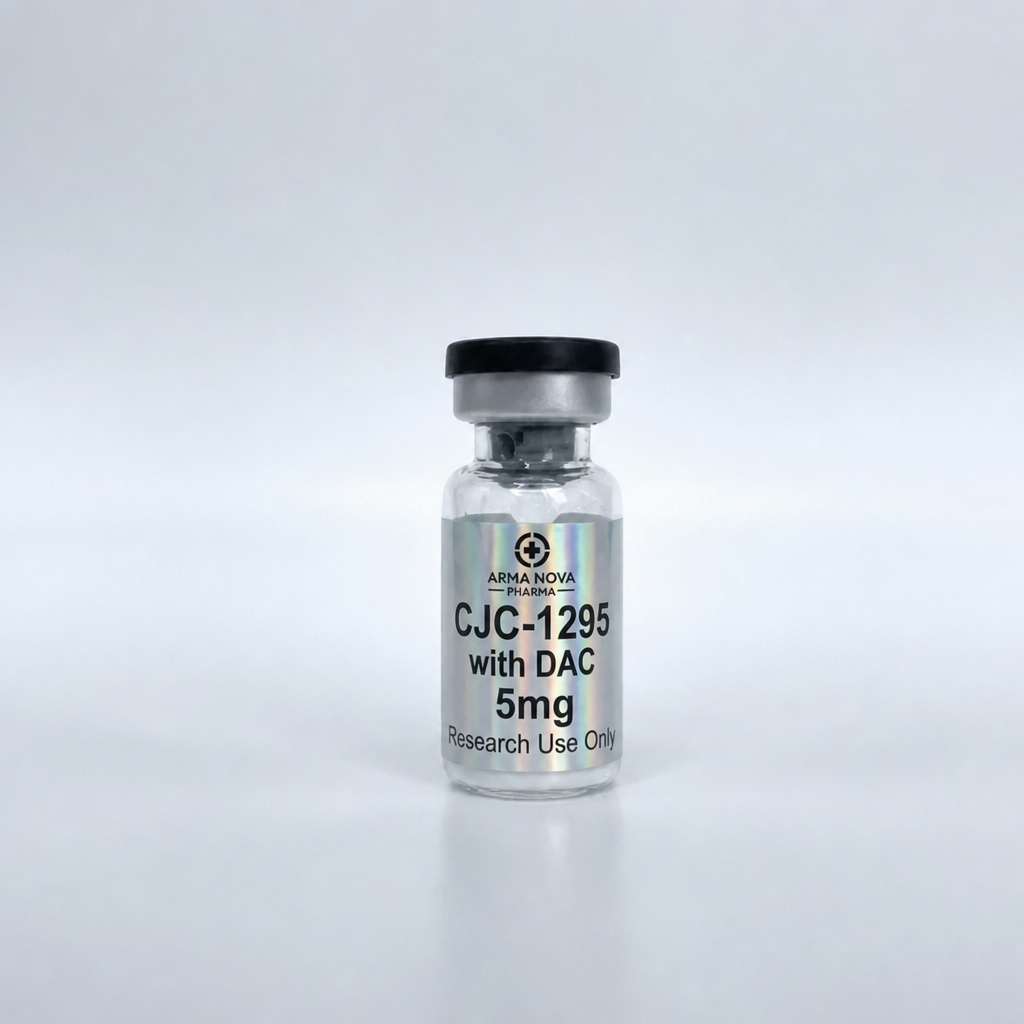
Arma Peptides stocks both CJC-1295 formulations with transparent batch-specific COAs, but understanding which variant your protocol requires—and why UK vendors frequently mislabel them—is essential before procurement.
ghrp 2 cjc 1295 no dac uk: What “No DAC” Actually Means: The Drug Affinity Complex Explained
CJC-1295 without DAC is structurally identical to native growth hormone-releasing hormone (GHRH) analogue Sermorelin, modified at four amino acid positions to resist enzymatic degradation. The Drug Affinity Complex (DAC)—a lysine-maleimide moiety—was engineered to covalently bind circulating serum albumin, creating a depot effect that extends plasma half-life from approximately 30 minutes (no DAC) to 6–8 days (with DAC).
This modification was detailed in Teichman et al.’s 2006 study published in the Journal of Clinical Endocrinology & Metabolism, which demonstrated that a single subcutaneous injection of CJC-1295 with DAC produced sustained GH and IGF-1 elevation for up to 6 days in healthy adults. The study recorded mean IGF-1 increases of 1.5- to 3-fold above baseline persisting across multiple days—an effect impossible with the unmodified peptide.
For researchers sourcing ghrp 2 cjc 1295 no dac uk, the practical implication is dosing frequency: CJC-1295 no DAC requires administration 1-3 times daily to maintain elevated GH pulse amplitude, whereas the DAC variant necessitates only once- or twice-weekly dosing. The two are not interchangeable, yet UK suppliers routinely conflate them or omit the DAC status entirely from product specifications.
Why GHRP-2 and CJC-1295 No DAC Are Stacked: Synergistic Mechanisms
Growth hormone secretion is regulated by two complementary pathways: GHRH (stimulatory) and somatostatin (inhibitory). CJC-1295 without DAC functions as a GHRH analogue, amplifying the magnitude of GH pulses by binding growth hormone-releasing hormone receptors on pituitary somatotrophs. GHRP-2 (Growth Hormone-Releasing Peptide-2) operates via the ghrelin receptor (GHS-R1a), triggering GH release through a distinct mechanism that simultaneously suppresses somatostatin.
The synergy arises because GHRP-2 and GHRH analogues activate independent but convergent signalling cascades. When administered together, the resulting GH pulse amplitude exceeds the additive effect of either peptide alone—a phenomenon documented across multiple preclinical models. GHRP-2’s anti-somatostatin activity creates a permissive environment for CJC-1295 no DAC to maximise GH output during each pulse window.
This stacking principle is why researchers investigating pulsatile GH dynamics typically pair a GHRH analogue with a secretagogue like GHRP-2, Ipamorelin 5mg UK, or hexarelin. The no-DAC formulation is specifically chosen when mimicking natural pulsatile secretion patterns is a research objective, as it permits discrete 90–120 minute GH elevation windows rather than sustained supraphysiological levels.
CJC-1295 With DAC vs. Without DAC: Half-Life, Protocols, and UK Sourcing Confusion
A 2006 study by Alba et al. in American Journal of Physiology – Endocrinology and Metabolism demonstrated that once-monthly administration of CJC-1295 with DAC normalised growth in GHRH-knockout mice, confirming sustained bioactivity from the albumin-binding modification. This extended pharmacokinetic profile contrasts sharply with CJC-1295 no DAC’s 30-minute half-life, necessitating fundamentally different research protocols.
Protocol Implications for UK Researchers
| Parameter | CJC-1295 No DAC | CJC-1295 With DAC |
|---|---|---|
| Half-life | ~30 minutes | 6–8 days |
| Dosing frequency | 1–3× daily | 1–2× weekly |
| GH secretion pattern | Pulsatile (mimics natural) | Sustained elevation |
| Typical research dose (per injection) | 100–200 mcg | 1–2 mg |
| Stacking compatibility | Excellent (with GHRP-2, Ipamorelin) | Limited (elevated baseline reduces pulse amplitude) |
UK vendors frequently label products as “CJC-1295” without specifying DAC status, leading to protocol errors. When procuring ghrp 2 cjc 1295 no dac uk material, explicit confirmation of the absence of the DAC modification is non-negotiable. Arma Peptides publishes molecular weight via HPLC-MS for each batch: CJC-1295 no DAC presents at ~3647 Da, whereas the DAC variant appears at ~3647 Da + ~238 Da (maleimide-lysine linker), yielding ~3885 Da.
GHRP-2: Mechanism, Selectivity, and Why It’s Preferred Over GHRP-6
GHRP-2 belongs to the first generation of synthetic growth hormone secretagogues, sharing structural homology with the endogenous peptide ghrelin. Unlike ghrelin, GHRP-2 demonstrates significantly higher potency at the GHS-R1a receptor with reduced off-target effects. The peptide is a hexapeptide (six amino acids) with a D-amino acid substitution at position 2, conferring resistance to peptidase degradation.
Compared to GHRP-6 (its predecessor), GHRP-2 produces comparable GH release with markedly attenuated appetite stimulation—an important distinction for research models sensitive to confounding metabolic variables. Both peptides elevate cortisol and prolactin at higher doses, though this effect is less pronounced than with hexarelin, which demonstrates substantial desensitisation after repeated administration.
For UK researchers designing ghrp 2 cjc 1295 no dac uk protocols, GHRP-2’s balanced profile—strong GH secretagogue activity without excessive appetite or prolactin elevation—makes it a rational first-line choice. Ipamorelin represents a more selective alternative with negligible cortisol/prolactin impact, though at slightly lower GH pulse amplitude.
Sourcing Research-Grade GHRP-2 and CJC-1295 No DAC in the UK: Purity, COAs, and Regulatory Context
The UK does not regulate peptides like GHRP-2 or CJC-1295 as controlled substances under the Misuse of Drugs Act 1971, but they fall under the Human Medicines Regulations 2012 when intended for human use. Research peptides marketed explicitly for in vitro or animal research are legal to purchase and possess, provided no therapeutic claims are made and labelling clearly states “not for human consumption” or “research use only.”
What ≥99% HPLC Purity Actually Means
High-performance liquid chromatography (HPLC) quantifies peptide purity by separating compounds based on hydrophobicity and measuring absorbance at 214-280 nm. A ≥99% purity specification indicates that 99% or more of the material by mass is the target peptide sequence, with ≤1% consisting of truncated sequences, deletion analogues, or synthesis by-products.
Arma Peptides publishes third-party HPLC chromatograms and mass spectrometry data for every batch. For CJC-1295 no DAC, expect a retention time of approximately 18-22 minutes (depending on column and gradient) and a predominant peak representing ≥99% of total UV absorbance. Secondary peaks below 0.5% are acceptable; anything above 1% suggests suboptimal synthesis or degradation.
Certificate of Analysis (COA) Verification Checklist
When sourcing ghrp 2 cjc 1295 no dac uk material, demand a COA containing:
- Batch number matching the vial label
- HPLC chromatogram with integrated peak areas and retention times
- Mass spectrometry (MS) confirming molecular weight (3647 Da for CJC no DAC, 1817 Da for GHRP-2)
- Peptide content (assay) by amino acid analysis or UV absorbance, typically 95–102%
- Endotoxin level (LAL test) ≤1.0 EU/mg for in vivo use
- Microbiological testing (sterility, if lyophilised under aseptic conditions)
- Date of analysis and testing laboratory accreditation
UK researchers should reject any supplier unwilling to provide batch-specific COAs or offering only generic “template” certificates not tied to actual test results.
Typical Research Protocols: GHRP-2 + CJC-1295 No DAC Stacking Frameworks
The following frameworks are derived from published investigational models and should be adapted to specific research objectives. All doses are expressed per kilogram body weight where applicable, or as absolute doses for in vitro work.
Protocol A: Pulsatile GH Stimulation (Most Common)
- CJC-1295 no DAC: 100–200 mcg per dose
- GHRP-2: 100–200 mcg per dose
- Frequency: Administered together 1–3× daily (typically before morning fasting period, post-training, and/or before sleep)
- Reconstitution: Bacteriostatic water (0.9% benzyl alcohol), 2 mL per 5 mg vial (final concentration 2.5 mg/mL)
- Duration: 8–12 weeks in exploratory models; longer-term studies exist but require monitoring for desensitisation
Protocol B: Intensive Pulsatile Secretion
- CJC-1295 no DAC: 100 mcg per dose
- GHRP-2: 200 mcg per dose
- Frequency: 3× daily (morning fasted, mid-afternoon, pre-sleep)
- Rationale: Maximises endogenous pulse amplitude without transitioning to sustained elevation; used when investigating acute lipolytic or anabolic markers
Researchers should note that CJC-1295 with DAC (available as CJC-1295 with DAC 5mg UK or CJC-1295 with DAC 10mg UK) follows entirely different dosing: typically 1–2 mg once or twice weekly, without co-administration of GHRP-2 at every injection due to already-elevated baseline GH.
UK Delivery, Storage, and Stability Considerations
Lyophilised peptides exhibit excellent stability when stored at -20°C, with CJC-1295 no DAC and GHRP-2 remaining >95% pure for 12+ months under these conditions. Once reconstituted with bacteriostatic water, stability drops significantly: expect 2–4 weeks at 2–8°C (refrigerated) before oxidative degradation or aggregation reduces potency below 90%.
Arma Peptides ships all orders via temperature-controlled next-day UK courier with cold packs during warmer months. Peptides should be refrigerated immediately upon receipt. Repeated freeze-thaw cycles degrade peptide integrity; aliquot reconstituted solutions into single-use volumes if possible.
Reconstitution Best Practices
- Allow lyophilised vial to reach room temperature (15–20 minutes) to prevent thermal shock condensation
- Add bacteriostatic water slowly down the vial wall—never inject directly onto the peptide cake
- Swirl gently; do not vortex or shake—mechanical shearing can cause aggregation
- Inspect for clarity—solution should be colourless and free of particulates; cloudiness indicates aggregation or contamination
- Store reconstituted peptide at 2–8°C in the original vial, protected from light
Common Sourcing Errors When Procuring GHRP-2 CJC-1295 No DAC UK
UK researchers encounter several recurring pitfalls when sourcing this peptide stack:
1. DAC Status Ambiguity
Many UK vendors list “CJC-1295” without specifying DAC modification. This ambiguity often conceals the with DAC variant (more expensive to synthesise, marketed as “premium”), leading researchers to dose incorrectly. Always confirm: if molecular weight is listed as ~3885 Da or product literature mentions “weekly dosing,” you’re receiving the DAC variant—inappropriate for pulsatile stacking protocols.
2. Under-Dosed or Over-Filled Vials
Nominal 5 mg vials should contain 5.0 ± 0.5 mg based on peptide assay (not just vial fill weight, which includes excipients like mannitol). Some suppliers over-fill to 6–7 mg and adjust pricing accordingly; others under-fill to 4 mg and maintain standard pricing. Demand an assay percentage on the COA—this reveals actual peptide content per vial.
3. Mistaking CJC-1295 No DAC for Modified GRF(1-29)
Modified GRF(1-29) is synonymous with CJC-1295 no DAC—both designate the same 29-amino-acid GHRH analogue. Some suppliers use one name, others the other. Confusion arises when researchers believe they’re purchasing two different compounds. Molecular weight confirmation (3647 Da) resolves this.
4. Overlooking Endotoxin Levels
Bacterial endotoxin contamination (measured in endotoxin units, EU) can confound in vivo research by inducing inflammatory cytokines independent of peptide activity. For subcutaneous or intravenous administration in animal models, endotoxin should be ≤1.0 EU/mg. In vitro work tolerates higher levels, but suppliers should still test and report.
Understanding the Research Landscape: What the Clinical Data Actually Shows
While extensive preclinical and Phase I/II data exist for CJC-1295 with DAC, fewer controlled human trials have isolated CJC-1295 no DAC because its short half-life renders it less commercially viable for therapeutic development. The compound is essentially Modified GRF(1-29), which was investigated as a potential GH deficiency treatment before being superseded by longer-acting analogues.
GHRP-2, meanwhile, reached Phase II clinical trials for GH deficiency and short bowel syndrome in the 1990s and early 2000s but was not advanced to market approval. Key findings from the clinical literature include:
- Dose-dependent GH secretion: GHRP-2 at 1 mcg/kg IV produced ~10-fold increases in peak GH; 2 mcg/kg yielded no further gain, suggesting receptor saturation around 1 mcg/kg
- Blunted response in obesity: Obese subjects demonstrated 30–50% lower GH response to GHRP-2 compared to lean controls, likely due to elevated free fatty acids and somatostatin tone
- Cortisol and prolactin elevation: Both hormones increased dose-dependently, though less than with GHRP-6 or hexarelin
- No tachyphylaxis at physiological doses: Repeated daily administration for 15 days maintained GH responsiveness, unlike hexarelin which desensitises within 7 days
For CJC-1295 no DAC specifically, Teichman et al. demonstrated that even a single dose of the DAC variant produced mean IGF-1 AUC increases of 50–100% over 7 days. By inference, the no-DAC variant requires multiple daily doses to sustain even a fraction of this effect—hence the stacking rationale with GHRP-2 to amplify each discrete pulse.
Regulatory and Ethical Context for UK Researchers
Peptides like GHRP-2 and CJC-1295 no DAC are neither approved medicines nor controlled substances in the UK. Their legal status for research purposes is clear: they may be purchased, possessed, and used in laboratory settings under the Human Medicines Regulations 2012, provided they are labelled for research or veterinary investigation and no therapeutic claims are implied.
The Medicines and Healthcare products Regulatory Agency (MHRA) does not require a research license for in vitro peptide work, though institutional ethics approval is mandatory for any in vivo animal study under the Animals (Scientific Procedures) Act 1986. Researchers affiliated with universities or pharmaceutical companies should consult their institutional review boards before procuring materials.
Arma Peptides explicitly labels all products “For Research Use Only – Not for Human Consumption” in compliance with UK law. Misuse of research peptides for unlicensed human enhancement, bodybuilding, or anti-ageing purposes is both illegal and unsafe, as these materials are not manufactured under Good Manufacturing Practice (GMP) for human drug production.
Comparing No-DAC vs. DAC for Research Design: Which Protocol Fits Your Study?
Selecting between CJC-1295 formulations hinges on your research question:
Choose CJC-1295 No DAC If:
- Your model investigates pulsatile GH secretion dynamics (e.g., circadian rhythms, exercise-induced pulses)
- You require rapid onset and offset to measure discrete physiological responses
- You are stacking with GHRP-2 or Ipamorelin to study synergistic secretagogue mechanisms
- You need to mimic natural GH secretion patterns rather than sustained supraphysiological elevation
- Your protocol involves frequent dosing flexibility (1–3× daily titration based on response)
Choose CJC-1295 With DAC If:
- Your study requires sustained GH/IGF-1 elevation over days (e.g., growth, wound healing, metabolic endpoints)
- Minimising dosing frequency is a priority (once or twice weekly)
- You are modelling chronic GH supplementation rather than acute pulsatile stimulation
- Stacking with GHRP-2 is not part of the protocol (baseline GH elevation reduces pulse amplitude)
For the majority of UK researchers searching for ghrp 2 cjc 1295 no dac uk, the objective is typically pulsatile GH augmentation, making the no-DAC formulation the rational choice. The DAC variant serves distinct research aims and should not be substituted without protocol redesign.
HPLC-Verified Sourcing: Why Third-Party Testing Matters
Peptide synthesis is complex, with multiple opportunities for sequence errors, incomplete coupling, or oxidation. Generic “Certificate of Analysis” templates—often PDFs lacking batch numbers or chromatograms—provide no assurance of quality. Authentic third-party HPLC/MS testing, conducted by accredited laboratories independent of the peptide manufacturer, is the only reliable verification method.
Arma Peptides commissions testing from ISO/IEC 17025-accredited UK laboratories, with results published per batch on the product page. Researchers can cross-reference batch numbers on received vials against online COAs—a transparency standard absent from most UK peptide vendors.
Red Flags in COAs
- No batch number: Template COAs reused across batches
- Generic “≥98%” claims without chromatogram: No way to verify actual purity
- Missing mass spectrometry: Purity alone doesn’t confirm correct sequence; MS is essential
- Testing date predates product listing: Suggests COA copied from another source
- No laboratory contact information: Legitimate testing labs provide phone/address for verification
Next-Day UK Delivery and Practical Ordering Logistics
Arma Peptides dispatches orders placed before 2 PM GMT on the same business day via Royal Mail 24-hour tracked service or DPD next-day courier. Peptides ship in insulated packaging with gel ice packs during spring/summer months (April–September) to maintain 2–8°C during transit.
Pricing for ghrp 2 cjc 1295 no dac uk reflects the complexity of synthesis and third-party testing costs. Typical UK market rates (as of 2026) for ≥99% HPLC-verified material:
- CJC-1295 no DAC 5 mg: £35–50
- GHRP-2 5 mg: £28–40
- Bulk discounts: 3+ vials typically 10–15% reduction per unit
Researchers should budget for bacteriostatic water (£6–8 per 30 mL), insulin syringes (0.3–0.5 mL, 29–31 gauge), and cold storage. A typical 8-week protocol at moderate dosing (100 mcg CJC no DAC + 100 mcg GHRP-2, twice daily) consumes approximately 11–12 mg of each peptide (3× 5 mg vials per compound).
Potential Adverse Research Observations and Limitations
While both peptides exhibit favourable safety profiles in published human trials, several dose-dependent effects warrant consideration in research design:
- Water retention: GH-mediated sodium retention can increase extracellular fluid volume by 2–5% in the first 2 weeks, potentially confounding body composition measurements
- Transient hypoglycaemia: Peak GH secretion 30–60 minutes post-injection can lower blood glucose 10–20 mg/dL; avoid dosing during fasted-state metabolic assessments unless glucose is a measured endpoint
- Injection-site reactions: Erythema, pruritus, or subcutaneous nodules occur in <5% of administrations; rotating injection sites mitigates this
- Cortisol/prolactin elevation: GHRP-2 doses >2 mcg/kg can double cortisol and prolactin for 2–4 hours; limit evening dosing if studying sleep architecture or HPA axis
- Desensitisation potential: Continuous high-dose GHRP-2 (>3 mcg/kg 3× daily) may reduce responsiveness over 4–6 weeks; cycling or dose moderation recommended
These observations derive primarily from human clinical trials; extrapolation to animal models requires species-specific pharmacokinetic adjustments.
Stacking Alternatives: GHRP-2 vs. Ipamorelin vs. Hexarelin
Researchers may consider alternative secretagogues depending on the specific research aims:
| Secretagogue | GH Potency | Cortisol/Prolactin | Appetite Effect | Desensitisation Risk |
|---|---|---|---|---|
| GHRP-2 | High (+++) | Moderate (++) | Low (+) | Low |
| GHRP-6 | High (+++) | Moderate (++) | High (+++) | Low |
| Ipamorelin | Moderate (++) | Minimal (+) | Minimal (+) | Minimal |
| Hexarelin | Very High (++++) | High (+++) | Moderate (++) | High (rapid) |
Ipamorelin 5mg UK is often selected when cortisol or prolactin elevation would confound endpoints (e.g., stress response studies, reproductive models). GHRP-2 remains preferable when maximal GH pulse amplitude is the priority and ancillary hormone shifts are acceptable or measured as secondary endpoints.
Frequently Cited Misconceptions in UK Forums and Grey Literature
Misconception 1: “CJC-1295 Is Always the DAC Version”
False. Original nomenclature was ambiguous, but current best practice distinguishes CJC-1295 with DAC (also called CJC-1295 DAC) from CJC-1295 no DAC (synonymous with Modified GRF 1-29). The latter is structurally a tetra-substituted GHRH(1-29) analogue without the albumin-binding lysine-maleimide modification. UK suppliers using “CJC-1295” without qualification are often selling the DAC variant due to higher profit margins.
Misconception 2: “Higher Doses Always Produce Stronger Effects”
GH secretagogue receptors saturate at relatively low doses. For GHRP-2, maximal GH release occurs around 1 mcg/kg; doubling to 2 mcg/kg yields marginal further increase but significantly elevates cortisol. Dose escalation beyond receptor saturation wastes material and increases adverse signals without proportional benefit.
Misconception 3: “Peptides Don’t Degrade If Kept Cold”
Lyophilised peptides are stable at -20°C, but reconstituted solutions degrade even under refrigeration. Oxidation of methionine residues, deamidation of asparagine/glutamine, and aggregation all occur in aqueous solution. Expect 10–20% potency loss after 4 weeks at 2–8°C; freeze-thaw accelerates this. Bacteriostatic water extends stability compared to sterile water alone, but degradation is inevitable.
Practical Example: Designing a 10-Week Exploratory Protocol
A hypothetical UK laboratory investigating the metabolic effects of pulsatile GH stimulation in a rodent obesity model might structure a protocol as follows:
Objective
Evaluate the impact of GHRP-2 + CJC-1295 no DAC on lipolysis markers and insulin sensitivity in diet-induced obese (DIO) mice over 10 weeks.
Materials Sourcing
- CJC-1295 no DAC: 4× 5 mg vials (≥99% HPLC, Arma Peptides, batch-verified COA)
- GHRP-2: 4× 5 mg vials (≥99% HPLC, batch-verified COA)
- Bacteriostatic water: 60 mL total
- Insulin syringes: 0.3 mL, 31-gauge, 100-pack
Dosing
- CJC-1295 no DAC: 100 mcg per dose (assumes 25 g mouse, ~4 mcg/g)
- GHRP-2: 100 mcg per dose
- Route: Subcutaneous, dorsal injection
- Frequency: Twice daily (morning and evening, 12-hour interval)
- Total duration: 10 weeks
Sample Reconstitution
- Reconstitute each 5 mg vial with 2 mL bacteriostatic water → 2.5 mg/mL concentration
- 100 mcg dose = 0.04 mL (40 µL or “4 IU” on insulin syringe)
- Each vial provides 50 doses; 2 doses/day × 7 days = 14 doses/week
- 10 weeks = 140 doses → 3 vials per peptide (150 doses total)
- Order 4× vials per peptide to allow for overfill variance and pilot dosing
Endpoint Measurements
- Weekly body composition (DEXA or EchoMRI)
- Fasting glucose and insulin (week 0, 5, 10)
- Serum IGF-1 (week 0, 5, 10)
- Adipose tissue gene expression (lipolytic enzymes: HSL, ATGL)
- Hepatic lipid content (Oil Red O staining at sacrifice)
Anticipated Challenges
- Injection tolerance: Twice-daily subcutaneous injections may induce stress; rotate sites and minimise handling time
- Peptide stability: Reconstituted vials last ~3 weeks refrigerated; prepare fresh vials every 2 weeks to ensure >95% potency
- Baseline GH variability: Obese rodents exhibit blunted GH; confirm model responsiveness with a pilot dose-response before committing to full cohort
Why UK Researchers Choose Arma Peptides for GHRP-2 CJC-1295 No DAC UK Procurement
Arma Peptides differentiates through:
- Batch-specific COAs: Every vial traces to an HPLC/MS report with chromatogram, mass spec, and endotoxin data
- ≥99% verified purity: Third-party UK laboratory testing, not in-house claims
- Transparent DAC specification: Product pages explicitly state “with DAC” or “no DAC”—no ambiguity
- Next-day UK delivery: Orders placed by 2 PM ship same-day via tracked courier
- Research-use compliance: All products labelled per UK regulations, institutional purchase orders accepted
- Customer support: Technical queries answered by staff with peptide biochemistry training, not generic call centres
For researchers requiring ghrp 2 cjc 1295 no dac uk materials meeting rigorous purity standards, Arma Peptides delivers the documentation, consistency, and logistical reliability necessary for reproducible research outcomes.
Conclusion: Precision Sourcing for Pulsatile GH Research
The GHRP-2 and CJC-1295 no DAC stack remains a cornerstone protocol for UK researchers investigating growth hormone secretagogue mechanisms, metabolic regulation, and pulsatile endocrine signalling. Yet the critical distinction between CJC-1295 with and without DAC—a structural modification that transforms a 30-minute half-life peptide into a week-long depot formulation—continues to create sourcing confusion and protocol errors across the UK research community.
When procuring ghrp 2 cjc 1295 no dac uk materials, demand explicit confirmation of DAC status via molecular weight verification (3647 Da for no-DAC), published HPLC chromatograms showing ≥99% purity, and mass spectrometry confirming sequence fidelity. Reject suppliers offering generic COAs, ambiguous product descriptions, or refusal to provide batch-specific documentation. The integrity of your research depends on knowing exactly what molecule you’re administering—and at what purity.
Arma Peptides supplies both CJC-1295 formulations with full traceability, next-day UK delivery, and the technical transparency serious research demands. Whether your protocol investigates pulsatile dynamics with the no-DAC variant or sustained GH elevation with the DAC-modified form, accurate sourcing is the foundation of reproducible science.
Research Use Only – Not for Human Consumption. All peptides sold by Arma Peptides are intended exclusively for in vitro research or animal studies conducted under appropriate institutional ethical approval. These products are not medicines, not intended for human use, and are not manufactured under GMP conditions required for therapeutic applications. UK researchers must comply with all applicable regulations including the Animals (Scientific Procedures) Act 1986 and Human Medicines Regulations 2012.
Related posts
Tesamorelin 10mg UK: Research-Grade Growth Hormone-Releasing Hormone Analogue for 2026 UK-based researchers investigating growth hormone-releasing hormone (GHRH) analogues frequently encounter a critical sourcing challenge:… Continue reading
Ipamorelin UK: The Selective Growth Hormone Secretagogue for Researchers in 2026 Among the growth hormone-releasing peptides available to UK researchers, ipamorelin stands apart for a... Continue reading
Tirzepatide 30mg UK: The Dual GIP/GLP-1 Receptor Agonist for Advanced Metabolic Research Tirzepatide represents the first dual glucose-dependent insulinotropic polypeptide (GIP) and glucagon-like peptide-1 (GLP-1)... Continue reading
HCG 5000IU UK: Research-Grade Sourcing and Clinical Context Guide 2026 Human chorionic gonadotropin at the 5000 international unit dosage represents one of the most frequently... Continue reading
HGH 100 IU UK: Verified Research-Grade Sourcing, Purity Standards, and Regulatory Context for 2026 Securing genuine, laboratory-verified hgh 100 iu uk formulations presents distinct challenges... Continue reading
Add comment