
No products in the cart.
BPC 157 UK Researchers Guide: Sourcing & Mechanisms 2026
BPC 157 UK Researchers Guide: Sourcing, Mechanisms, and Verification Standards
The majority of UK peptide suppliers describe BPC-157 as a “healing peptide” without addressing its fundamental biochemical origin: this 15-amino-acid sequence is a partial fragment derived from body protection compound (BPC) found naturally in human gastric juice. Understanding this gastric pentadecapeptide foundation is critical for researchers evaluating its reported cytoprotective, angiogenic, and tissue-repair properties in controlled experimental models. This BPC 157 UK researchers guide consolidates peer-reviewed mechanisms, HPLC purity verification protocols, and UK-specific sourcing criteria for laboratories and research practitioners requiring pharmaceutical-grade materials with documented chain-of-custody.
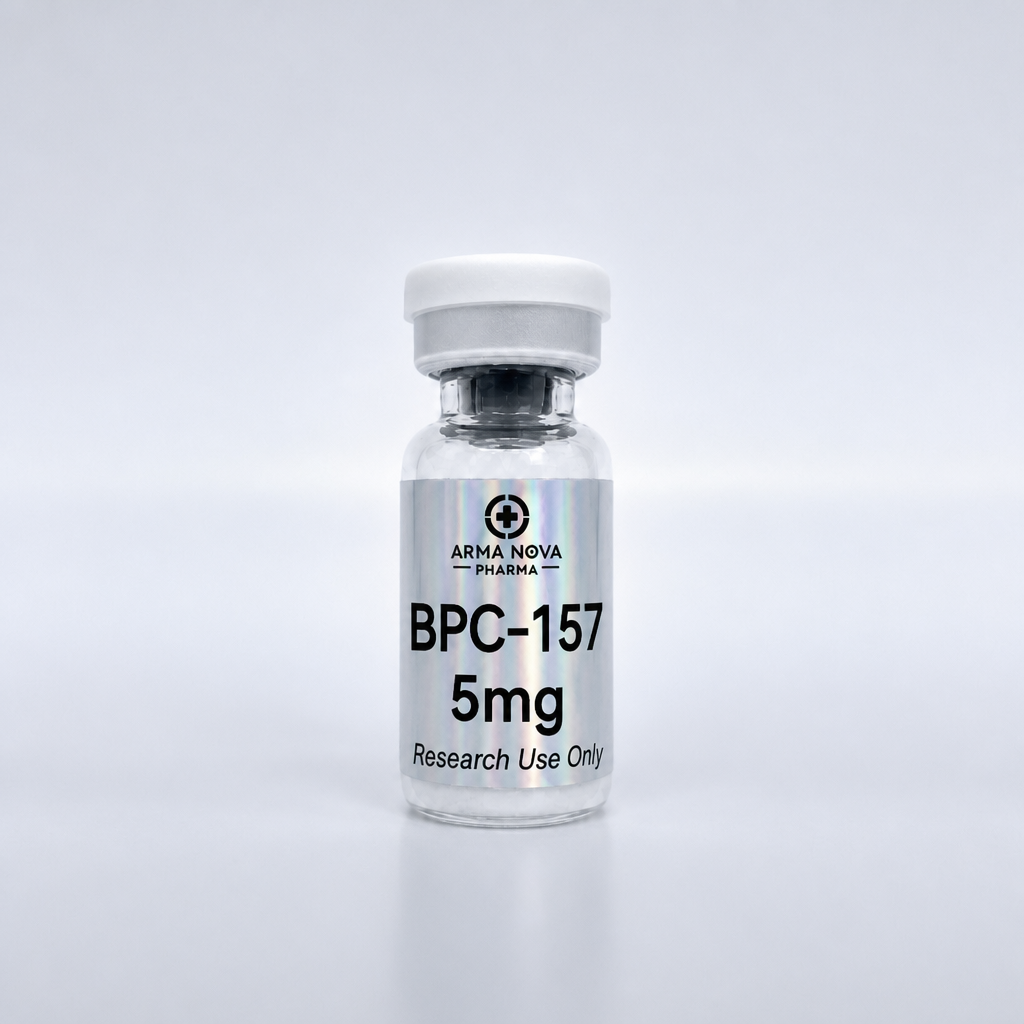
BPC-157, catalogued as PL 14736 and PL 10, represents a stable synthetic sequence replicating amino acids within the larger BPC protein complex secreted by gastric mucosa. Unlike many peptides studied exclusively in vitro, BPC-157 has been investigated across in vivo rodent models, ex vivo tendon healing assays, and mechanistic cell-culture systems for over three decades, predominantly by Croatian and Taiwanese research groups. The peptide’s reported effects span accelerated angiogenesis, modulation of nitric oxide pathways, growth factor upregulation (particularly VEGF and bFGF), and interaction with the FAK-paxillin cytoskeletal signalling network.
The Gastric Pentadecapeptide Origin: Why Biochemical Provenance Matters
BPC-157’s sequence (Gly-Glu-Pro-Pro-Pro-Gly-Lys-Pro-Ala-Asp-Asp-Ala-Gly-Leu-Val) was isolated and stabilised by Predrag Sikiric’s research group at the University of Zagreb School of Medicine during the late 1980s. It is a synthetic partial sequence of BPC, a protein naturally present in gastric secretions that exerts local protective effects on the gastric epithelium. The research hypothesis posited that isolating and stabilising this 15-amino-acid fragment would preserve cytoprotective activity while enabling systemic administration without rapid enzymatic degradation—a key limitation of full-length gastric peptides.
This gastric origin distinguishes BPC-157 from synthetic growth factor mimetics or wholly artificial peptide constructs. Sikiric et al. (2018) emphasise the brain-gut axis context, noting that BPC-157’s endogenous template functions in gastrointestinal mucosal repair and may exert neuromodulatory effects via the vagal nerve and enteric nervous system. The peptide’s reported resistance to gastric acid and peptidase degradation—unusual for a 15-mer—likely reflects structural motifs inherited from its gastric precursor, including multiple proline residues that confer conformational rigidity.
For UK researchers procuring BPC-157, verifying the correct 15-amino-acid sequence via mass spectrometry (MALDI-TOF or ESI-MS) is non-negotiable. Suppliers offering peptides labelled “BPC-157” without molecular weight confirmation (expected MW ~1419 Da for the acetate salt form) or sequence verification may be distributing truncated, scrambled, or entirely unrelated sequences.
Peer-Reviewed Mechanisms: Angiogenesis, Nitric Oxide, and Cytoskeletal Signalling
Three mechanistic pathways recur across BPC-157 literature: angiogenesis promotion via VEGF receptor signalling, nitric oxide (NO) pathway modulation, and focal adhesion kinase (FAK) activation linked to cytoskeletal remodelling during cell migration and wound closure.
Angiogenesis and VEGF Receptor Interaction
Chang et al. (2011) demonstrated in rat Achilles tendon models that BPC-157 administration accelerated tendon healing through enhanced tendon outgrowth, increased cell survival under oxidative stress, and improved directional cell migration. Critically, these effects were abolished when co-administered with VEGFR2 antagonists, indicating that BPC-157’s angiogenic activity is functionally dependent on VEGF receptor signalling rather than acting as a direct VEGF analogue. Immunohistochemistry revealed elevated CD31-positive microvascular density in treated tendon tissue at 7 and 14 days post-injury, correlating with improved tensile strength recovery.
The peptide does not appear to directly bind VEGF receptors as an agonist; instead, mechanistic evidence suggests it upregulates endogenous VEGF-A transcription and stabilises VEGFR2 surface expression on endothelial cells. This indirect mechanism may explain BPC-157’s reported synergy with other pro-angiogenic interventions and its activity even in models of impaired VEGF signalling, such as diabetic wound healing or corticosteroid-induced healing suppression.
Nitric Oxide Pathway: Dual Modulation Context-Dependent Effects
BPC-157 exhibits context-dependent modulation of nitric oxide synthase (NOS) isoforms. In models of gastric mucosal injury (NSAID-induced ulceration, ethanol damage), the peptide appears to enhance constitutive NOS (eNOS, nNOS) activity, promoting vasodilation and cytoprotective NO signalling. Conversely, in inflammatory models characterised by excessive inducible NOS (iNOS) expression—such as adjuvant arthritis or colitis—BPC-157 administration correlated with reduced iNOS levels and lower systemic nitrite/nitrate, suggesting anti-inflammatory NO suppression.
This dual profile is mechanistically plausible: physiological NO concentrations (picomolar to low nanomolar) mediate vascular homeostasis and tissue repair, whereas pathological NO overproduction (micromolar range via iNOS) generates peroxynitrite radicals and nitrosative stress. The gastric pentadecapeptide may function as a homeostatic modulator rather than a unidirectional NOS activator or inhibitor, with activity determined by local redox environment and inflammatory milieu.
FAK-Paxillin Cytoskeletal Signalling and Directional Migration
In vitro scratch-wound assays using human fibroblasts and endothelial cells have shown that BPC-157 accelerates wound closure through enhanced cell migration velocity and directionality, not merely proliferation. This effect correlates with phosphorylation of focal adhesion kinase (FAK) at Tyr397 and downstream activation of paxillin, proteins integral to integrin-mediated adhesion turnover during cell locomotion. Blocking FAK with pharmacological inhibitors (PF-573228) or dominant-negative constructs negates BPC-157’s pro-migratory effect, confirming FAK as a necessary signalling node.
The precise upstream trigger linking BPC-157 exposure to FAK phosphorylation remains uncharacterised. Potential mechanisms include integrin clustering, growth factor receptor transactivation (e.g., EGF or FGF receptors), or direct interaction with an as-yet-unidentified membrane receptor. No canonical peptide receptor for BPC-157 has been cloned or definitively identified, which remains a significant gap in mechanistic understanding.
Evidence Quality and Methodological Limitations
While BPC-157 has accumulated an extensive preclinical literature, UK researchers must approach this evidence critically. The majority of studies originate from a small number of research groups, predominantly in Croatia and Taiwan, with limited independent replication by unaffiliated laboratories. Many rodent studies employ intraperitoneal (IP) or intramuscular (IM) injection, dosing regimens (typically 10 µg/kg to 10 mg/kg), and outcome measures that may not translate directly to other experimental models or species.
Gwyer et al. (2019) conducted a systematic review of BPC-157 in musculoskeletal soft tissue healing, noting that while 90% of included animal studies reported statistically significant improvements in healing metrics (histology scores, tensile strength, cellularity), study quality was heterogeneous. Common limitations included small sample sizes (n=6–10 per group), lack of blinded outcome assessment, absence of dose-response characterisation, and limited reporting of adverse events or histopathological side effects. No human clinical trials of BPC-157 are registered on ClinicalTrials.gov or the EU Clinical Trials Register as of 2026, which constrains translational inference.
The peptide’s reported stability in gastric acid and resistance to enzymatic degradation is frequently cited but incompletely characterised. Detailed pharmacokinetic data—including absorption kinetics, peak plasma concentration (Cmax), area-under-curve (AUC), elimination half-life (t½), and tissue distribution following oral, subcutaneous, or IP administration—are sparse. This limits the ability to design rigorous dose-escalation or bioavailability studies.
BPC 157 UK Researchers Guide: HPLC Purity and Analytical Verification Standards
Pharmaceutical-grade peptide synthesis demands ≥95% purity for in vivo research and ≥99% for mechanistic cell-culture assays where contaminants—deletion sequences, truncated fragments, residual solvents (TFA, acetonitrile), or endotoxin—can confound experimental outcomes. For UK researchers sourcing BPC-157, the following verification criteria are foundational to this BPC 157 UK researchers guide:
High-Performance Liquid Chromatography (HPLC) Analysis
HPLC quantifies peptide purity by separating the target 15-mer from synthesis by-products (deletion sequences, diastereomers, aggregated dimers) based on hydrophobicity and charge. Reputable UK suppliers publish batch-specific HPLC chromatograms showing a single dominant peak at the expected retention time, with purity calculated as peak area percentage. For BPC-157, expect a major peak representing ≥99% of total UV absorbance (typically monitored at 214 nm or 220 nm).
Critical red flags include suppliers who provide only a “typical” or “representative” chromatogram rather than batch-matched documentation, chromatograms with multiple unidentified peaks >1% abundance, or baseline drift and noise suggesting poor instrument calibration. Always verify that the HPLC report includes injection date, column type (commonly C18 reverse-phase), gradient profile, and analyst signature.
Mass Spectrometry Sequence Confirmation
MALDI-TOF or electrospray ionisation mass spectrometry (ESI-MS) confirms molecular weight and, when coupled with tandem MS (MS/MS), can verify amino acid sequence. The expected monoisotopic mass for BPC-157 acetate is approximately 1419 Da. A mass spectrum showing the correct [M+H]⁺ ion and absence of significant impurity ions provides orthogonal confirmation to HPLC purity.
Suppliers offering BPC-157 without mass spec data cannot credibly verify sequence identity. Substitution of a single amino acid—such as leucine for isoleucine, or aspartic acid for glutamic acid—may alter bioactivity while producing visually similar chromatographic profiles.
Certificate of Analysis (COA) Transparency
Every batch should be accompanied by a COA detailing synthesis date, peptide content (net weight corrected for moisture and counterion), purity (HPLC %), endotoxin levels (EU/mg, critical for in vivo use), and sterility testing if applicable. UK-based suppliers should provide COAs from ISO-accredited analytical laboratories, ideally UK or EU-based, rather than unverifiable overseas testing houses.
Arma Peptides publishes batch-specific COAs for all peptide products, including BPC-157 5mg and BPC-157 10mg vials, with HPLC purity confirmed at ≥99% and endotoxin levels consistently below 1 EU/mg. This transparency is essential for reproducible experimental design and regulatory compliance under UK laboratory governance.
UK Regulatory Context: Research Use Only and Legal Compliance
BPC-157 is not authorised as a human medicine by the UK Medicines and Healthcare products Regulatory Agency (MHRA), nor is it listed as a controlled substance under the Misuse of Drugs Act 1971. It exists in a regulatory category as a research chemical, legally available for purchase and use exclusively in non-clinical research settings—academic laboratories, contract research organisations (CROs), and in vitro/in vivo experimental models.
Importantly, BPC-157 is explicitly prohibited in human clinical use or as a food supplement under UK law. The MHRA has issued enforcement notices against suppliers marketing peptides for human therapeutic use without a marketing authorisation. Researchers must ensure procurement documentation clearly specifies “for research use only” and that institutional ethics approvals (where applicable for animal studies) are in place prior to experimental use.
UK customs classification typically categorises research-grade peptides under HS code 2934.99 (other heterocyclic compounds), and no special import licence is required for quantities consistent with laboratory use. However, researchers should retain COA documentation and purchase invoices to demonstrate legitimate research intent if queried during inbound customs inspection.
Dosing Frameworks in Rodent Models: Translational Caveats
Published rodent studies employ BPC-157 doses ranging from 10 µg/kg (for systemic gastric protection) to 10 mg/kg (for acute injury models), typically administered intraperitoneally or via direct local injection. For a 250 g rat, 10 µg/kg corresponds to 2.5 µg per dose; for a 70 kg human (hypothetically), the same dose would be 700 µg. However, direct allometric scaling from rodent mg/kg to human equivalents is methodologically problematic without pharmacokinetic correction for species differences in metabolic rate, volume of distribution, and clearance pathways.
Researchers designing new BPC-157 experiments should consider dose-response characterisation across at least three log-fold concentrations, inclusion of vehicle-only controls, and blinding of outcome assessors to treatment group. Combination studies—such as BPC-157 co-administered with corticosteroids, NSAIDs, or other peptides like TB-500—are increasingly common; for UK researchers interested in synergistic protocols, pre-formulated options like BPC-157 + TB-500 Blend provide standardised dosing ratios and eliminate compounding variability.
Reconstitution, Storage, and Handling Protocols
Lyophilised BPC-157 should be stored at -20°C in the original sealed vial, protected from light and moisture. Under these conditions, shelf life typically exceeds 24 months without measurable degradation. Once reconstituted in bacteriostatic water or sterile saline, the peptide solution remains stable for approximately 14 days at 4°C or up to 6 months at -20°C in single-use aliquots.
Reconstitution protocol for a 5 mg vial (typical for the BPC-157 5mg format):
- Allow the lyophilised vial to equilibrate to room temperature before opening to prevent condensation
- Add 2.5 mL sterile bacteriostatic water (0.9% benzyl alcohol) to yield a 2 mg/mL stock solution
- Gently swirl (do not vortex) until powder fully dissolves—typically <60 seconds
- Aliquot into sterile cryovials (e.g., 0.5 mL per vial) to avoid repeated freeze-thaw cycles
- Label each aliquot with peptide identity, concentration, reconstitution date, and batch number
Avoid repeated freeze-thaw cycling, which can induce peptide aggregation and loss of bioactivity. If experimental protocols require daily dosing over extended periods, prepare working-concentration aliquots frozen separately and thaw only as needed.
Comparing UK Suppliers: Red Flags and Due Diligence Checklist
The UK peptide market includes both ISO-accredited laboratory suppliers and unregulated resellers dropshipping from overseas manufacturers with minimal quality oversight. This BPC 157 UK researchers guide emphasises the following due diligence criteria:
| Criterion | Minimum Standard | Red Flag |
|---|---|---|
| HPLC Purity | ≥99% verified per batch with chromatogram | Generic “≥98%” claim without batch-specific data |
| COA Availability | Published online or provided pre-purchase upon request | “Available upon request” but not actually provided |
| Mass Spec Confirmation | MALDI-TOF or ESI-MS showing expected MW ~1419 Da | No mass spec data; HPLC only |
| Endotoxin Testing | <1 EU/mg for in vivo use; LAL assay documented | No endotoxin data provided |
| UK Delivery Timeframe | Next-day or 48-hour delivery with tracked shipping | 7–14 day shipping from non-UK warehouse |
| Regulatory Labelling | “For research use only” clearly stated on product and invoice | Marketing language implying human therapeutic use |
| Customer Support | Technical queries answered by qualified personnel; references provided | Generic responses; inability to discuss synthesis methods or purity assays |
Suppliers unable or unwilling to provide batch-specific analytical documentation should be disqualified from consideration. The marginal cost savings are negated by experimental irreproducibility and potential confounding from impure or mislabelled materials.
Practical Experimental Design Considerations
Researchers initiating BPC-157 studies should anticipate several methodological challenges unique to this peptide:
Lack of Validated Biomarkers
No plasma, serum, or tissue biomarker has been validated as a direct measure of BPC-157 activity. Unlike peptides with known receptor targets (e.g., GLP-1, IGF-1), BPC-157’s receptor identity remains unknown, precluding receptor occupancy assays or competitive binding studies. Researchers typically rely on downstream functional readouts—histological healing scores, tensile strength testing, angiography, or inflammatory cytokine panels—rather than direct peptide exposure biomarkers.
Route of Administration and Bioavailability
BPC-157 has been administered via intraperitoneal injection, intramuscular injection, subcutaneous injection, oral gavage, and even topical application in published studies. Comparative bioavailability data across these routes are minimal. Oral bioavailability appears surprisingly high for a 15-amino-acid peptide, possibly due to gastric acid resistance and uptake via peptide transporters (PEPT1/2) in the intestinal epithelium, but quantitative pharmacokinetics are lacking. Researchers should select routes based on experimental objectives and consider pilot dose-escalation or route-comparison arms.
Timing and Duration of Treatment
Acute injury models (tendon laceration, ligament transection, gastric ulceration) typically initiate BPC-157 immediately post-injury and continue daily dosing for 7–28 days. Chronic inflammatory models (arthritis, colitis) may employ longer treatment durations (4–8 weeks). Preliminary evidence suggests BPC-157 is most effective when administered during the inflammatory and proliferative phases of healing rather than late-stage remodelling, but systematic phase-specific studies are scarce.
Emerging Research Directions and Knowledge Gaps
Despite three decades of investigation, key mechanistic and translational questions remain unresolved:
- Receptor identification: The absence of a defined cognate receptor for BPC-157 limits mechanistic pharmacology and the development of selective antagonists or radioligand binding assays.
- Human pharmacokinetics: No published human PK data exist. Parameters such as absorption, distribution, metabolism, and excretion (ADME) are extrapolated from rodent studies, introducing significant uncertainty.
- Safety pharmacology: Long-term toxicity studies, reproductive toxicity assessments, and comprehensive histopathology following chronic BPC-157 administration are absent from the literature. Short-term rodent studies report minimal adverse events, but this does not constitute comprehensive safety characterisation.
- Interaction with comorbidities: How BPC-157’s activity is modified by diabetes, obesity, immunosuppression, or concurrent medications (e.g., corticosteroids, NSAIDs, anticoagulants) is poorly characterised, despite these representing common real-world experimental confounders.
- Structural analogues and optimisation: Limited structure-activity relationship (SAR) studies have explored truncated or modified BPC-157 sequences to identify minimal active fragments or enhanced-stability analogues.
UK researchers have the opportunity to address these gaps through rigorous, hypothesis-driven experimental designs that build on—and critically evaluate—the existing literature base.
Sourcing BPC-157 in the UK: Next-Day Delivery and Quality Assurance
For UK-based laboratories, supply chain reliability and analytical transparency directly impact experimental timelines and data quality. Arma Peptides operates fast UK & EU fulfilment with next-day delivery across mainland Britain, eliminating customs delays and international shipping risks. All peptide batches undergo third-party HPLC and mass spectrometry verification, with COAs published per batch and accessible to researchers pre-purchase.
Peptides are shipped in insulated packaging with gel ice packs to maintain cold-chain integrity during transit, critical for preserving lyophilised peptide stability. Orders placed before 2 PM GMT typically dispatch same-day for next-working-day delivery via tracked courier, with specialised handling for temperature-sensitive biologics.
Researchers requiring specific batch reservations for multi-phase studies—ensuring identical material across experimental timepoints—can request batch-matching services to eliminate inter-batch variability as a potential confounder. This level of supply chain control is rarely available from overseas suppliers or marketplace resellers operating dropship models.
Final Considerations: Rigour, Reproducibility, and Realistic Expectations
BPC-157 presents a compelling mechanistic profile and an extensive—if methodologically uneven—preclinical literature supporting roles in tissue repair, angiogenesis, and cytoprotection. However, enthusiasm must be tempered by recognition of the evidence limitations: reliance on a narrow set of research groups, absence of human trials, incomplete receptor characterisation, and limited independent replication.
UK researchers integrating BPC-157 into experimental protocols should prioritise rigorous controls, dose-response characterisation, blinded outcome assessment, and transparent reporting of both positive and null findings. The peptide is not a panacea, and experimental designs premised on unrealistic effect sizes or universal efficacy across injury models will likely yield irreproducible results.
Equally, sourcing decisions must prioritise verified purity, batch-to-batch consistency, and transparent analytical documentation. The marginal cost difference between HPLC-verified ≥99% peptide and unverified “research-grade” material is negligible relative to the total cost of an experimental study—reagents, animal housing, personnel time, and opportunity cost of failed experiments due to impure or degraded peptides.
This BPC 157 UK researchers guide has outlined the gastric pentadecapeptide’s mechanistic foundations, the peer-reviewed evidence base with critical appraisal of methodological limitations, UK-specific regulatory context, and practical sourcing criteria for laboratories demanding pharmaceutical-grade materials. By grounding procurement and experimental design decisions in biochemical first principles, analytical verification standards, and realistic interpretation of existing evidence, UK researchers can contribute meaningfully to the evolving understanding of BPC-157’s biological activity and translational potential.
This article is intended exclusively for educational and research purposes. BPC-157 is not approved for human therapeutic use in the United Kingdom or European Union. All experimental use must comply with institutional ethics approvals, UK Home Office licensing requirements for animal research where applicable, and MHRA regulations prohibiting unauthorised medicinal use. Researchers are responsible for ensuring compliance with all applicable legal and regulatory frameworks governing peptide research in their jurisdiction.
Related posts
Tesamorelin 10mg UK: Research-Grade Growth Hormone-Releasing Hormone Analogue for 2026 UK-based researchers investigating growth hormone-releasing hormone (GHRH) analogues frequently encounter a critical sourcing challenge:… Continue reading
Ipamorelin UK: The Selective Growth Hormone Secretagogue for Researchers in 2026 Among the growth hormone-releasing peptides available to UK researchers, ipamorelin stands apart for a... Continue reading
Tirzepatide 30mg UK: The Dual GIP/GLP-1 Receptor Agonist for Advanced Metabolic Research Tirzepatide represents the first dual glucose-dependent insulinotropic polypeptide (GIP) and glucagon-like peptide-1 (GLP-1)... Continue reading
HCG 5000IU UK: Research-Grade Sourcing and Clinical Context Guide 2026 Human chorionic gonadotropin at the 5000 international unit dosage represents one of the most frequently... Continue reading
HGH 100 IU UK: Verified Research-Grade Sourcing, Purity Standards, and Regulatory Context for 2026 Securing genuine, laboratory-verified hgh 100 iu uk formulations presents distinct challenges... Continue reading
Add comment