
No products in the cart.
Peptides UK reviews: evidence behind the ratings

Written by
Arma Peptides Team
Research Content Editor


 23 Oct 2026
 4 min read

1. What peptides UK reviews can—and cannot—verify
Verdict: reviews are useful for understanding reported service experiences, not proving product identity, purity or research outcomes. Look for specific, dated accounts that explain what happened and whether the reviewer describes an order or a personal impression. Even detailed feedback is not a substitute for a batch-matched report. Our HMG 75IU review illustrates how to assess listing and documentation claims.

2. Check that a COA matches the product batch
Verdict: a certificate of analysis (COA) is more informative when it identifies the item and the specific batch being sold. Check the lot or batch number, test date, laboratory details, methods and reported results; compare the identifier with the product packaging or listing. A generic report without a clear match offers less assurance. See the supplier’s HPLC and batch COAs and check what each report actually covers.

3. Treat HPLC claims as one part of the evidence
Verdict: high-performance liquid chromatography (HPLC) can provide analytical information about a sample, but a stated purity result does not establish every aspect of quality, handling or suitability. Read the method and report alongside the batch identity and other available testing. It also cannot establish that a product is appropriate for human use. For background, read what peptides do.
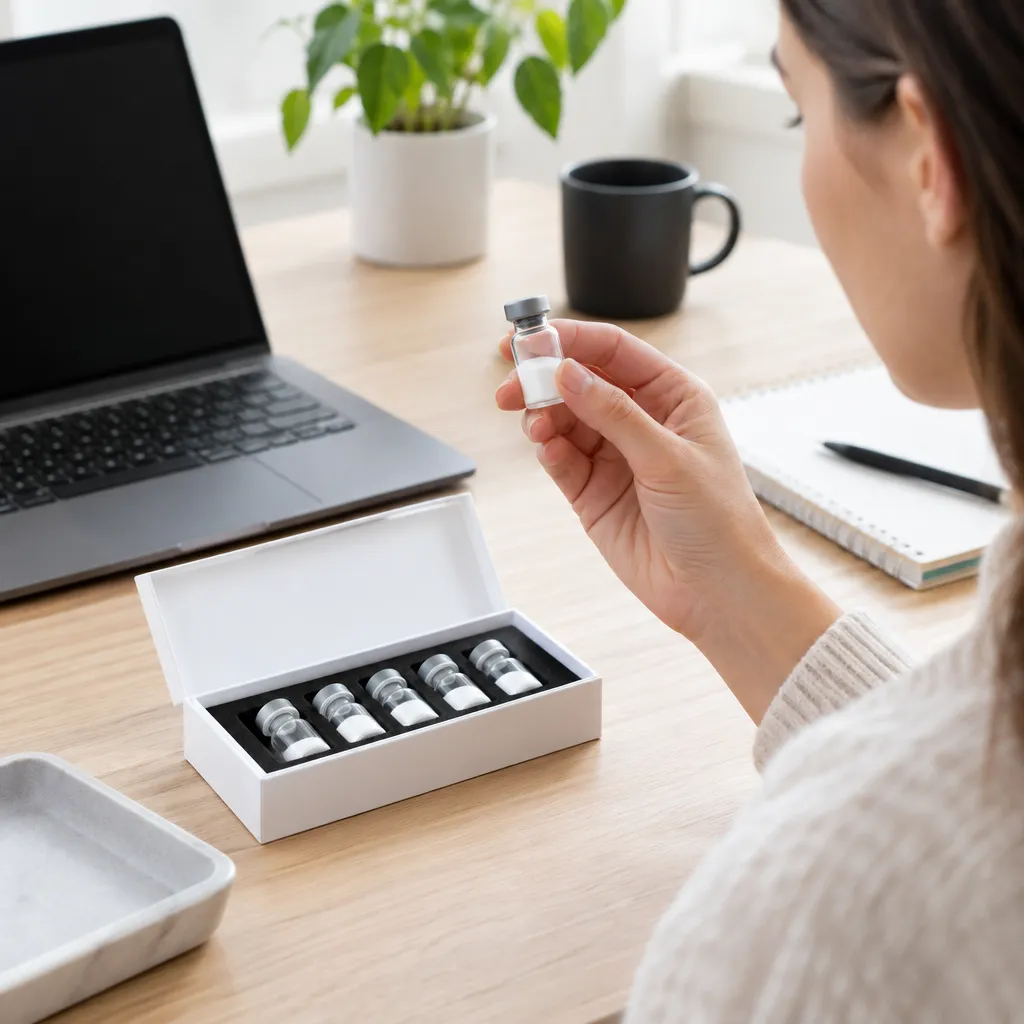
4. Assess product pages for clear, consistent information
Verdict: a useful product page states what is being sold, its stated specification, quantity and research-use boundary without promising health outcomes. Check that the product name and details agree across the listing, label and supporting paperwork. Vague descriptions, unsupported promises or missing documents are reasons to pause and seek clarification before deciding.
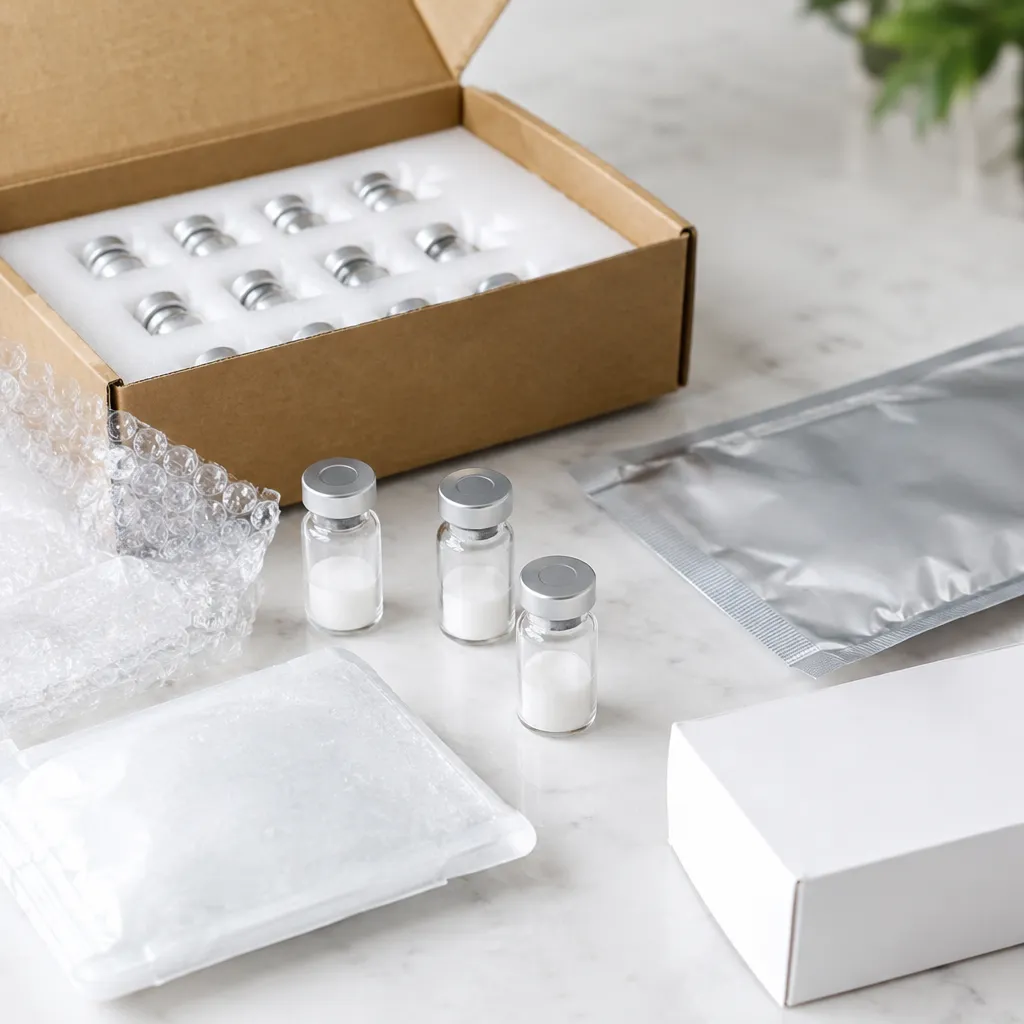
5. Read delivery terms before weighing speed claims
Verdict: “fast delivery” is a claim to check against published terms, not a guarantee of arrival by a particular date. Look for dispatch estimates, tracked-delivery coverage, shipping costs and instructions for delays or missing parcels. A review may describe one person’s order, but it cannot establish the current service terms for every delivery.

6. Use customer-service reviews as service evidence only
Verdict: dated, detailed feedback may help you judge how a supplier communicates or handles order issues. Look for recurring, specific descriptions rather than isolated praise or complaints, and consider whether the supplier responds constructively. Such comments can inform service expectations; they do not verify product contents or demonstrate research outcomes.
7. Apply the checks to Arma Peptides before deciding
Verdict: Arma Peptides states that it offers batch COAs, HPLC verification and tracked delivery, and describes independent testing for peptide pens. These statements are starting points for review, not a substitute for checking the current product-specific documents and delivery terms. Buyers seeking a named option can inspect the BPC-157 & TB-500 Blend listing and its available details.
Peptides supplier review FAQs
Are research peptides legitimate products?
“Research peptide” describes a product presented for research use; that label alone does not verify its identity, quality or authorisation as a medicine. Check the product documentation and intended-use statement independently.
Are peptides legal to buy in the UK?
The legal position depends on the substance, its intended use and how it is supplied. Check current UK requirements for the specific product rather than assuming that online availability confirms its status.
Is a UK peptides website safe to order from?
No website can be judged from its UK focus alone. Review its contact and delivery terms, product information, batch-specific documents and stated use, and pause if key details are unclear.
What risks are associated with using research peptides?
Risks may include uncertain identity, contamination, handling issues and health effects that are not established by a supplier review. Research-use products should not be treated as medicines or assumed suitable for human use.
Does an HPLC purity result prove a peptide is safe to use?
No. HPLC results can describe aspects of a tested sample, but do not by themselves prove sterility, safe handling, suitability for people or authorisation as a medicine.
Can a certificate of analysis confirm a product is sterile?
Only if the report includes an appropriate sterility test and clearly identifies the tested sample. A COA that reports other analytical results does not, by itself, establish sterility.
What should I do if a supplier does not provide batch paperwork?
Ask for the current batch’s documentation and check that its identifiers match the product. If the supplier cannot clarify what was tested, consider pausing rather than relying on general claims or reviews.
How can I tell whether a peptide product is authorised as a medicine in the UK?
Check current information from the UK medicines regulator for the specific product and its authorisation status. A supplier’s product page, customer reviews or research-use label is not proof of medicine authorisation. For personal health questions, consult a qualified healthcare professional, particularly if pregnant or breastfeeding, managing a chronic condition, taking other medicines, or considering use for a child.
Explore the product details
Review the listing and available batch documentation for the BPC-157 & TB-500 Blend, and compare them with the checks in this guide.
About the author
Arma Peptides Team
Research Content Editor
Hannah Whitaker is a UK-based science writer with a background in life-sciences communications, specialising in research-use peptides and laboratory product information. She makes HPLC verification, batch certificates of analysis and product documentation clear and accessible for readers seeking well-documented research materials. Her articles draw on published research and supplier documentation, with a measured approach to product handling and evidence. She clearly distinguishes laboratory research use from clinical or personal use.
Research-use peptide resourcesHPLC verification and batch COAsLaboratory product documentationResearch-use handling information


Related posts

Kisspeptin is a family of signalling peptides studied for its role in communication between the brain and the reproductive hormone system. Continue reading

Glow 70mg is a product name that raises two separate questions: what the label describes and what evidence supports the product. Continue reading

MGF and PEG-MGF names can look similar in search results, but a shared name does not establish that two listings describe the same material. Continue reading

For anyone searching for retatrutide in the UK, the key question is not simply where to buy it, but whether a research listing gives enough... Continue reading

Bac water is a term commonly used for bacteriostatic water: water formulated with a preservative intended to inhibit bacterial growth under specified conditions. Continue reading
Add comment