
No products in the cart.
Glow 70mg: How to Check Its Composition and Evidence

Written by
Arma Peptides Team
Research Content Editor


 22 Oct 2026
 7 min read
Glow 70mg is a product name that raises two separate questions: what the label describes and what evidence supports the product. The key is to check the specific listing and batch documentation rather than infer a formula, intended effect or use from the name alone.
What does Glow 70mg refer to?
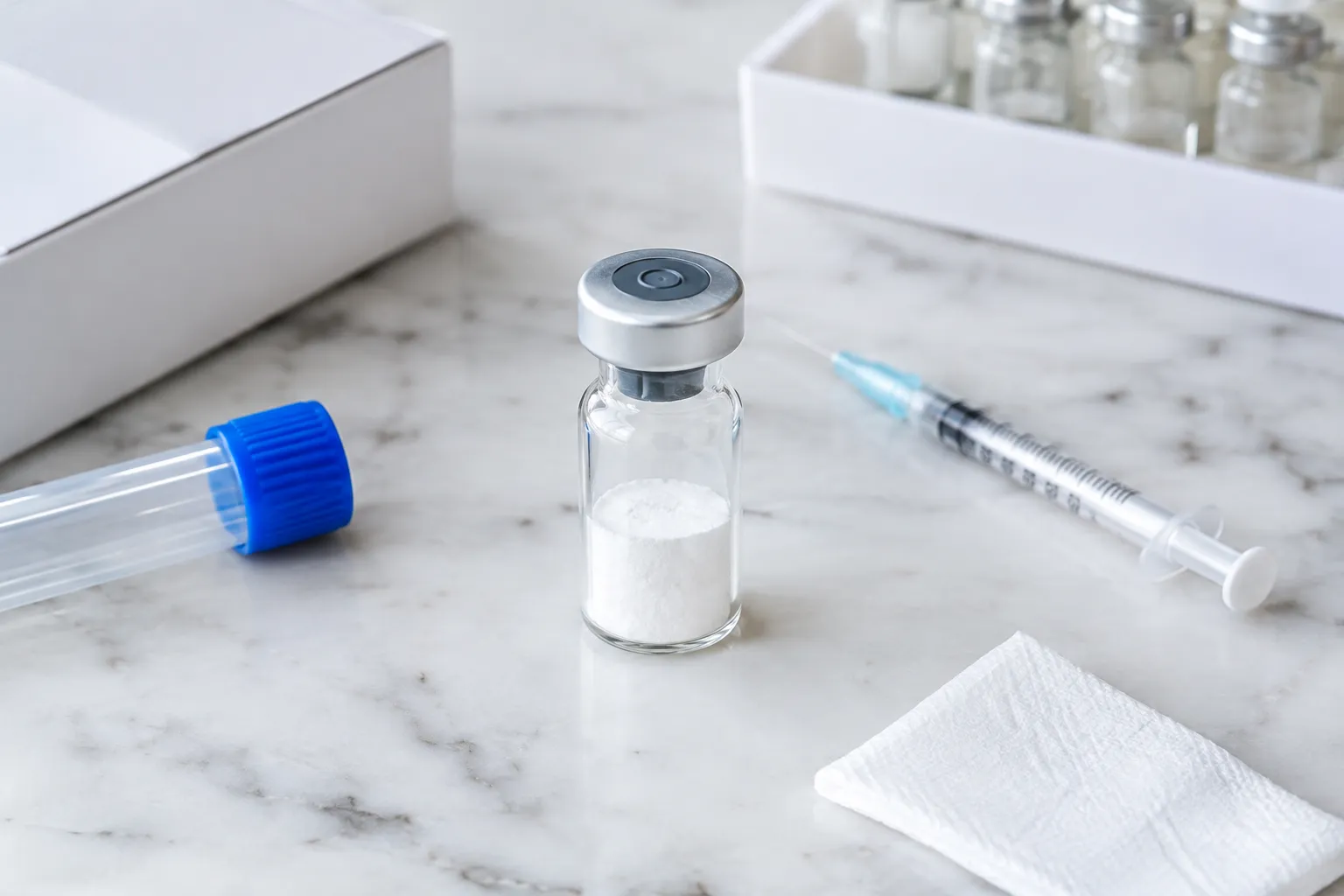
Glow 70mg is a named research-grade product listing. The “70mg” part of the name indicates a stated total amount, but it does not by itself tell you how that amount is divided among ingredients. To understand what the product contains, check its current product information and any accompanying batch documents.
How to interpret the blend label
For a blend, a total amount and the amount of each component are not necessarily the same thing. A label stating 70mg does not, on its own, establish that each ingredient is present at 70mg—or reveal how much of any individual ingredient is included.
Before drawing conclusions, look for a product-specific composition that names each component and states its amount. If that information is not clear, the label alone cannot answer questions about the blend’s proportions. Do not use a total figure to calculate a component amount or make assumptions about how a product should be used.
Check the product’s stated composition
Product names are not a reliable substitute for a full ingredient list. Formulas and naming conventions can differ between products, so check the current listing for Glow 70mg and compare any stated ingredients against the documentation for that product and batch.
This is especially relevant when browsing a supplier’s wider range. For instance, Arma Peptides lists GHK-Cu research material and a BPC-157 and TB-500 blend as separate products. Those separate listings should not be taken as evidence that either product is part of Glow 70mg. Confirm the composition from the Glow listing itself.
What research can and cannot tell us about Glow

Research findings need to be matched to the exact product being discussed. Evidence about an individual compound does not automatically establish the composition, properties or effects of a named blend. Readers assessing Glow 70mg should distinguish product documentation from research claims about separate substances.
Evidence on the blend versus its components
A study of one ingredient cannot establish what happens with a combination of ingredients. The quantities, formulation and context may differ, and research on individual components does not prove that they have the same effects when combined in a particular product.
Likewise, information about another product with a similar name does not establish the composition of Glow 70mg. For a meaningful comparison, the ingredient list, amounts and product identity need to match. If research describes a compound but does not examine the finished blend, treat it as evidence about that compound—not as proof about Glow.
Why claims need careful interpretation
When assessing a claim, check what was actually studied, what product or ingredient was involved, and whether the finding applies to the question being asked. Early or limited research may raise questions for further investigation without establishing a reliable outcome for a particular blend.
Marketing language, online discussion and testimonials are not substitutes for product-specific evidence. Claims about health, appearance or performance should not be inferred from the name of a product or from findings that concern a different preparation. A laboratory research product is not established as suitable for personal use by the existence of research on one of its possible components.
How to assess research-grade Glow 70mg

For laboratory buyers, a practical review starts with product identity and documentation. Check that the label, listing and any report refer to the same product and batch. Then note what each document actually states, rather than treating a general quality description as proof of every possible quality characteristic.
Review the batch COA and HPLC information
A certificate of analysis (COA) can document the results reported for a product batch. Check whether it identifies the product and batch or lot, gives a report date, and states which tests were performed and what those tests found.
HPLC, or high-performance liquid chromatography, is an analytical method used to separate and assess components in a sample. HPLC information may help document findings about a sample, but the method name alone does not tell you what was measured or what conclusions the report supports. Read the stated scope and results.
Arma Peptides describes its approach to peptide pen testing as involving independent laboratory testing, including HPLC analysis, and says its lab results can address matters such as purity, compound identification and other screening. These descriptions do not replace checking the relevant report: confirm that the document is batch-specific and that its stated tests cover the information you need. A COA also cannot establish personal suitability or a health outcome.
When comparing suppliers, use concrete checks rather than general assurances: Is the product clearly identified? Is the batch or lot traceable? Does the report specify its methods and results? Can the listing and report be matched without ambiguity? These questions help separate documented information from claims that a document does not address.
Check handling and storage guidance
Storage and handling requirements can depend on the specific product and its documentation. Use the instructions supplied for the product and follow the relevant laboratory procedures; avoid substituting generic online guidance where it conflicts with product-specific information.
Keep the label and batch documents with the product so its identity and handling instructions remain clear. If the documentation leaves a practical laboratory question unanswered, seek appropriate technical advice before proceeding. A qualified professional should be consulted about any health-related question specific to your circumstances.
UK research-use and purchasing considerations
The phrase “research-grade” describes a product’s stated research-use context; it should not be read as approval for personal health, cosmetic or therapeutic use. UK buyers should check the supplier’s intended-use statement and consult current official guidance if they need to establish regulatory requirements for their particular work.
Confirm intended use before ordering
Arma Peptides presents its products for laboratory research use only. A research-use statement is not a recommendation for self-administration, nor does it establish that a product is a medicine or appropriate for personal use.
Before ordering, consider whether the product’s stated purpose fits your legitimate laboratory requirements and whether you have the procedures and documentation needed for that work. Do not treat online claims or informal advice as a personal-use protocol.
Use the product page for current specifications
The product page is the place to check the current listing, stated composition, available documentation and availability details for Glow 70mg. Compare the information there with the product label and any batch-specific report before making a purchasing decision.
The same document-first approach is useful when researching other listings. For example, the Tesamorelin ipamorelin blend listing is a separate product page, not a source for assumptions about Glow 70mg. Keep each product’s identity and documentation distinct.
Glow 70mg FAQ
Is Glow 70mg approved as a medicine in the UK?
A product name or research-use listing does not establish that Glow 70mg is approved as a medicine in the UK. Check current information from the relevant UK regulator if you need to establish a product’s regulatory status.
Can Glow 70mg be used for personal health or skincare?
Glow 70mg is presented by Arma Peptides for laboratory research use only, not as a product for personal health or skincare. Research-use labelling should not be interpreted as evidence of safety or suitability for those purposes.
Can Glow 70mg be combined with other peptides?
There is no general basis for assuming that combining Glow 70mg with another peptide is appropriate or supported by research. Do not infer compatibility from separate product listings or online protocols.
How does Glow 70mg differ from KLOW?
Names alone cannot establish whether Glow 70mg and another product refer to the same formulation. Compare the stated ingredients, amounts and batch documentation for each specific product rather than assuming their names mean the same thing.
Does research on one ingredient prove the blend has the same effects?
No. Research on an individual ingredient does not establish the effects of a finished blend, whose composition and proportions may differ from those examined in the research.
What does research-grade mean for a peptide product?
“Research-grade” indicates a stated research-use context; it does not, by itself, establish approval as a medicine or suitability for personal use. Review the product’s documentation to see what is specifically stated and tested.
How can I tell whether a COA applies to the batch I received?
Match the product name and batch or lot identifier on the COA to the label or packaging. Also check the report date, tests performed and stated results; a report without a clear batch match may not document the product in hand.
Should I follow generic online instructions if they differ from the product documentation?
No. Follow the product-specific documentation and relevant laboratory procedures rather than generic online instructions that conflict with them. If a technical question remains unresolved, seek appropriate laboratory advice.
Review the Glow 70mg listing
Reviewing the current listing and batch information can help you check product identity, stated composition and the scope of available documentation before making a decision.
About the author
Arma Peptides Team
Research Content Editor
Hannah Whitaker is a UK-based science writer with a background in life-sciences communications, specialising in research-use peptides and laboratory product information. She makes HPLC verification, batch certificates of analysis and product documentation clear and accessible for readers seeking well-documented research materials. Her articles draw on published research and supplier documentation, with a measured approach to product handling and evidence. She clearly distinguishes laboratory research use from clinical or personal use.
Research-use peptide resourcesHPLC verification and batch COAsLaboratory product documentationResearch-use handling information


Related posts

Kisspeptin is a family of signalling peptides studied for its role in communication between the brain and the reproductive hormone system. Continue reading

Reviews of peptide suppliers in the UK can help you assess communication and delivery, but customer ratings alone cannot verify what is in a product. Continue reading

MGF and PEG-MGF names can look similar in search results, but a shared name does not establish that two listings describe the same material. Continue reading

For anyone searching for retatrutide in the UK, the key question is not simply where to buy it, but whether a research listing gives enough... Continue reading

Bac water is a term commonly used for bacteriostatic water: water formulated with a preservative intended to inhibit bacterial growth under specified conditions. Continue reading
Add comment