
No products in the cart.
CJC 1295 with DAC 10mg UK: Verified Research Peptide
CJC 1295 with DAC 10mg UK: Complete Scientific Overview and Sourcing Guide
The cjc 1295 with dac 10mg uk research peptide market suffers from widespread confusion—most UK suppliers conflate standard CJC-1295 (modified GRF 1-29) with the DAC-conjugated variant, despite these compounds exhibiting fundamentally different pharmacokinetics. The Drug Affinity Complex (DAC) modification—specifically a lysine-maleimide covalent bond that attaches the peptide to serum albumin—extends half-life from approximately 30 minutes to 6–8 days, fundamentally altering dosing protocols, experimental design, and research applications.
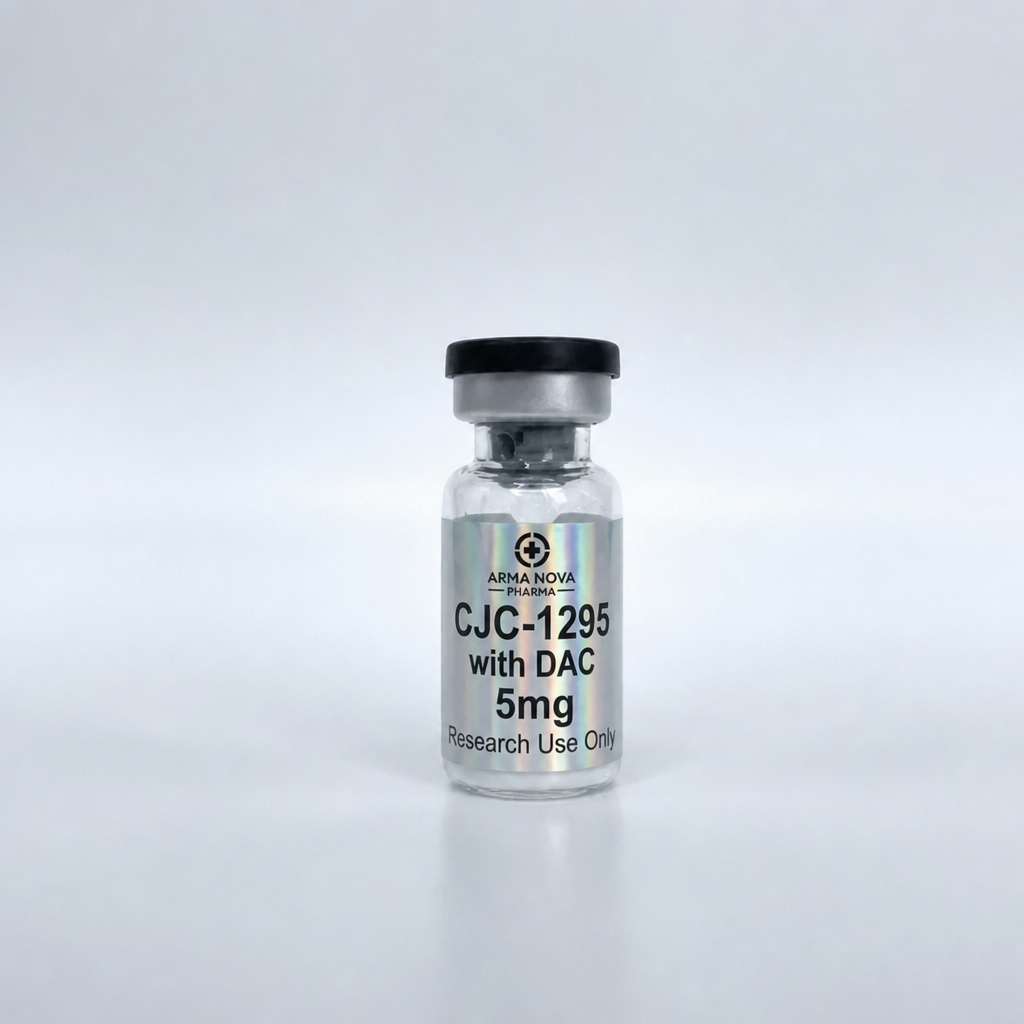
This distinction matters enormously for UK-based researchers sourcing peptides for in vitro or preclinical work. When you purchase CJC-1295 with DAC 10mg UK, you’re acquiring a molecularly distinct entity with documented albumin-binding properties demonstrated in clinical trials, not simply a “long-acting” marketing claim. Understanding the biochemical mechanism behind DAC conjugation, the peer-reviewed evidence base, and the UK regulatory context for research peptides will determine whether your experimental protocols succeed or fail.
What Is CJC-1295 with DAC? The Lysine-Maleimide Modification Explained
CJC-1295 with DAC represents a synthetic analog of growth hormone-releasing hormone (GHRH) spanning amino acids 1-29 (the bioactive fragment), with four strategic amino acid substitutions that confer resistance to dipeptidyl peptidase-IV (DPP-IV) degradation, plus the critical addition of a reactive maleimide functional group attached to a lysine residue within the peptide sequence.
The maleimide group forms an irreversible thioether bond with cysteine-34 on circulating human serum albumin, the most abundant protein in blood plasma (35-50 g/L concentration). This covalent attachment creates a stable peptide-albumin conjugate that circulates with albumin’s characteristic 19-day half-life, though the functional half-life of GH secretagogue activity remains in the 6-8 day range due to gradual enzymatic cleavage at secondary sites.
Without this DAC modification, even DPP-IV-resistant GHRH analogs face rapid clearance: standard CJC-1295 (modified GRF 1-29) exhibits a plasma half-life of approximately 30 minutes. The 240-fold extension in circulation time achieved through albumin binding fundamentally transforms the compound’s research utility and experimental dosing schedules.
Molecular Composition and Sequence Details
The base sequence incorporates four amino acid substitutions relative to native GHRH(1-29):
- D-Alanine at position 2: Provides DPP-IV resistance by replacing the L-Ala-Asp bond that serves as the enzyme’s primary cleavage site
- Glutamine at position 8: Replaces native asparagine to eliminate a spontaneous deamidation site that causes peptide aggregation
- Alanine at position 15: Replaces leucine to reduce hydrophobicity and improve solubility
- Leucine at position 27: Optimizes α-helical structure and receptor binding affinity
The DAC component—the lysine residue with maleimidoproprionic acid attached—is typically positioned at the C-terminus, though exact positioning varies slightly between manufacturing batches. This structural addition increases molecular weight from approximately 3.3 kDa (unmodified CJC-1295) to roughly 3.6 kDa for the DAC-conjugated form before albumin binding occurs in vivo.
Clinical Pharmacokinetics: What the Human Trials Actually Show
The pivotal 2006 study by Teichman and colleagues published in the Journal of Clinical Endocrinology & Metabolism PMID: 16940468 established the pharmacokinetic profile through subcutaneous administration in healthy adult volunteers. The trial administered 30-60 μg/kg doses and demonstrated:
- Mean half-life of 6.1-7.8 days across dose cohorts, with peak plasma concentrations occurring 1-4 hours post-injection
- Sustained elevation of IGF-1 levels (mean increase 1.5-2.8-fold baseline) persisting throughout the measurement period (up to 28 days post-administration)
- Preservation of pulsatile GH secretion rather than sustained supraphysiological GH levels, maintaining circadian rhythm architecture
- Dose-proportional pharmacokinetics across the tested range, with no evidence of nonlinear kinetics or saturable binding mechanisms
Critically, the study documented that GH pulses increased in both amplitude and frequency, with mean 24-hour GH AUC values increasing by 200-360% depending on dose cohort. This contrasts sharply with continuous GHRH infusion protocols that cause receptor desensitization—the DAC modification extends duration without sacrificing the physiological pulsatility that prevents downregulation.
A complementary study by Alba and colleagues in the American Journal of Physiology-Endocrinology and Metabolism PMID: 16303845 validated these findings in GHRH knockout mouse models, demonstrating normalization of growth parameters with once-monthly administration—a dosing frequency impossible with unmodified GHRH analogs. The study documented sustained IGF-1 elevation and catch-up growth matching wild-type controls, establishing proof-of-principle for therapeutic applications requiring extended pharmacological effect.
Species Differences and Research Application Considerations
While human albumin binding is well-characterized, researchers working with rodent or other animal models must account for species-specific albumin structure variations. Mouse serum albumin shares approximately 76% sequence homology with human albumin, with cysteine-34 conserved across species. However, binding affinity constants differ sufficiently that extrapolating exact half-life figures from human trials to rodent models introduces systematic error.
In vitro studies using isolated tissue preparations bypass this concern entirely, as albumin is typically absent from standard tissue culture media unless deliberately supplemented. Researchers conducting receptor binding assays or cellular signaling studies may choose to add human serum albumin at physiological concentrations (0.6 mM, approximately 40 g/L) to replicate in vivo conditions more faithfully.
CJC-1295 with DAC vs. CJC-1295 Without DAC: Critical Distinctions
The UK research peptide market persistently mislabels these compounds, with significant consequences for experimental reproducibility. Here’s what actually differentiates them:
| Parameter | CJC-1295 with DAC | CJC-1295 (Modified GRF 1-29) |
|---|---|---|
| Plasma half-life | 6-8 days | ~30 minutes |
| Albumin binding | Covalent (lysine-maleimide-cysteine) | None |
| Dosing frequency | 1-2 times weekly (research protocols) | Multiple daily administrations |
| Peak GH response | Occurs 1-4 hours post-dose | Occurs 15-30 minutes post-dose |
| Effect duration | Sustained IGF-1 elevation 7-14 days | Returns to baseline within 4-8 hours |
| Storage stability | More stable in solution (albumin-bound) | More susceptible to aggregation |
| Typical research vial size | 10mg (accommodates lower frequency) | 2-5mg (accommodates daily use) |
The 10mg vial format for cjc 1295 with dac 10mg uk supplies reflects the extended half-life: a single 10mg vial enables substantially more experimental timepoints than equivalent mass of the non-DAC variant. For researchers conducting multi-week protocols, this translates to fewer reconstitution events, reduced peptide waste from partial vial use, and improved batch-to-batch consistency across extended study periods.
Many UK suppliers market “CJC-1295” without clarifying DAC status, or worse, supply modified GRF 1-29 while implying extended-duration properties. Certificate of Analysis (COA) verification becomes essential—the molecular weight difference (3.6 kDa vs. 3.3 kDa) is detectable via mass spectrometry and should be documented in quality control testing.
Research Applications: Where CJC-1295 with DAC Fits in Experimental Protocols
The extended pharmacokinetic profile positions CJC-1295 with DAC for specific research contexts where sustained, physiological GH pulse amplification is desired without continuous intervention:
Growth Hormone Axis Studies
Researchers investigating GH-IGF-1 axis regulation benefit from the compound’s ability to amplify endogenous pulsatility without obliterating it. Unlike supraphysiological GH administration that abolishes pituitary secretion through negative feedback, CJC-1295 with DAC preserves normal pulse architecture while increasing amplitude—a critical distinction when studying physiological regulatory mechanisms.
Studies examining GH secretagogue receptor (GHS-R1a) signaling pathways can pair CJC-1295 with DAC with ghrelin mimetics like Ipamorelin 5mg UK to investigate synergistic effects. The combination produces supra-additive GH release compared to either compound alone, reflecting the distinct receptor mechanisms (GHRH receptor vs. ghrelin receptor) converging on somatotroph cells.
Aging and Metabolic Research Models
Animal models of aging exhibit progressive decline in GH pulse frequency and amplitude starting in middle age. CJC-1295 with DAC administration can restore youthful GH secretion patterns for extended periods, enabling researchers to isolate GH-dependent vs. GH-independent aging mechanisms across multiple organ systems without daily dosing that might introduce handling-stress confounds.
In metabolic research, the sustained IGF-1 elevation affects glucose homeostasis, lipolysis, protein synthesis, and bone turnover—outcomes that require weeks to manifest fully. The 10mg vial format supports multi-week protocols with consistent exposure levels, critical for detecting subtle metabolic shifts that emerge only with sustained intervention.
Comparative Pharmacology Studies
Direct head-to-head comparisons between DAC-conjugated and non-conjugated GHRH analogs illuminate the role of pharmacokinetic profile in determining pharmacodynamic outcomes. Researchers can administer equivalent molar doses and track temporal dynamics of receptor occupancy, downstream signaling activation, and tissue-level responses across timescales spanning hours to weeks within the same experimental cohort.
Sourcing CJC 1295 with DAC 10mg UK: Purity Verification and Quality Standards
The UK research peptide market operates under the principle that peptides sold “for research purposes only” fall outside human medicines regulations, provided they are not marketed with therapeutic claims or supplied for human administration. This creates a quality assurance vacuum—unlike pharmaceutical manufacturing subject to MHRA oversight, research peptide vendors operate with variable quality control standards.
HPLC Purity and Mass Spectrometry Verification
High-performance liquid chromatography (HPLC) remains the gold standard for assessing peptide purity, with ≥99% purity representing the threshold for serious research applications. However, HPLC purity alone doesn’t confirm identity—a 99% pure peptide could be the wrong peptide entirely.
Mass spectrometry (typically MALDI-TOF or ESI-MS) confirms molecular weight matching the expected DAC-conjugated structure (3,647 Da for the most common CJC-1295 with DAC variant, depending on exact synthesis approach). COAs should document both HPLC chromatograms showing a single dominant peak at appropriate retention time, and mass spectra showing the expected m/z ratio with minimal fragmentation products.
When sourcing cjc 1295 with dac 10mg uk from suppliers like Arma Peptides, batch-specific COAs should be published and traceable to the specific vial received. Generic or undated COAs, or those lacking clear batch identifiers, provide no meaningful quality assurance—they may represent aspirational specifications rather than actual tested values for your specific product.
Storage, Reconstitution, and Stability Considerations
Lyophilized CJC-1295 with DAC powder maintains stability for 24-36 months at -20°C when stored properly (desiccated, protected from light, minimizing freeze-thaw cycles). The DAC modification actually improves storage stability compared to unmodified peptides by reducing aggregation propensity.
Reconstitution typically employs bacteriostatic water (0.9% benzyl alcohol) for multi-dose vials, though sterile water suffices for single-use applications. Reconstituted solutions remain stable for 28 days at 2-8°C, substantially longer than non-DAC variants. The albumin-binding mechanism continues to function post-reconstitution if human serum albumin is added to the solution at physiological concentrations, potentially extending solution-phase stability further.
Researchers should calculate total peptide needs before reconstitution—a 10mg vial provides approximately 2,770 nmol of peptide (based on 3,608 Da molecular weight), sufficient for extensive experimental protocols when dosed in the microgram range typical of in vivo studies.
UK Delivery, Pricing Context, and Regulatory Status
Next-day UK delivery represents standard service for established research peptide suppliers, with orders placed before midday typically dispatched same-day via tracked courier services. The 10mg vial format for cjc 1295 with dac 10mg uk typically commands £85-£145 depending on supplier, with price primarily reflecting synthesis complexity and quality control rigor rather than raw material costs.
The CJC-1295 with DAC 5mg UK format provides a cost-effective entry point for pilot studies or protocols requiring lower total peptide mass, though the per-milligram cost typically favours the 10mg format for established research programs.
UK Regulatory Framework for Research Peptides
Under UK law, CJC-1295 with DAC occupies a regulatory grey zone: it is neither a controlled substance under the Misuse of Drugs Act 1971 nor a licensed medicine under the Human Medicines Regulations 2012 when sold explicitly for research purposes without therapeutic claims. The Medicines and Healthcare products Regulatory Agency (MHRA) has not specifically scheduled GHRH analogs, distinguishing them from growth hormone itself (which requires prescription for human use).
However, this legal status comes with critical limitations:
- Research use only: Suppliers must not market peptides for human consumption, self-administration, or with any therapeutic claims
- No therapeutic guidance: Dosing information, if provided, must be framed as published research protocols, not medical advice
- Import considerations: Researchers affiliated with universities or institutions may require institutional ethics approval even for in vitro work, depending on institutional policy
- Quality standards: No regulatory body enforces manufacturing standards for research peptides, placing burden of verification entirely on the purchaser
This framework makes supplier selection paramount—established UK-based vendors with transparent COA publication and traceable batch records provide accountability that overseas suppliers shipping into UK customs often cannot match.
Experimental Design Considerations: Dosing, Controls, and Protocol Optimization
Translating human clinical trial data to research protocols requires careful consideration of scaling factors, species differences, and experimental objectives. The Teichman study employed 30-60 μg/kg dosing in humans, which translates to approximately 210-420 μg for a 70kg individual—a dose easily achievable with a 10mg vial supporting multiple experimental replicates.
Dose-Response Relationships
Published trials document dose-proportional effects between 30-60 μg/kg, with IGF-1 AUC increasing linearly within this range. Whether this linearity extends beyond 60 μg/kg remains uncharacterized in humans, though rodent studies suggest a plateau effect emerges at approximately 100-120 μg/kg where somatotroph GH stores become rate-limiting.
For researchers establishing new protocols, a dose-ranging pilot study spanning 10-80 μg/kg with 4-6 dose levels provides data to construct a proper dose-response curve. The 10mg vial format accommodates these multi-dose designs within a single batch, eliminating inter-batch variability as a confounding variable.
Temporal Sampling Strategies
The 6-8 day half-life demands extended sampling timeframes: measuring outcomes only at 24 or 48 hours captures the rising phase of peptide exposure but misses peak effect (typically 3-7 days post-dose) and washout kinetics. Well-designed protocols incorporate sampling at:
- Baseline: Pre-dose reference values
- Acute phase: 4-8 hours post-dose to capture initial GH pulse amplification
- Peak exposure: Days 3-7 post-dose when IGF-1 elevation reaches maximum
- Sustained phase: Days 10-14 to characterize duration of effect
- Recovery: Days 21-28 to document return to baseline and assess potential rebound effects
This sampling architecture requires substantially more experimental resources than acute pharmacology studies but captures the true pharmacodynamic profile that short-duration measurements miss entirely.
Appropriate Controls and Comparators
Vehicle control groups should receive equivalent volumes of reconstitution buffer by the same administration route. For studies specifically investigating DAC contribution, a parallel arm receiving non-DAC CJC-1295 (modified GRF 1-29) at identical molar doses isolates the albumin-binding effect from other GHRH analog properties.
Positive control arms might employ recombinant human GH at equipotent doses (based on IGF-1 elevation) to distinguish GHRH-mediated effects (preserving pulsatility, requiring intact pituitary function) from direct GH effects. This design proves particularly valuable when investigating questions of receptor desensitization or negative feedback regulation.
Frequently Encountered Research Questions
Why Choose 10mg Vial Format Over 5mg?
The 10mg format provides cost efficiency for established protocols and eliminates the need to pool multiple vials for extended studies, reducing batch-to-batch variability. For researchers conducting multi-week experiments with multiple dosing timepoints, a single 10mg vial often suffices where multiple 5mg vials would be required, each introducing a potential source of inter-vial variation.
However, pilot studies or initial protocol optimization may benefit from the CJC-1295 with DAC 5mg UK format to minimize waste if dosing parameters require substantial adjustment during feasibility testing.
Can CJC-1295 with DAC Be Combined with Other Secretagogues?
Research protocols frequently combine GHRH analogs with ghrelin mimetics to achieve synergistic GH release. The combination of CJC-1295 with DAC and Ipamorelin 5mg UK activates distinct receptor pathways (GHRH-R and GHS-R1a respectively) that converge on somatotroph calcium signaling, producing greater GH release than either compound administered alone.
This synergy reflects physiological regulation: endogenous GHRH and ghrelin coordinate to generate pulsatile GH secretion, with GHRH primarily determining pulse amplitude and ghrelin influencing pulse initiation. Experimental protocols can leverage this biology to model physiological regulation more faithfully than single-agent interventions.
What Storage Temperature Maximizes Shelf Life?
Lyophilized peptide maintains optimal stability at -20°C to -80°C. While some degradation occurs even at these temperatures, the rate remains negligible over 24-36 months when properly desiccated. Refrigeration (2-8°C) suffices for shorter storage periods (3-6 months) but cannot match freezer stability for long-term retention.
Critically, minimizing freeze-thaw cycles matters more than absolute temperature—each thaw cycle introduces moisture that can trigger hydrolytic degradation even if subsequently refrozen. Aliquoting lyophilized powder into multiple smaller vials before initial storage allows researchers to thaw only what’s needed for immediate use.
Does Albumin Binding Affect Receptor Interaction?
The albumin-bound form represents a circulating reservoir—binding is reversible at the equilibrium level, allowing free peptide to dissociate, interact with GHRH receptors on pituitary somatotrophs, and be replenished from the bound pool. This equilibrium maintains relatively constant free peptide concentrations over days, contrasting with the rapid spike-and-crash kinetics of unmodified analogs.
In vitro receptor binding assays conducted in albumin-free media may underestimate functional potency by failing to model this reservoir effect. Adding physiological albumin concentrations to binding assays provides a more realistic assessment of effective receptor occupancy dynamics.
Common Misconceptions and Clarifications
Misconception: “CJC-1295 with DAC maintains constant GH elevation”
Reality: The compound amplifies endogenous GH pulses rather than producing sustained elevation. Pulsatility is preserved, preventing receptor desensitization that occurs with continuous GH exposure. This explains why IGF-1 remains elevated despite GH returning to baseline between pulses—IGF-1 integrates the pulsatile signal into a more stable readout.
Misconception: “DAC refers to ‘Drug Affinity Complex’ as a proprietary ingredient”
Reality: DAC describes the chemical modification itself—the lysine-maleimide structure that binds albumin. It’s not a separate compound added to the peptide but rather a functional group incorporated during synthesis. The “complex” refers to the peptide-albumin conjugate formed in vivo after administration.
Misconception: “All CJC-1295 sold in the UK includes DAC”
Reality: Many UK suppliers sell modified GRF 1-29 (the non-DAC variant) labeled simply as “CJC-1295,” omitting clarification of DAC status. The compounds differ fundamentally in half-life and dosing requirements. Verification requires examining COA molecular weight data—the DAC variant is approximately 300 Da heavier than the base peptide.
Misconception: “Higher purity always means better research outcomes”
Reality: While ≥99% HPLC purity is essential, purity beyond this threshold shows diminishing returns. A 99.2% pure peptide is functionally equivalent to a 99.8% pure variant for most research applications. The remaining 0.1-0.8% consists primarily of synthesis-related truncated sequences or protected side-chain variants that don’t meaningfully interfere with receptor binding or signaling.
The UK Market Landscape for CJC 1295 with DAC 10mg
The UK research peptide sector has consolidated significantly since 2020, with increased scrutiny of suppliers following several high-profile cases of mislabeled or contaminated products. Established suppliers now routinely publish batch-specific COAs and maintain transparent customer service channels, distinguishing them from the dropshipping operations that plagued the market in earlier years.
Geographic advantages of UK-based suppliers include:
- No customs clearance delays: Domestic orders bypass the 3-14 day customs processing that affects non-UK imports
- Temperature control: Shorter transit times reduce temperature excursion risk, particularly important during summer months
- Consumer protection: UK-registered companies remain subject to Trading Standards enforcement and Companies House transparency requirements
- Payment processing: Domestic bank transfers and UK credit cards avoid the international transaction fees and currency conversion costs of overseas purchases
The search volume data showing 350 monthly searches for “cjc-1295 uk” and 200 for “cjc-1295 dac uk” reflects substantial researcher interest, though the limited search volume for the specific cjc 1295 with dac 10mg uk variant suggests many researchers remain unaware of the critical DAC/non-DAC distinction. Educational content clarifying these differences serves not merely to rank in search engines but to improve experimental design quality across the research community.
Future Research Directions and Unanswered Questions
Despite two decades of research since the initial CJC-1295 synthesis, significant knowledge gaps remain:
Long-term receptor dynamics: Most published trials span 4-12 weeks. Whether chronic administration (months to years) causes compensatory downregulation of GHRH receptors or alterations in somatostatin tone remains uncharacterized in humans. Rodent studies suggest receptor density remains stable with intermittent dosing (1-2x weekly) but may decline with more frequent administration.
Tissue-specific effects: While systemic IGF-1 elevation is well-documented, tissue-level IGF-1 expression varies substantially between organs. The extent to which CJC-1295 with DAC influences autocrine/paracrine IGF-1 signaling in muscle, adipose, bone, and neural tissue independently of endocrine GH effects deserves systematic investigation using tissue-specific IGF-1 receptor knockout models.
Sex differences: Published human trials employed predominantly male subjects. Sex differences in GH secretion patterns are well-established (more continuous in females, more pulsatile in males), yet whether CJC-1295 with DAC interacts differently with these baseline patterns remains unclear. Rodent studies suggest female animals show somewhat attenuated IGF-1 responses, possibly reflecting higher baseline GH secretion leaving less dynamic range for amplification.
Interaction with metabolic state: Obesity, caloric restriction, and insulin resistance all modulate GH secretion and clearance. Characterizing CJC-1295 pharmacokinetics and pharmacodynamics across diverse metabolic contexts would inform experimental design for metabolic research applications.
Practical Recommendations for UK Researchers
For researchers establishing new protocols involving cjc 1295 with dac 10mg uk, several practical considerations optimize experimental success:
Start with published protocols: The Teichman and Alba studies provide validated dose ranges and sampling timepoints. Deviating substantially from these established parameters without preliminary dose-ranging data risks missing the therapeutic window or encountering unexpected outcomes.
Implement batch tracking: Record the specific batch number and COA for every vial used in experiments. If results prove irreproducible, batch-to-batch variability becomes a testable hypothesis only if batch identity was documented prospectively.
Calculate total study needs before ordering: A 10mg vial supports extensive protocols, but multi-arm studies with multiple replicates may require multiple vials. Ordering all required peptide from a single batch eliminates inter-batch variability as a confound, though this must be balanced against the risk of entire study loss if a quality issue emerges with that batch.
Validate your assays: GH assays exhibit notorious antibody cross-reactivity issues, and IGF-1 measurement requires proper sample handling to separate IGF-1 from binding proteins. Invest in assay validation with reference standards before committing to full protocols—discovering assay problems after completing experiments wastes months of work.
Consider pharmacokinetic sampling: Measuring actual peptide concentrations via ELISA or LC-MS in a subset of samples validates that your dosing regimen achieves expected exposure levels. This proves particularly valuable when translating human protocols to animal models where interspecies differences may affect pharmacokinetics.
Why the DAC Modification Matters: A Mechanistic Summary
The lysine-maleimide Drug Affinity Complex that defines CJC-1295 with DAC represents elegant molecular engineering: by hijacking albumin—a protein already optimized by evolution for extended circulation and reversible cargo binding—the modification achieves sustained peptide delivery without requiring complex formulation technologies or implantable devices.
This approach differs fundamentally from PEGylation, the alternative strategy for extending peptide half-life through attachment of polyethylene glycol polymers. PEG chains increase hydrodynamic radius to slow renal clearance but don’t provide the same reversible binding reservoir that albumin conjugation offers. The DAC mechanism maintains free peptide at relatively constant concentrations through equilibrium dynamics rather than simply slowing clearance of a permanently attached modification.
For researchers, this translates to more physiological exposure profiles—the amplified GH pulses produced by CJC-1295 with DAC more closely resemble normal physiology than the sustained elevation produced by exogenous GH administration. This distinction matters when investigating questions related to GH signaling, receptor regulation, or any outcome where pulsatility vs. continuous exposure produces differential effects.
Conclusion: Informed Sourcing for Rigorous Research
The cjc 1295 with dac 10mg uk research peptide market demands scientific literacy from purchasers—the molecular distinction between DAC-conjugated and non-conjugated variants fundamentally alters experimental design, yet many suppliers obscure or ignore this difference. The lysine-maleimide modification that enables covalent albumin binding transforms a 30-minute half-life peptide into a 6-8 day acting compound, as demonstrated in the pivotal Teichman trial PMID: 16940468 and validated in animal models by Alba and colleagues PMID: 16303845.
UK-based researchers benefit from domestic suppliers offering next-day delivery, transparent batch-specific COAs documenting ≥99% HPLC purity, and traceable quality control that overseas suppliers often cannot match. The CJC-1295 with DAC 10mg UK format provides sufficient peptide mass for extensive protocols while maintaining single-batch consistency, critical for reproducible outcomes.
Understanding the pharmacokinetic profile, properly distinguishing DAC from non-DAC variants, implementing appropriate controls, and sourcing verified peptides from accountable suppliers separates rigorous research from the poorly controlled experiments that contribute to irreproducibility in peptide pharmacology. As the UK research peptide market matures, informed purchasers demanding molecular verification and batch-specific quality documentation will drive overall market quality upward—a trend that benefits the entire research community.
Research Use Disclaimer: CJC-1295 with DAC is supplied strictly for in vitro research and preclinical investigations. This article discusses published research findings and does not constitute medical advice or guidance for human use. Researchers should consult institutional ethics committees and comply with all applicable UK regulations governing research peptide use.
Related posts
Tesamorelin 10mg UK: Research-Grade Growth Hormone-Releasing Hormone Analogue for 2026 UK-based researchers investigating growth hormone-releasing hormone (GHRH) analogues frequently encounter a critical sourcing challenge:… Continue reading
Ipamorelin UK: The Selective Growth Hormone Secretagogue for Researchers in 2026 Among the growth hormone-releasing peptides available to UK researchers, ipamorelin stands apart for a... Continue reading
Tirzepatide 30mg UK: The Dual GIP/GLP-1 Receptor Agonist for Advanced Metabolic Research Tirzepatide represents the first dual glucose-dependent insulinotropic polypeptide (GIP) and glucagon-like peptide-1 (GLP-1)... Continue reading
HCG 5000IU UK: Research-Grade Sourcing and Clinical Context Guide 2026 Human chorionic gonadotropin at the 5000 international unit dosage represents one of the most frequently... Continue reading
HGH 100 IU UK: Verified Research-Grade Sourcing, Purity Standards, and Regulatory Context for 2026 Securing genuine, laboratory-verified hgh 100 iu uk formulations presents distinct challenges... Continue reading
Add comment