
No products in the cart.
GHK-Cu Pen: How to Assess Product Types and Labels

Written by
Hannah Whitaker
Research Content Editor
 13 Oct 2026
 6 min read
The phrase “GHK-Cu pen” can describe different products, from a prefilled device to a pen-style dispenser. The format alone does not confirm what is inside, what the product is intended for, or whether it is suitable for personal use. If you are comparing options, check the product identity, stated purpose and batch documentation rather than relying on the word “pen”.
What people mean by a GHK-Cu pen
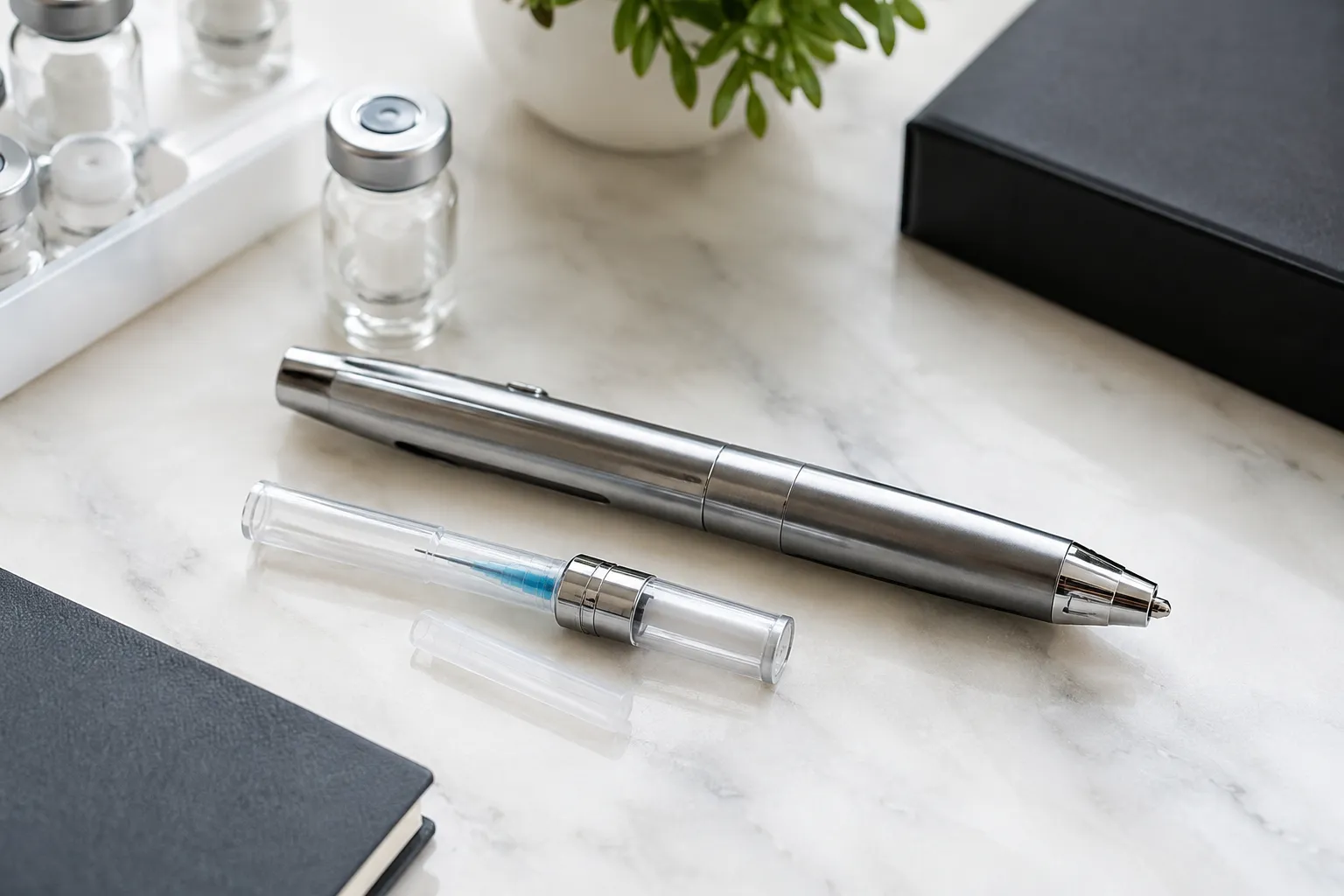
GHK-Cu is discussed in several product contexts, so listings that use “pen” may not refer to the same type of item. Some may describe a device containing material; others may use the term loosely as a label. Before comparing products, establish whether the listing is for a finished formulation, a dispensing device, or research material.
A pen-like appearance is not evidence of a product’s contents, sterility, testing or intended route of use. Those details need to be stated and supported separately.
Prefilled pens and pen-style devices
A prefilled pen is presented as a device containing a product in a ready-filled format. A pen-style device, by contrast, may refer to a dispenser intended to hold or release material. The terms are not interchangeable, and a listing should explain which one it means.
For any GHK-Cu pen listing, look for an unambiguous product description and labelling. Check whether it identifies the contents and formulation, states the intended use, and provides batch-specific documentation where applicable. Do not infer these details from photographs, a product name or a device’s appearance.
How a pen differs from research material
Research material is supplied for laboratory research use; it is not automatically a prefilled pen or a finished product for personal use. A listing for GHK-Cu research material should be assessed according to its stated identity, specification and documentation—not treated as a substitute for a consumer cosmetic or a ready-to-use device.
Arma Peptides lists GHK-Cu research material as a separate offering. Review that product page for the current description and available information. Do not assume that research material can be loaded into a pen or used on or in the body.
What GHK-Cu is and why it appears in pen listings
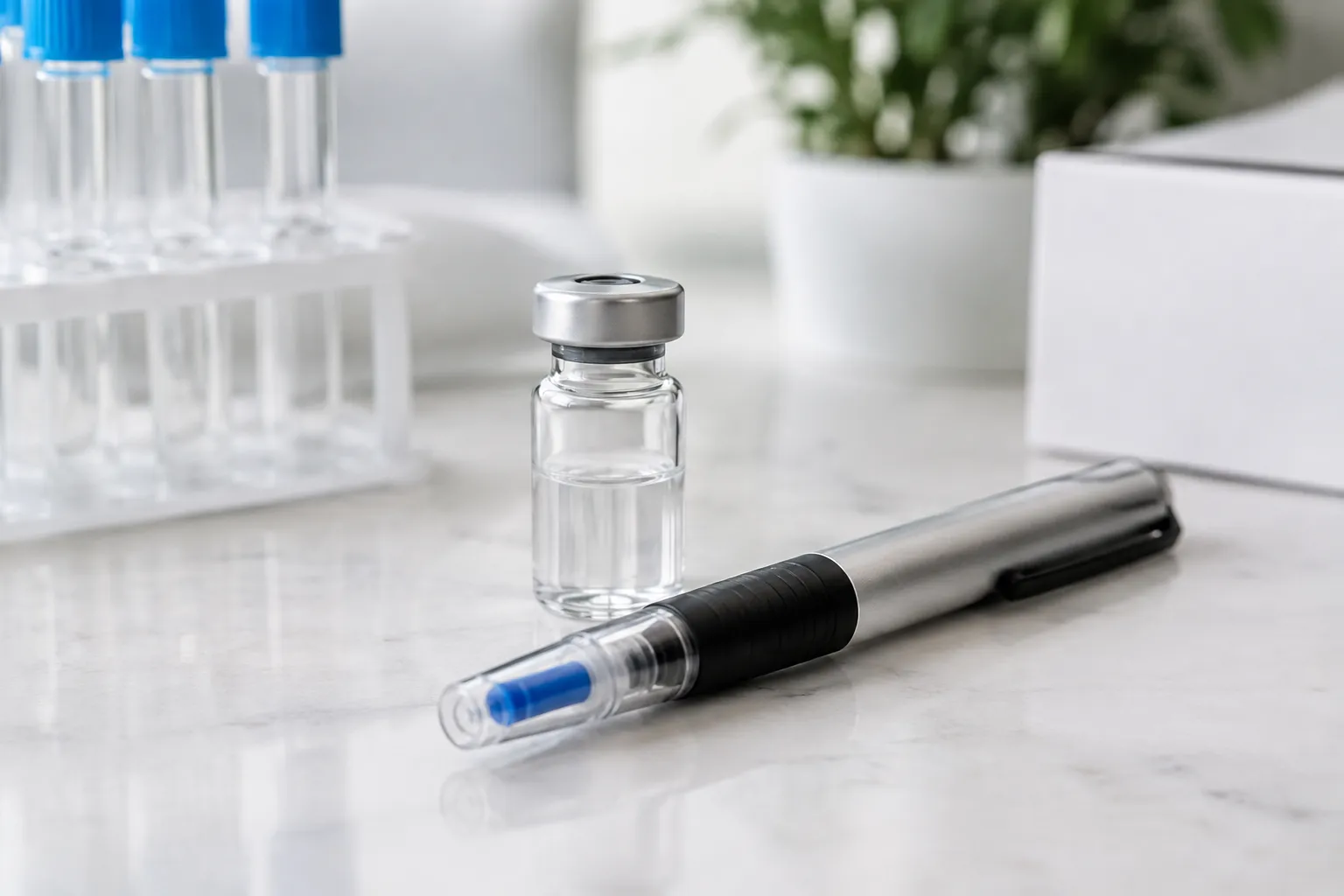
GHK-Cu is a copper-binding peptide: GHK refers to the tripeptide glycine-histidine-lysine, and Cu denotes copper associated with it. It appears in research discussions and in some cosmetic-product marketing, which can lead to different types of products being described with similar language.
The presence of GHK-Cu in a listing does not establish that a particular product has a specific effect. Nor does discussion of the peptide in research or cosmetics confirm the contents, quality or suitability of an individual pen. Separate the general identity of the compound from claims about a specific product.
When comparing a GHK-Cu pen with research material, focus first on what is actually being sold. A research-use product and a finished cosmetic are different product categories, with different stated purposes and information needs.
Claims, product details and safety considerations
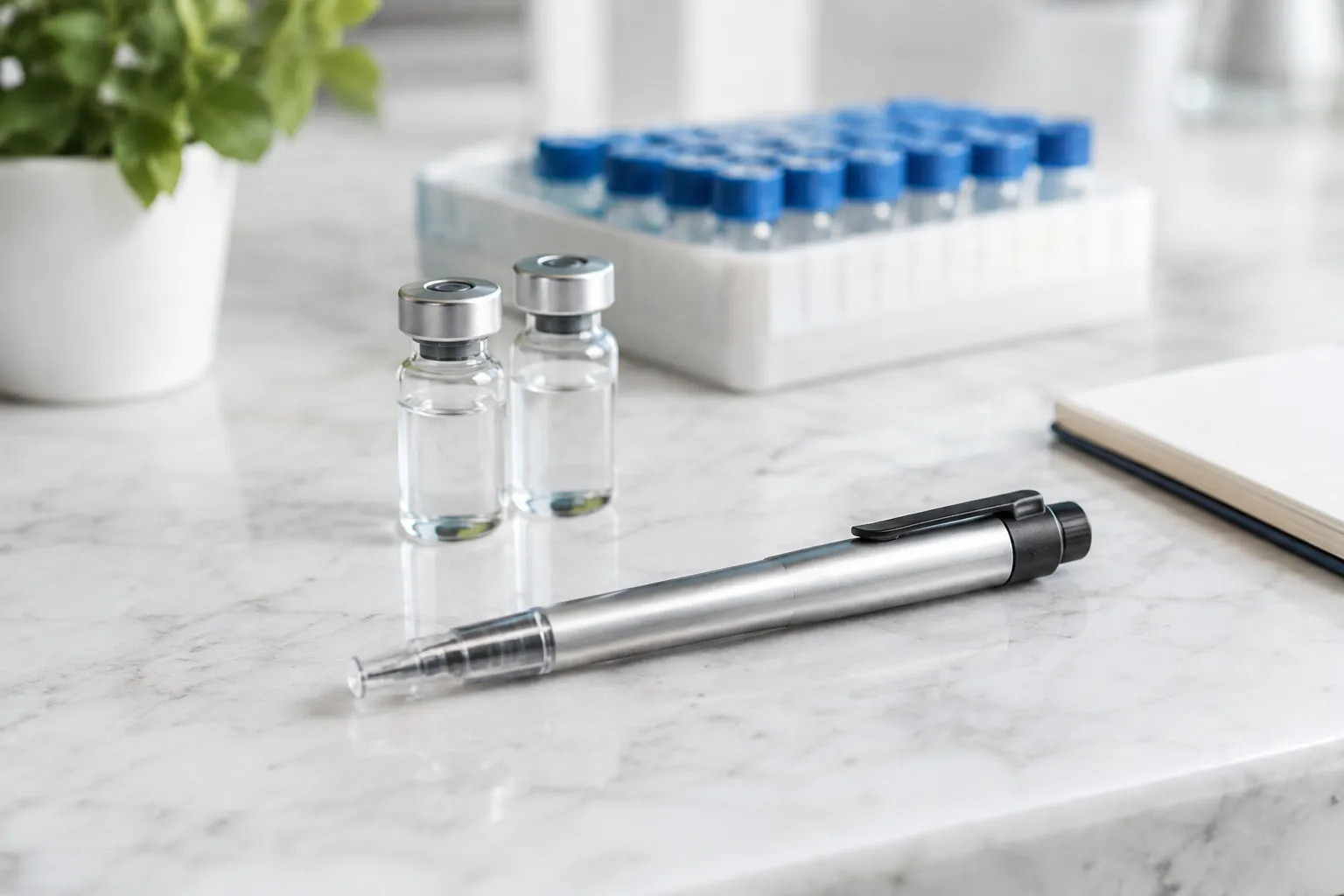
Product pages can combine a compound name, a device format and promotional claims. Treat those as separate pieces of information. The name may identify the compound; the format describes how the product is presented; neither alone verifies the supporting evidence or the product’s intended use.
A careful check is especially important when a listing makes claims about purity, concentration, sterility or personal results. Look for specific documentation rather than assuming that a polished presentation proves those claims.
Check the contents and intended use
Before evaluating a GHK-Cu pen or research product, check:
- The exact product name and compound identity.
- The stated specification and intended use.
- Whether the documentation refers to the same batch or lot as the item being considered.
- What the available test report actually measures.
- Whether claims on the listing are supported by clear product information.
A certificate of analysis (COA) can help document results for a specified sample or batch. Check its product identity, batch or lot reference, test date, analytical method and reported results. A report that does not clearly match the product and batch is less useful for assessing that item.
HPLC, or high-performance liquid chromatography, is an analytical method that can help assess a sample’s composition and purity profile. HPLC results do not, by themselves, establish sterility, suitability for personal use, regulatory approval or a particular biological effect. Match the method and reported result to the claim being made.
Understand the limits of research-grade products
“Research-grade” describes a product’s stated category; it does not establish approval, safety or suitability for injection, skincare or any other personal use. A laboratory-use product should be treated according to its stated purpose and should not be repurposed as a personal-use product.
Likewise, a pen format does not guarantee sterile contents or safe use. Sterility is a separate property that requires relevant evidence; device appearance and packaging alone cannot confirm it. Do not rely on online claims or informal feedback to establish that a research product is appropriate for use on or in the body.
Finding GHK-Cu research material from Arma Peptides
Readers looking for a laboratory-use product should distinguish that need from a search for a GHK-Cu pen intended for personal use. Arma Peptides offers GHK-Cu research material for research use. Review the product page for its stated description and specification before deciding whether it fits your laboratory requirements.
Arma Peptides describes its approach as emphasizing HPLC verification and batch COAs. For any product documentation, use the report itself to check what was tested and whether the identity and batch details correspond to the product under consideration. A COA can document the results it reports; it should not be read as proof of claims beyond its stated scope.
If a pen-style product is what you are comparing, do not assume the research material listing describes a pen. Check the current product information for its stated format and purpose. You can also review the GHK-Cu research material page for the available details and documentation.
GHK-Cu Pen FAQs
Is a GHK-Cu pen the same as a copper peptide serum?
No. A GHK-Cu pen describes a pen-style format, while a serum is a topical formulation; the name alone does not establish the contents or intended use of either product.
Does a pen format guarantee that a product is sterile?
No. A pen’s format or appearance does not prove sterility; look for relevant product-specific evidence, and do not assume research material is sterile or suitable for personal use.
Is a GHK-Cu pen approved for cosmetic use in the UK?
The term “GHK-Cu pen” does not establish UK cosmetic approval. Check the product’s stated category and applicable regulatory information rather than treating a product name or marketing claim as proof.
Do GHK-Cu pen products require a prescription in the UK?
There is no single answer based on the word “pen”: requirements depend on the product’s composition, presentation and intended use. Check its legal classification and seek appropriate regulatory guidance.
How can I check whether a GHK-Cu batch COA matches its product?
Compare the COA’s product identity and batch or lot number with the product label or listing, then review the report date, test method and results.
Does GHK-Cu occur naturally in the body?
GHK is a peptide found naturally in the body and can bind copper to form GHK-Cu. This fact does not establish the safety or effects of a particular product.
Can GHK-Cu research material be used in skincare?
Research material is not automatically a finished skincare product or suitable for topical use. Follow the product’s stated purpose and do not assume cosmetic suitability from the compound name.
What should I check about storage of GHK-Cu research material?
Follow the storage conditions stated on the product label or accompanying documentation. If those instructions are unclear, contact the supplier before handling or storing the material.
Choose products according to their stated purpose
A GHK-Cu pen and GHK-Cu research material are not interchangeable terms. First decide whether you are assessing a pen-style product or a laboratory-use material, then check identity, stated specification, intended use and batch documentation against that choice. For research material, consult the Arma Peptides product information and assess the documentation for the specific product and batch.
Explore GHK-Cu Research Material
Review the product information and available documentation to assess whether this laboratory-use material fits your research requirements.
About the author
Hannah Whitaker
Research Content Editor
Hannah Whitaker is a UK-based science writer with a background in life-sciences communications, specialising in research-use peptides and laboratory product information. She makes HPLC verification, batch certificates of analysis and product documentation clear and accessible for readers seeking well-documented research materials. Her articles draw on published research and supplier documentation, with a measured approach to product handling and evidence. She clearly distinguishes laboratory research use from clinical or personal use.
Research-use peptide resourcesHPLC verification and batch COAsLaboratory product documentationResearch-use handling information
Powered by SeoVision

Related posts

Kisspeptin is a family of signalling peptides studied for its role in communication between the brain and the reproductive hormone system. Continue reading

Reviews of peptide suppliers in the UK can help you assess communication and delivery, but customer ratings alone cannot verify what is in a product. Continue reading

Glow 70mg is a product name that raises two separate questions: what the label describes and what evidence supports the product. Continue reading

MGF and PEG-MGF names can look similar in search results, but a shared name does not establish that two listings describe the same material. Continue reading

For anyone searching for retatrutide in the UK, the key question is not simply where to buy it, but whether a research listing gives enough... Continue reading
Add comment