
No products in the cart.
Melanotan nasal products and the claims to question
Written by
Arma Peptides
 1 Nov 2026
 6 min read
Online descriptions of melanotan nasal products can make different formulations sound interchangeable, but names and marketing language do not establish a product’s contents, evidence or regulatory status. A careful comparison starts by separating what a listing says from what its documentation can actually support.
What “melanotan nasal” can mean online

“Melanotan nasal” is a broad online label that may refer to products described as sprays or drops; the wording alone does not confirm their ingredients, formulation or status.
Product names and formats are not proof of contents
Listings may use “nasal spray”, “nasal drops” and “nasal melanotan” for products presented in similar ways. Those terms describe a claimed format, not independent evidence of what is in a container. Two listings that use the same name may still differ in their stated ingredients, concentration, preparation or supporting documents.
Look for a product description that identifies the compound, stated amount and format clearly. Check whether the label and listing use consistent terminology. If the description switches between “spray” and “drops”, or does not say which compound it refers to, that ambiguity limits meaningful comparison.
A name is not a chemical analysis, and a product image is not proof of contents. The research-focused blog offers further research-only reading; as with any online material, distinguish general explanations from evidence about a specific product or batch.
Melanotan I and II are distinct compounds
Melanotan I and melanotan II are distinct names, not interchangeable labels for one compound. A listing that says only “melanotan” leaves an important identity question unanswered.
The distinction matters when comparing claims because information about one compound cannot automatically substantiate claims about another. A product description should name the specific compound it claims to contain, and any accompanying analytical document should identify the same one. Neither a compound name nor a research discussion establishes that an online product is authorised or suitable for personal use.

What evidence supports claims about nasal products?
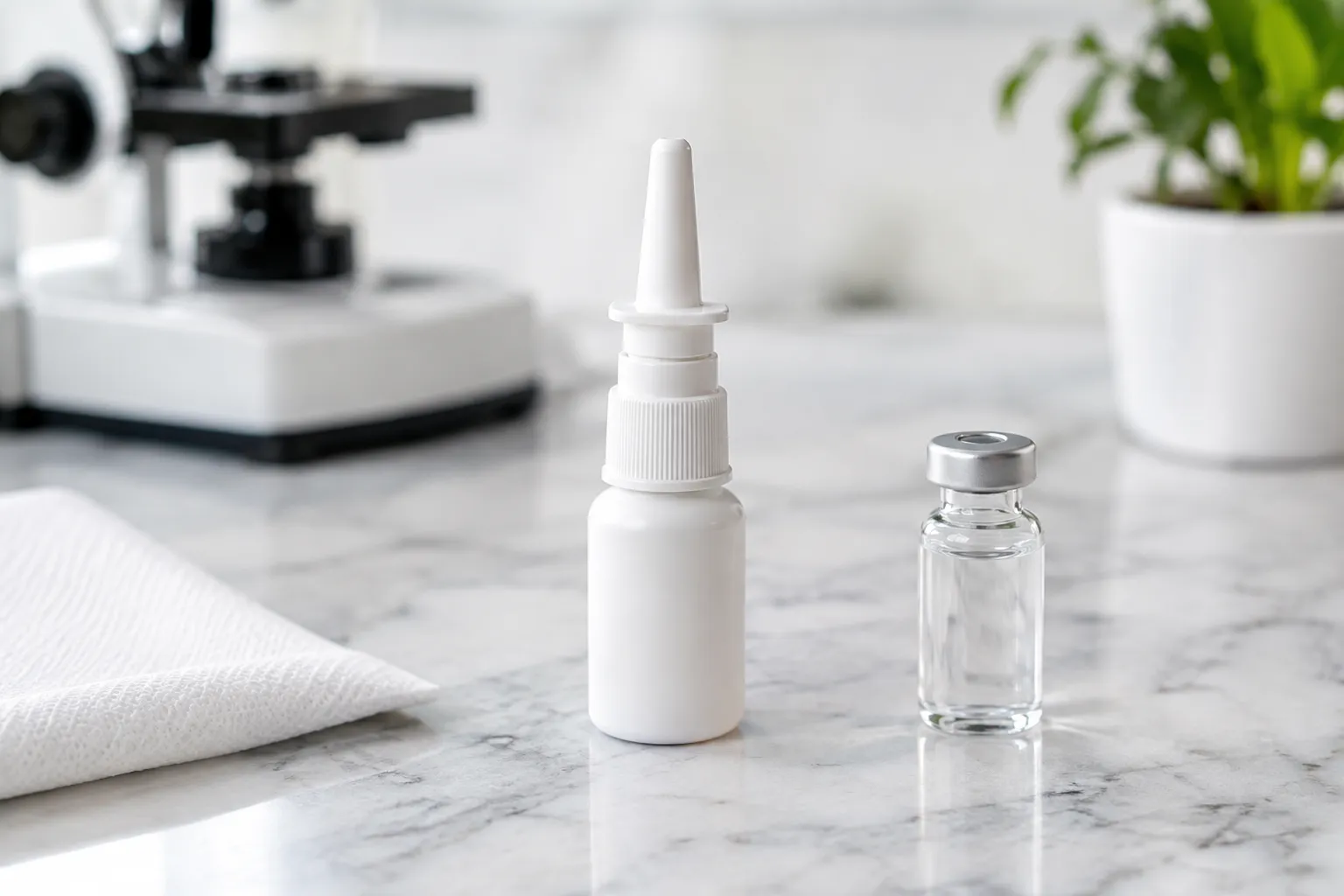
Claims about tanning effects, absorption or safety need evidence that relates to the named compound and the specific formulation; a product listing by itself cannot establish them.
Online copy may make statements about how quickly a nasal product works, how much is absorbed, or what results to expect. These are different claims and need different kinds of support. Evidence about a compound in one form does not automatically show how a particular nasal formulation behaves. Nor does a statement that a product is “research-grade” demonstrate a health outcome or safety for personal use.
Check what evidence a seller actually presents: Is it a general explanation, a manufacturer statement, a report about a particular batch, or published research? Does it identify the same compound and form as the listing? Is the claim narrower than the evidence, or does the wording promise more than the document can show?
Documentation can help readers assess what a seller says about its own products. For example, our supplier documentation approach describes the sort of information a supplier may make available. A document is most useful when its scope, product identity and batch are clear; it should not be treated as proof of every claim made nearby.
How to compare product descriptions and documentation
Compare listings by checking whether the product identity, stated specification and batch information are clear and consistent, then assess what the supporting documents actually verify.
A practical comparison should focus on information that can be checked rather than persuasive wording. Note what each listing states, what it documents and what remains unclear. This makes gaps visible without assuming that polished presentation or confident claims indicate higher quality.
Our guide to peptides reviews offers a broader framework for reading product information and evaluating claims. When assessing melanotan nasal listings, apply the same principle: separate description, evidence and interpretation.
Check identity, concentration and batch details
Start with four questions:
- Does the listing identify melanotan I or melanotan II, rather than using only a broad name?
- Does it state the product’s form and concentration clearly?
- Is there a lot or batch identifier that connects the product to its documents?
- Do the label, listing and report use consistent names and specifications?
If the information is missing or contradictory, a reader cannot make a reliable like-for-like comparison. For instance, a report for a named compound does not resolve uncertainty if the product listing uses a different name or does not identify the batch. Likewise, a concentration stated without clear units or context may be difficult to interpret. Ask the seller to clarify any material ambiguity rather than filling gaps with assumptions.
Understand what a COA or HPLC result can show
A certificate of analysis (COA) or an HPLC result can document particular analytical findings, but it does not by itself establish that a product is safe for personal use or authorised for sale as a medicine.
HPLC, or high-performance liquid chromatography, is an analytical method used to separate and assess components in a sample. A report may state findings such as an identified compound or a purity result, depending on the method and the report’s scope. Read the report itself: note the sample name, batch or lot number, test date, methods and results. Check whether these details correspond to the product being described.
A document without a traceable link to the listed batch offers less help in assessing that specific product. Even a batch-matched result has limits: a purity figure does not necessarily verify concentration in the finished formulation, every possible contaminant, delivery performance, clinical effects or regulatory status. Read each reported result only as broadly as its method and stated scope allow.
Health and regulatory context readers should know
Online marketing is not medical evidence, and a product’s claimed identity or format does not establish its regulatory status or suitability for people.
Health-related claims deserve particular scrutiny because a confident description can sound authoritative without explaining the evidence behind it. Separate a seller’s statements from findings in published research and from decisions or guidance issued by relevant regulators or medical bodies. If a listing refers to approval or authorisation, check which authority is meant and whether the claim concerns that exact product and formulation.
Do not infer personal-use suitability from a research label, a COA or a discussion of a compound. If you are considering a health-related decision, consult a qualified doctor or pharmacist about your own circumstances. This article does not replace a doctor’s advice.
How Arma Peptides describes its research products
Arma Peptides describes its products as being for laboratory research use only, and melanotan products are not among its stated offerings.
That distinction matters when reading this guide: discussing online melanotan terminology does not mean Arma Peptides sells a melanotan nasal product. The company’s stated range includes other research products, but those are not alternatives for melanotan and should not be presented as such.
Arma Peptides says it emphasises HPLC verification and batch COAs for research products. When evaluating any supplier’s documentation, including ours, check the product and batch details shown in the relevant documents and consider what each result does and does not establish. Research-use information should not be treated as personal-use guidance.
Use a cautious framework when assessing online claims
Treat each online claim as something to verify: identify the compound, check the stated specification, match documents to a batch and keep conclusions within the evidence’s limits.
A useful final check is to ask whether the listing answers four basic questions: What compound is claimed? What form and concentration are stated? Which batch is being described? What does the supporting report actually test or identify? Unanswered questions are meaningful limits, not details a reader should have to guess.
Be wary of language that turns a limited analytical result into a broad promise about effects, safety or suitability. A matching batch document can support specific statements about that sample, but cannot prove every claim made in a listing. Keep those boundaries in view when comparing melanotan nasal descriptions, and do not interpret research-product information as advice for personal use.

Related posts

For anyone comparing research peptides in the UK, the supplier’s product details and batch records matter more than broad assurances. Continue reading

The phrase “peptides tesamorelin” can refer to research on tesamorelin itself or to products that contain it, including blends. Continue reading

A useful comparison of a BPC-157 and TB-500 blend starts with the product page, not claims about intended effects. Continue reading

Check what “research use only” means for UK purchase Whether it is legal to purchase peptides in the UK depends on the product’s classification and... Continue reading

Tesamorelin is studied as a synthetic analogue of growth hormone-releasing hormone (GHRH), while kisspeptin is studied in reproductive hormone signalling. Continue reading
Add comment